
If you want to know why cordless inflators stop working, start with the battery, heat, settings, and air hose. Most sudden stops come from low power, an automatic shutoff, a loose air connection, or a motor that needs time to cool.
Some faults are simple to correct. Others need professional service. A safe check can help you tell the difference without opening the tool or battery.
Cordless inflators often stop because the battery is low, the motor is hot, the set pressure has been reached, or air is leaking at the hose. Turn the unit off. Let it cool, charge the battery, check the settings, and inspect the hose. Stop using it if you see smoke, sparks, swelling, leaks, or melted parts.
The screen may work even when the battery cannot run the motor.
The inflator may stop to protect its motor from excess heat.
The pump can stop normally after it reaches the target pressure.
A poor hose seal can make the unit run without filling the tire.
Why Cordless Inflators Stop Working
A cordless inflator needs three things to work. It needs enough battery power. It also needs a clear path for air. Last, its controls must permit the motor to run.
A fault in any one of these areas can stop the tool. The exact cause often depends on when it stopped and what it did first. For example, a unit that stops after ten minutes may be hot. A unit that will not start at all may have a power fault.
10 Common Reasons an Inflator Stops
The display and light use little power. They may still work when the battery is too weak to start the pump.
Some battery packs will not work outside their safe temperature range. Let the pack return to the range in its manual.
A loose removable pack may break the power link. Remove and refit it only as the maker directs.
Long use builds heat. A safety system may stop the motor until the unit cools.
The tool may have reached its set PSI. It may not restart if the tire is already at or above that target.
Car, bike, ball, and high-volume modes can act in different ways. A wrong mode may limit pressure or airflow.
A loose chuck, split hose, bad seal, or damaged valve can let air escape as fast as the pump adds it.
Dust or soft cargo can block cooling air. This may cause heat and an early shutdown.
A bad cable, plug, port, or charger can leave the battery empty even when a charge light appears.
A worn motor, switch, sensor, wire, or pump part may need maker-approved repair or replacement.
What the Timing of the Stop Can Tell You
| When it stops | Likely area to check | Safe first action |
|---|---|---|
| It never starts | Battery, contacts, switch, or settings | Charge, cool, and refit the battery |
| It stops at one PSI | Target pressure or auto shutoff | Check the unit and target setting |
| It stops after several minutes | Heat, duty cycle, or weak battery | Turn it off and allow full cooling |
| It stops when the hose moves | Hose, fitting, valve, or power contact | Inspect for loose or damaged parts |
| It runs but pressure stays flat | Air leak, blocked hose, or tire leak | Stop the motor and listen for leaks |
| It stops while charging | Battery heat, charger, cable, or port | Unplug it and check for damage |
How Battery Problems Stop the Inflator
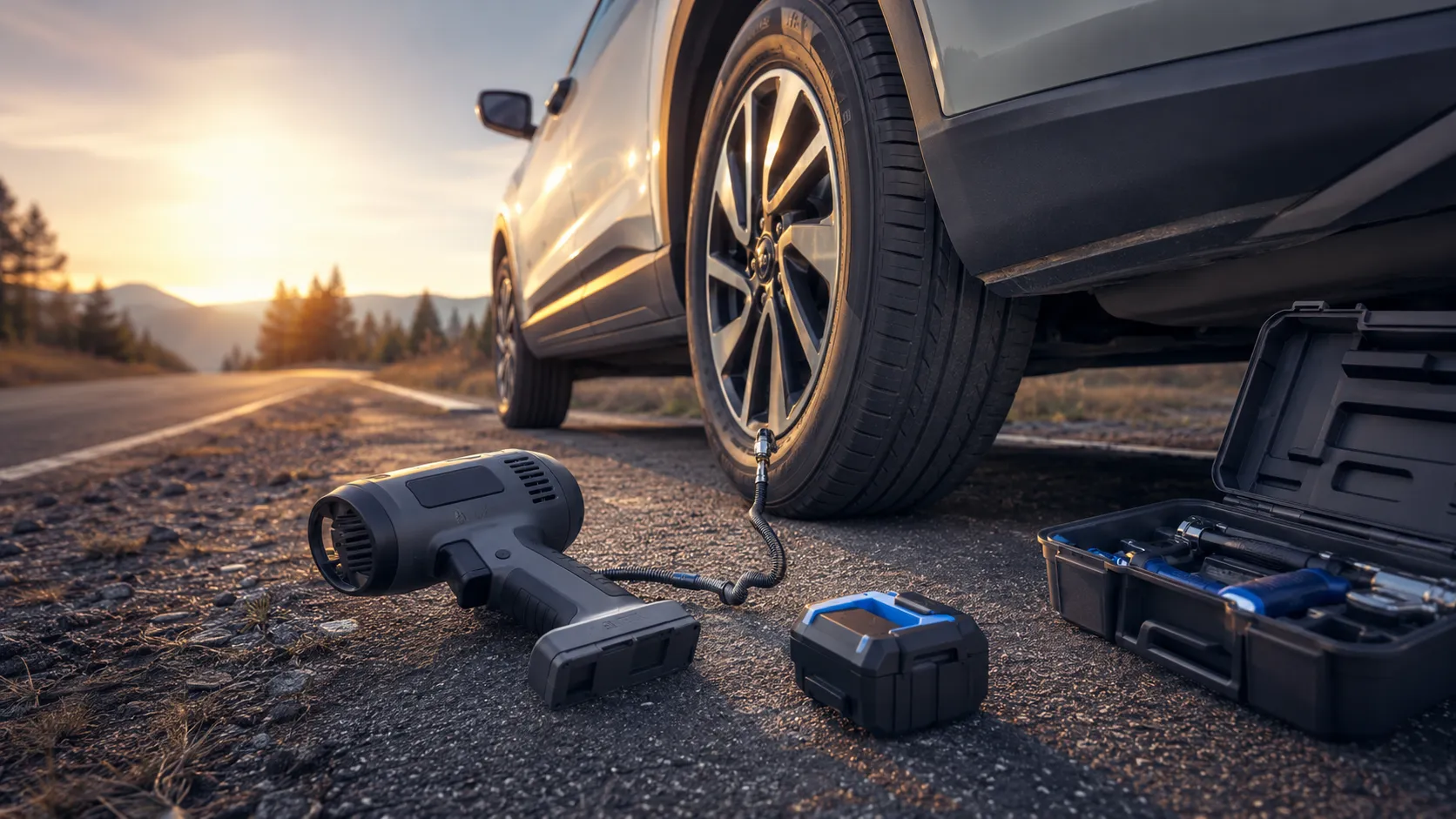
The motor needs much more power than the screen. This explains why an inflator may light up but fail to pump. A weak battery can also make the motor sound slow.
Charge the battery with the approved charger. Check the charge lights in the manual. If the pack is removable, make sure it locks in place. Keep the contacts clean and dry.
Battery age also matters. A worn pack may show a full charge but lose power under load. Do not open or rebuild a sealed pack. Ask the maker about a correct replacement.
Why Heat Makes the Motor Stop
Small inflators do hard work in a small case. The motor and pump create heat. This heat rises faster during long use or when a large tire needs much more air.
Each model has its own run time and cool-down limit. This is often called a duty cycle. Check the manual for the exact limit. Do not assume all inflators can run for the same length of time.
A blocked vent can make heat worse. Keep the tool off soft seats, carpet, and loose clothing while it runs. Brush dry dust from the outside of the vents after the unit cools.
How Settings Can Cause a Normal Stop
Many cordless inflators have a target pressure. The pump stops when its sensor reads that level. This helps prevent extra inflation, but it can also look like a fault.
Check whether the screen shows PSI, bar, or kPa. These units use different numbers. Then set the cold pressure shown on the vehicle label or in the owner’s manual. Do not use the maximum sidewall number as the normal target.
Some tools also have modes for tires, balls, and air beds. Pick the mode that matches the job. A high-volume mode may not make enough pressure for a car tire.
Use the vehicle maker’s cold-tire PSI. You can find it near the driver door or in the vehicle manual. The front and rear tires may need different pressure.
Why Air Leaks Make It Seem Broken
The motor can run well while no pressure builds. Air may be escaping at the chuck, hose, adapter, or tire valve. A punctured tire can also lose air while the pump runs.
Turn the inflator off. Check that the hose is straight and fully attached. Look for cuts, cracks, bubbles, loose ends, and worn seals. Fit the chuck straight onto the valve.
Do not keep running the pump if the tire will not hold air. An inflator adds air. It does not repair tire damage. A tire shop should check fast or repeat air loss.
A Safe Five-Step Recovery Check
Turn it off and inspect it
Disconnect the hose. Look at the case, battery, charger, and cable. Stop if any part is burned, cracked, swollen, or leaking.
Let the unit cool
Place it on a firm, dry surface. Keep its vents open. Wait for the full cool-down time in the manual.
Restore safe power
Use the approved charger. Refit a removable pack as directed. Do not force the battery or short its contacts.
Check the mode and air path
Confirm the pressure unit and target. Inspect the hose, chuck, adapter, and tire valve for damage or a poor seal.
Run one short test
Stay beside the inflator. Watch the screen and listen for leaks. Stop if the same fault returns or the unit gets very hot.
When a Reset May Help
A control can freeze after a low battery or an error. Some models have a reset process. The steps are not the same for every inflator.
Use only the reset process in the owner’s manual. Do not guess a button code. Do not short battery pins or open the case. A reset will not repair a bad battery, damaged hose, or worn motor.
When Repair or Replacement Makes Sense
Basic care may fix a low charge, wrong setting, loose battery, or poor hose seal. It will not fix a burned wire or failed pump.
Contact the maker or an approved shop if the tool keeps stopping after safe checks. Give them the model number and fault code. Explain when the stop occurs. Note any odd sound, smell, or heat.
Replacement may make more sense when the case is cracked, the hose cannot be changed, or the battery costs close to a new unit. Check the warranty before paying for repair.
Cordless Inflator Safety Rules
- Read the inflator, battery, charger, tire, and vehicle manuals.
- Work on firm ground away from traffic.
- Use the right battery and charger.
- Keep the tool, battery, and charger dry.
- Never short the battery pins.
- Do not open the battery or motor case.
- Keep air vents free from dust.
- Follow the run time and cool-down period.
- Do not leave the inflator running alone.
- Keep the hot hose away from bare skin.
- Get tire service for fast or repeat air loss.
Frequently Asked Questions
Why did my cordless inflator suddenly stop?
It may have reached the target PSI. The battery may be low, or the motor may be hot. Turn it off, let it cool, and check the charge and settings.
Why does the screen work but the pump does not?
The display needs less power than the motor. Charge the battery and refit it as directed. Get service if the pump still will not start.
Can overheating stop a cordless inflator?
Yes. Some inflators stop when the motor gets too hot. Follow the run time and cool-down limit in the manual. Keep the vents clear.
Why does my inflator stop before the tire is full?
The target may be wrong, the battery may be weak, or air may be leaking. Check the PSI setting, charge, hose, and valve seal.
Will a reset fix an inflator that keeps stopping?
A reset may clear a control error on some models. Use only the steps in the manual. It will not fix a damaged battery, hose, motor, or pump.
Can a damaged tire make the inflator seem faulty?
Yes. A puncture or bad valve can release air as fast as the pump adds it. Stop and have the tire checked if it will not hold pressure.
When should I stop troubleshooting the inflator?
Stop for smoke, sparks, leaks, swelling, a burning smell, melted parts, exposed wires, or severe heat. Ask the maker or an approved shop for help.
Conclusion: Why Cordless Inflators Stop Working
The main reasons why cordless inflators stop working are low power, excess heat, auto shutoff, wrong settings, and air leaks. Check these areas in a safe order. Keep each test short.
Stop if the fault returns after the basic checks. Do not open the battery or motor case. Ask the maker or an approved shop to repair internal parts. A tire that will not hold air needs tire service.
Check the battery, heat, target setting, hose, and tire valve first. A short, careful check can solve simple faults. Stop for smoke, sparks, damage, leaks, swelling, or severe heat.

1 thought on “Why Cordless Inflators Stop Working: 10 Common Causes”