
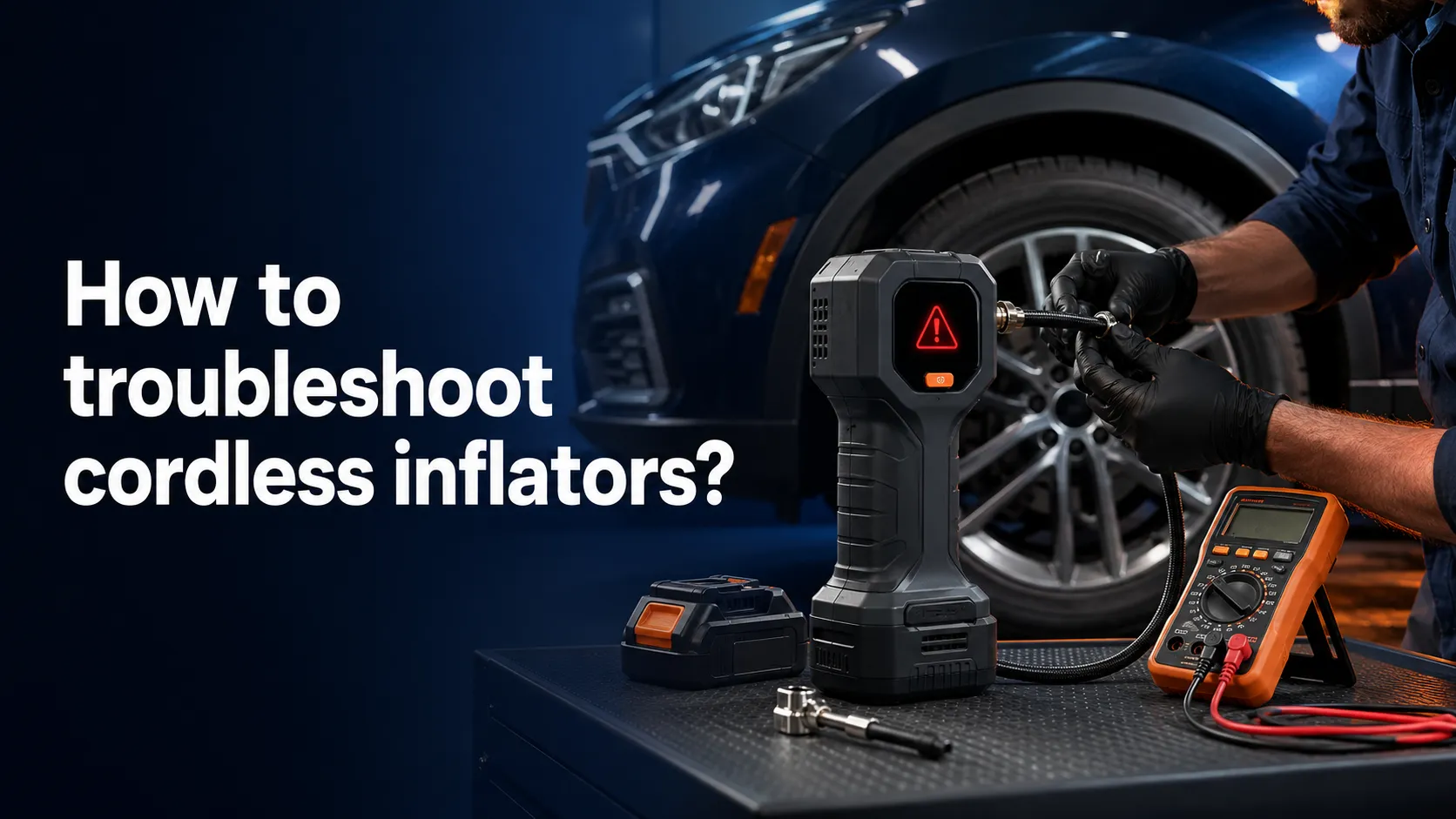
Learning how to troubleshoot cordless inflators can save time and stress. Start with the simple parts. Check the battery, settings, hose, and tire valve. These quick checks solve many common faults.
Stop if you see damage or smell something hot. Do not open the tool or its battery. Ask the maker or a trained repair shop for help with faults inside the unit.
Turn the inflator off and let it cool. Charge the battery and fit it again. Check the pressure unit, target setting, hose, and tire valve. Then run a short test. Stop if you see smoke, sparks, leaks, a swollen battery, or melted parts.
A weak battery is a common cause of failure.
A loose hose can stop pressure from rising.
The tool may stop when it reaches the set PSI.
Some units stop when the motor gets too hot.
How Cordless Inflator Troubleshooting Works
Work through one area at a time. First, check the power. Next, check the controls. Then inspect the path that carries air to the tire.
This order makes the cause easier to find. A loose hose can look like a weak pump. A low battery can look like a bad motor. The wrong target can make a good tool stop too soon.
What to Get Before You Start
- The manual for your inflator
- The right battery and charger
- A good tire pressure gauge
- A clean, dry cloth
- The right valve part or adapter
- A dry place with good light
- Your vehicle manual or tire label
Park on firm and level ground. Stay well away from traffic. Set the parking brake before you work.
Find the right cold tire pressure first. Look at the label near the driver door. You can also check the vehicle manual. Do not use the tire sidewall number as your normal target. NHTSA gives the same advice on its TireWise page.
How to Troubleshoot Cordless Inflators Step by Step
Turn the inflator off
Remove it from the tire and charger. Look at the case, hose, plug, and battery. Stop if you see cracks, loose wires, or melted parts.
Let the unit cool
Place it on a firm and dry surface. Keep the air vents clear. Wait for the full cool-down time in the manual.
Check the battery
Read the charge light or screen. Use only the right charger. Charge the pack as the manual tells you.
Fit the battery again
Remove the battery only if the manual allows it. Wipe dry dust from the contacts. Push the pack in until it locks.
Check the pressure setting
Make sure the screen shows PSI if your car label uses PSI. Set the cold pressure shown on the car label.
Choose the right mode
Some tools have modes for cars, bikes, or balls. Pick the mode made for your task. The wrong mode may stop the pump.
Inspect the hose
Look for cuts, cracks, flat spots, and loose ends. Remove any twist. Do not use a hose that leaks or has clear damage.
Fit the hose to the valve
Place the end straight on the tire valve. Lock or screw it in place. Do not force the threads.
Run a short test
Start the tool and stay near it. Watch the screen. Listen for air near the hose and valve.
Check with another gauge
Stop the pump and remove the hose. Use a good tire gauge. A large gap between the two readings may show a gauge fault.
Use only an approved reset
Some models have a reset process. Use it only when the manual gives the steps. Do not guess button codes or short the battery pins.
Get help if the fault stays
Write down the model, lights, sounds, and error code. Give this list to the maker or repair shop. It can speed up the next step.
Quick Cordless Inflator Diagnosis Table
| Problem | First check | When to stop |
|---|---|---|
| Will not start | Charge and refit the battery | The pack is hot, swollen, or leaking |
| Runs but adds no air | Check the hose and valve seal | The hose or case is split |
| Stops too soon | Check target, mode, heat, and charge | It gets too hot each time |
| Gauge looks wrong | Check PSI and use a second gauge | The large error comes back |
| Will not charge | Check the plug, cable, and port | You see heat, sparks, or melted parts |
| Air leaks at the valve | Fit the right adapter again | The valve or hose end is bent |
Common Problems and Easy Checks
Charge the battery. Let the tool cool. Then fit the battery once more.
Check the plug, cable, port, and wall outlet. Use the approved charger.
Check for a loose, blocked, or split hose. Make sure the right tip is in place.
Check the valve seal and the hose. A large tire may also need more time.
The battery may be low. The motor may also be hot. Let it cool before one short test.
Stop the pump and let the reading settle. Then use a second gauge.
Why the Motor Runs but Pressure Does Not Rise
Start at the tire valve. Air may leak around a loose hose end. The pump sound can hide this leak. Stop the motor so you can listen.
Next, check the full hose. Look for holes, cracks, and flat areas. Make sure no small part blocks the air path. Use the right adapter for the valve.
The tire may also have a leak. Air can leave as fast as the pump adds it. A bad valve can do the same thing. Get tire service if the tire will not hold air.
What to Do if the Inflator Gets Hot
Small air pumps make heat as they work. Some warmth is normal. High heat is not.
Turn the tool off if it shuts down or feels too hot. Remove it from the tire. Put it on a dry surface that will not burn. Keep all vents open.
Let it cool for the time shown in the manual. Do not pour water on it. Do not place it in a fridge or freezer. A fast change in heat can cause more harm.
What to Do if the Gauge Seems Wrong
First, check the unit on the screen. PSI, bar, and kPa do not use the same number. The wrong unit can cause a large error.
Next, stop the pump. Let the reading settle. Compare it with a good tire gauge. Try to check both readings when the tire is cold.
Do not trust the auto stop if the gap stays large. Ask the maker about service or a new unit. Do not adjust the sensor unless the manual gives a safe user process.
Use the cold tire pressure on the vehicle label. The front and rear tires may use a different PSI. Check the label before you add air.
Cordless Inflator Safety Rules
- Read the tool and vehicle manuals first.
- Work on firm ground away from traffic.
- Use the right battery and charger.
- Keep the tool and charger dry.
- Never short the battery pins.
- Do not open a sealed battery.
- Keep air vents free from dust.
- Follow the run time in the manual.
- Keep your face away from a damaged tire.
- Keep children and pets away.
- Get tire service if the tire will not hold air.
Frequently Asked Questions
Why will my cordless inflator not turn on?
The battery may be low, hot, or loose. Charge it and let the tool cool. Then fit the pack again. Get service if the tool stays off.
Why does the motor run but not fill the tire?
Check for a loose hose, bad seal, blocked hose, or tire leak. Stop if the hose, valve, or case has clear damage.
Why does my cordless inflator keep stopping?
It may have hit the set PSI. The battery may also be low, or the motor may be hot. Check the settings and follow the cool-down time.
How can I test the inflator gauge?
Stop the pump and let the reading settle. Check the tire with a good second gauge. Ask for service if a large gap stays.
Can I fix a cordless inflator myself?
Do only the user care steps in the manual. A trained shop should fix faults in the battery, wires, motor, sensor, or pump.
Why is my cordless inflator getting hot?
The motor and pump make heat. Follow the run time in the manual. Stop for high heat, smoke, damage, or a strong smell.
When should I replace my cordless inflator?
Replace or repair it after major damage, repeat heat faults, poor charging, or a bad gauge. A swollen or leaking battery is also unsafe.
Final Thoughts on How to Troubleshoot Cordless Inflators
Now you know how to troubleshoot cordless inflators in a safe order. Check the battery first. Then check the mode, target, hose, and tire valve. Run only a short test.
Stop if the fault comes back. Do not open the battery or pump case. Get help for faults inside the tool. A tire that loses air also needs a tire shop.
Start with power, settings, and air leaks. Keep each check short and safe. Stop for heat, smoke, sparks, damage, or a bad battery.