
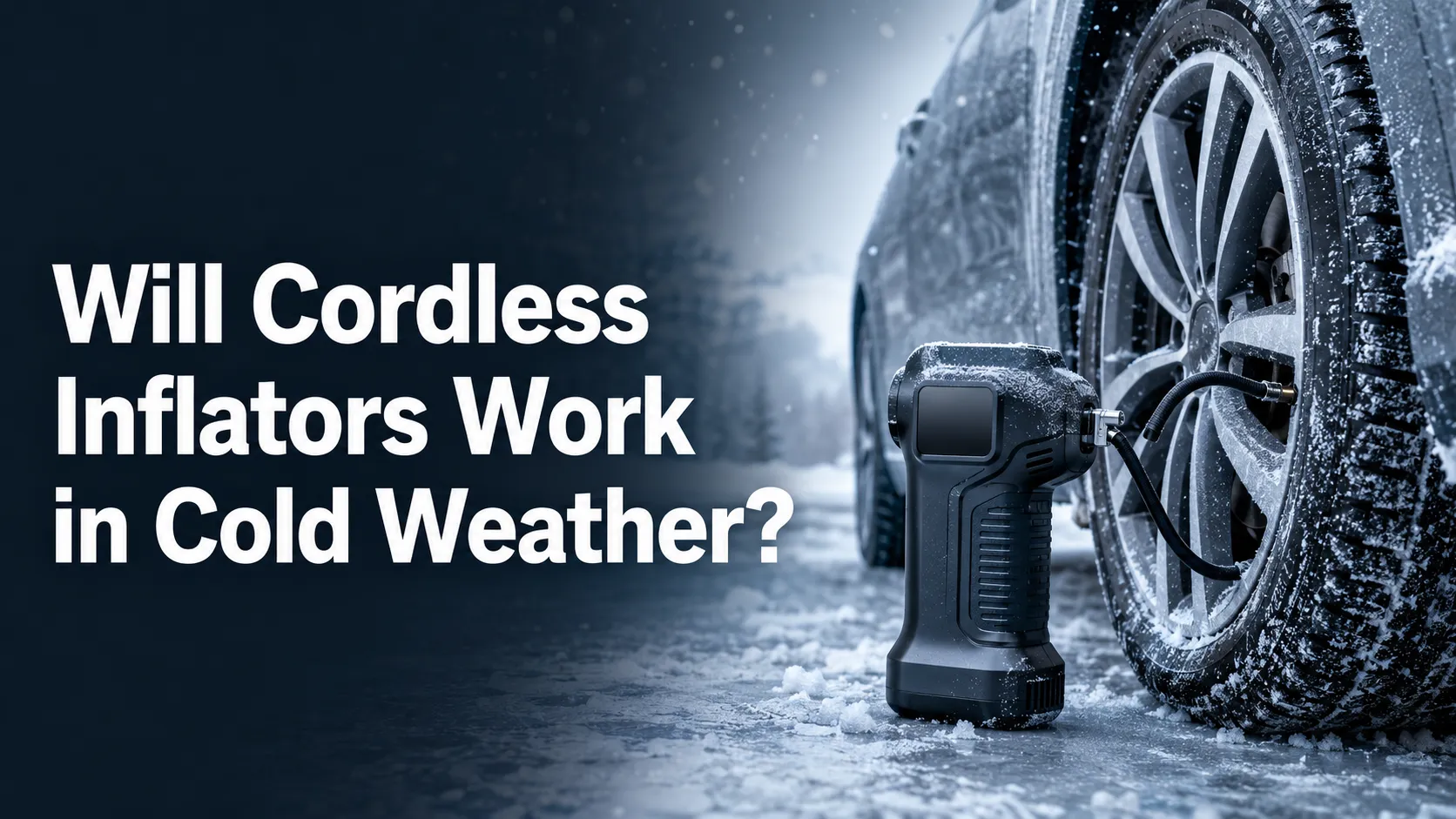
Will cordless inflators work in cold weather? In most cases, yes. A suitable inflator can still add air to a tire in winter. Yet cold can reduce battery output, slow the pump, stiffen the hose, and lower the pressure inside your tires.
The exact result depends on the model, battery temperature, state of charge, and outdoor conditions. Check the operating and charging limits in your manual before relying on the tool during a freeze.
Most cordless inflators can work in cold weather if their battery and tool remain within the maker’s approved temperature range. Start with a full, healthy battery. Keep the unit dry. If it is too cold to start, move it to a safe indoor space and let it warm on its own. Never heat the battery with a flame, heater, or heat gun.
A cold battery may deliver less power and runtime until it warms.
Colder outside air can lower the pressure shown by your tire gauge.
There is no single safe winter temperature for every cordless inflator.
A charged, dry, room-temperature battery is more dependable in winter.
Will Cordless Inflators Work in Cold Weather Reliably?
Many will work well enough for routine tire top-ups. The pump itself does not stop working only because the air is cold. The battery is often the first part to lose strength.
Cold slows the chemical activity inside a battery. That can lower its voltage under load. The inflator may run more slowly, show a low-battery warning, or shut off early. A weak or partly charged battery will often show these effects sooner.
Some tools also protect a battery that is outside its safe range. For example, the operator’s manual for one Milwaukee M18 inflator lists a model-specific operating range. It also notes that a temperature warning may appear if the battery is too cold. This does not set a rule for other brands or models. It shows why your own manual matters.
Do not judge winter use by one online temperature claim. The tool, battery, and charger may have different limits. Read all three sets of instructions.
How Cold Weather Affects the Inflator and Tire
Available power and runtime may fall. A cold pack may also trigger a protection system.
The pump may sound slower if the battery cannot supply its normal power.
Some materials become less flexible in deep cold. This can make the connector harder to seat.
A screen may respond more slowly. Snow or moisture can also make the controls hard to read.
The Battery May Feel Weaker
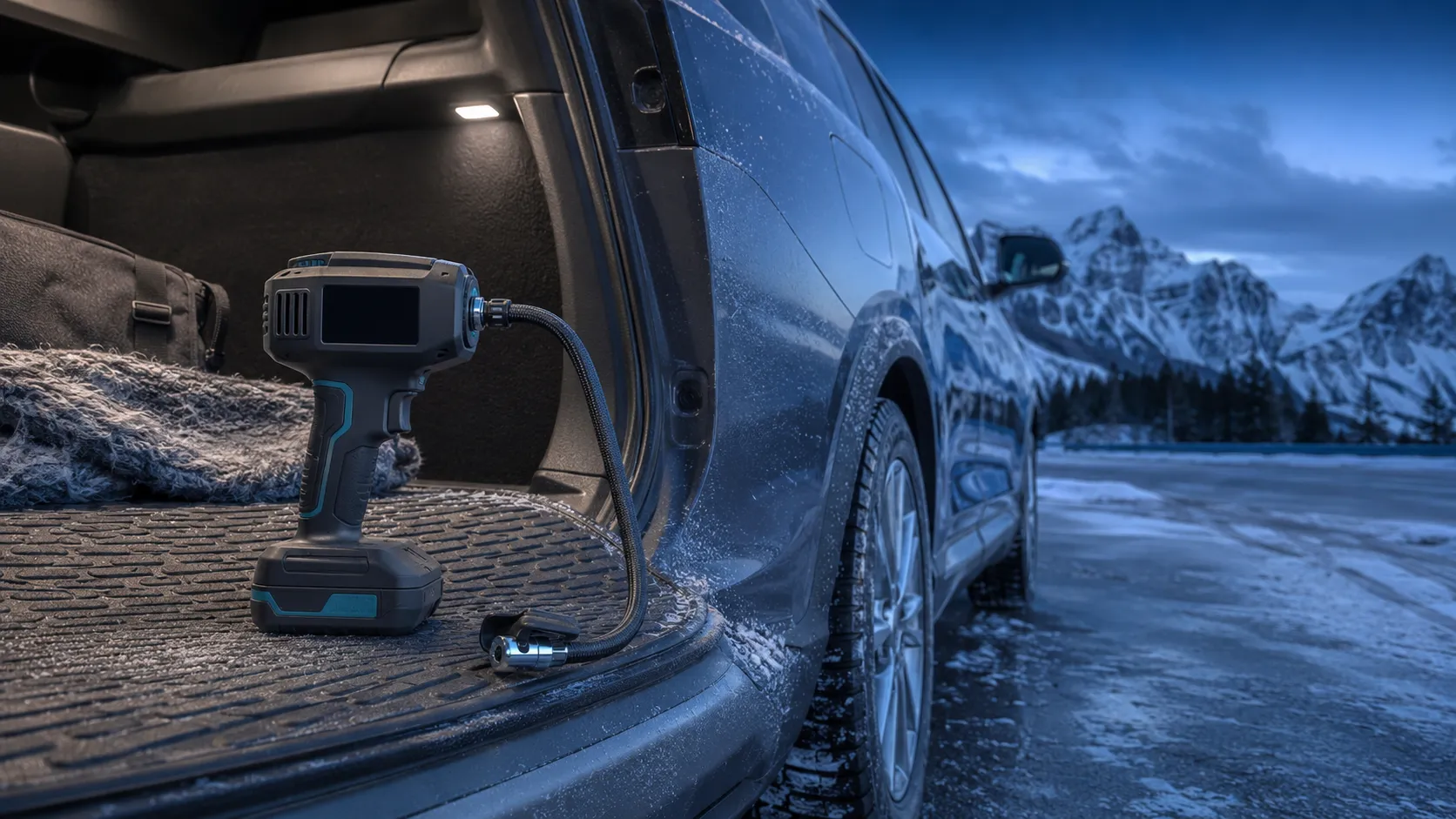
An inflator asks for steady power while its pump is under load. A cold battery may not supply that power as well as a warm one. The tool may still start, but it could take longer to reach the target pressure.
Battery age matters too. An older pack may have less useful capacity before winter begins. Cold weather can make that loss more obvious.
The Tire Needs More Attention
Cold weather can lower tire pressure. That means the inflator may have more work to do on a cold morning. It may need to top up several tires, not just one.
The NHTSA winter driving guide says to use the vehicle maker’s recommended pressure. You can find it on the driver-side door label or in the owner’s manual. Do not use the maximum pressure printed on the tire sidewall as the normal target.
Set pressure from the vehicle placard while the tires are cold. Front, rear, and spare tire targets may differ. Recheck with a reliable gauge after the pump stops.
Snow, Ice, and Moisture Add Risk
Cold air is not the only winter concern. Wet snow can enter vents or reach the battery contacts. Ice can also make the ground unsafe.
Place the inflator on a stable, dry surface. Keep the vents open. Do not run a tool that is wet unless its manual clearly allows that use.
Cold-Weather Performance at a Glance
| What You Notice | Possible Cold-Weather Cause | Safe First Action |
|---|---|---|
| Motor runs more slowly | Cold or low battery | Stop and check the charge and manual |
| Tool will not start | Battery protection or poor contact | Move indoors and let it warm naturally |
| Tool stops before target | Voltage drop, low charge, or overload | Stop, inspect, and try a charged battery |
| Hose is hard to connect | Stiff hose or icy valve area | Do not force it; clear ice with care |
| Pressure is lower in the morning | Colder tire and outside air | Use the vehicle’s cold pressure target |
| Display is slow or dim | Cold screen or weak battery | Confirm with a separate tire gauge |
These signs are not a repair diagnosis. A damaged battery, loose wire, worn pump, leaking hose, or bad tire can cause similar symptoms. Stop if the tool behaves in an unsafe way.
How to Use a Cordless Inflator in Winter
-
Read the Temperature Limits
Check the inflator, battery, and charger manuals. Follow the strictest limit that applies to the task.
-
Start With a Charged Battery
Charge the battery in a dry place and only within its approved charging range. Do not charge a damaged pack.
-
Inspect the Tire
Look for a bulge, deep cut, split sidewall, exposed cord, bent wheel, or damaged valve. Do not inflate a tire with clear structural damage.
-
Find the Correct Cold Pressure
Read the driver-side door placard or owner’s manual. Choose the value for that tire position and load.
-
Keep the Inflator Dry and Clear
Set it on a firm surface. Keep snow away from the battery, controls, hose, and air vents.
-
Connect Without Forcing the Hose
Seat the connector straight on the valve. Stop if the hose or fitting looks cracked, frozen, or damaged.
-
Stay With the Tool
Watch the display and listen to the motor. Follow the model’s duty cycle and stop for warning lights or odd sounds.
-
Verify and Store Safely
Check the final pressure after airflow stops. Wipe off moisture and let the unit dry before storage.
Keep a separate tire gauge and the inflator manual with your winter road kit. The gauge helps confirm the result. The manual gives you the correct warning lights, run time, and temperature limits.
Should You Warm the Battery Before Use?
If the pack is below its allowed range, move it to a safe indoor location. Let it reach a suitable temperature on its own. Keep it away from water and metal objects.
Do not place the battery on a radiator. Do not use a heat gun, hair dryer, open flame, or hot water. Fast or uneven heating can damage the pack and create a fire risk.
Also, do not start charging just because the pack is indoors. First check its temperature and the charger instructions. Battery makers set charging limits for a reason.
Do not use or charge a battery that is swollen, cracked, leaking, wet, or unusually hot. Stop for smoke, sparks, a sharp odor, or melted plastic. Move away and follow the maker’s emergency guidance.
Cold-Weather Benefits and Limits
Winter Benefits
- No wall outlet is needed during normal battery use.
- The tool is easy to carry to each tire.
- It can correct normal pressure loss after a cold snap.
- Many models offer a target-pressure shutoff.
Winter Limits
- Cold can reduce battery power and runtime.
- Several low tires can drain the pack faster.
- Snow and moisture can damage an unsuitable tool.
- A compact inflator cannot repair a tire leak.
A cordless inflator is useful winter gear, but it should not be your only plan. Keep the battery charged. Carry a gauge. Know how to reach roadside help if the tire is damaged or the tool will not run.
Why the Inflator May Stop in the Cold
A protection system may block use. Warm the pack naturally within the manual’s rules.
Cold can expose a weak charge. Try a fully charged and approved battery.
A stiff hose may not seal well. Turn off the tool and reseat it without force.
The pump may run but fail to gain pressure. Stop if the tire loses air fast.
Confirm PSI and the target value. Do not confuse PSI, bar, and kPa.
Repeated shutdown may need approved service. Do not open a sealed battery or tool.
Cold-weather trouble is less likely when the hose, connector, vents, and battery contacts are clean and dry. Check them before each winter trip. Compare the built-in gauge with a reliable gauge from time to time.
When to Stop and Get Help
Stop using the inflator if the battery or housing is damaged. The same applies to exposed wire, a cracked hose, smoke, sparks, a burning smell, severe vibration, or repeated shutdown.
Stop trying to add air if the tire has a bulge, split sidewall, exposed cord, damaged wheel, or fast leak. A tire that was driven while flat may have hidden damage. It needs a check by a qualified tire technician.
Move away from traffic when possible. Use hazard lights and roadside warning gear if safe to do so. Never put your body in a traffic lane to reach a tire.
An inflator only adds air. It does not seal a puncture, repair a valve, restore a damaged sidewall, or prove that a tire is safe to drive.
How to Store an Inflator for Winter
- Follow the maker’s storage temperature range.
- Keep the inflator and battery clean and dry.
- Protect the hose from sharp bends and heavy objects.
- Store the battery so metal cannot touch its terminals.
- Check the charge before a trip or severe weather alert.
- Keep the tire gauge, adapters, and manual together.
- Secure the case so it cannot slide inside the vehicle.
A vehicle cabin or trunk can become very cold. Whether you should leave the battery there depends on its stated storage range. If you bring it indoors, put it back in the vehicle before travel. A warm battery at home cannot help during a roadside emergency.
Frequently Asked Questions
Will a cordless inflator work below freezing?
It may, but the answer depends on the model and battery. Cold can reduce power and trigger a temperature warning. Check the operating range in the inflator and battery manuals.
Why does my tire inflator battery die faster in winter?
Cold slows battery chemistry and can reduce useful power under load. A low, old, or damaged battery may show a larger drop in runtime.
Can I charge an inflator battery when it is very cold?
Charge it only within the battery and charger limits. If it is too cold, let it warm naturally in a dry indoor place. Do not use direct heat.
Should I keep my cordless inflator inside the house?
Use the maker’s storage guidance. Indoor storage may protect the battery from deep cold, but remember to put the tool back in your vehicle before a trip.
Why does tire pressure fall during cold weather?
Pressure drops as the air inside the tire becomes colder. Check the tires cold and inflate them to the vehicle maker’s value on the door placard or in the manual.
Can snow damage a cordless inflator?
Snow can melt and expose the tool, vents, or battery contacts to moisture. Keep the unit dry and do not use it wet unless the manual clearly permits that use.
What should I do if the inflator will not start in the cold?
Stop and check the charge, battery seating, warning lights, and manual. If the battery is too cold, let it warm naturally. Seek approved service if the problem continues.
Related Guides
Conclusion: Will Cordless Inflators Work in Cold Weather?
Will cordless inflators work in cold weather? Most suitable models can handle normal winter tire top-ups. Cold may reduce battery power, slow the pump, stiffen the hose, and lower tire pressure. A full battery and dry setup can improve the result.
Always follow the temperature limits for your inflator, battery, and charger. Use the cold tire pressure on the vehicle placard. Stop for tool damage, unsafe battery signs, or tire damage. Get professional help when a tire will not hold air.
A cordless inflator can be useful winter gear, but preparation matters. Keep it charged, dry, and within its approved temperature range. Carry a separate gauge, verify the final pressure, and never treat added air as a repair for a damaged tire.

1 thought on “Will Cordless Inflators Work in Cold Weather? Guide”