
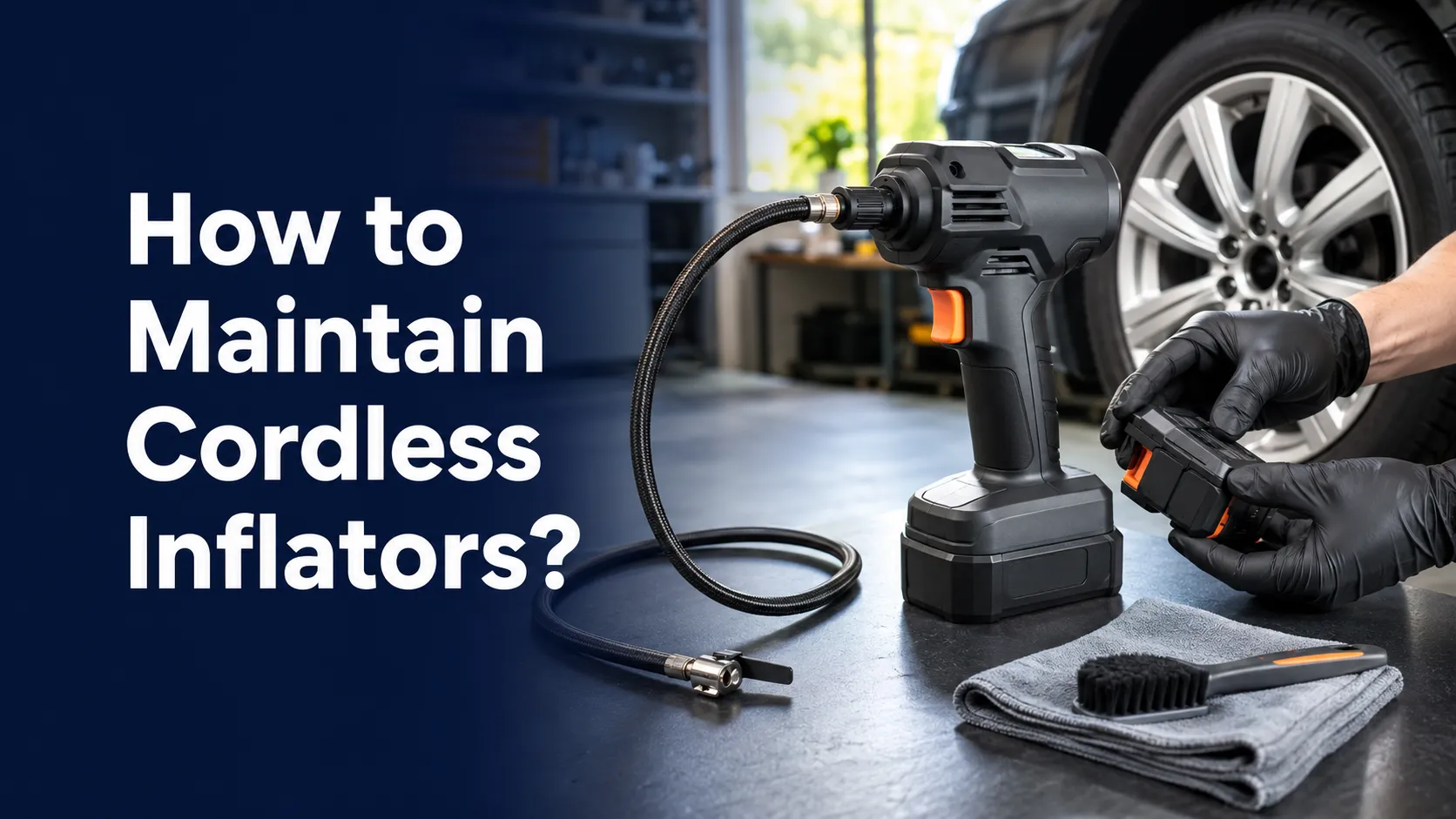
Learning how to maintain cordless inflators helps keep the battery charged, airflow steady, and pressure readings dependable. A short inspection after every use can also reveal hose, connector, vent, or battery problems before a roadside emergency.
This practical guide explains how everyday drivers can clean, inspect, test, charge, and safely store a cordless tire inflator.
Let the inflator cool after use, wipe away dirt, inspect its hose and tire chuck, check the battery and charger, perform a short test, and store everything in a cool, dry, protected location. Always follow the instructions supplied with your specific inflator and battery.
Remove dirt and moisture before returning the inflator to its case.
Check the hose, chuck, vents, battery case, contacts, and charger.
Confirm the controls, display, airflow, and automatic shutoff work.
Never use a leaking hose, swollen battery, or damaged charger.
Why Cordless Inflator Maintenance Matters
A cordless inflator may sit unused in a vehicle, garage, or emergency kit for several months. Heat, cold, dust, moisture, battery discharge, and pressure from surrounding cargo can affect its condition.
Routine maintenance cannot prevent every failure, but it can help you discover a weak battery, damaged hose, loose tire chuck, blocked vent, or inaccurate pressure reading before you need the inflator.
What You Need Before Maintenance
- The inflator, battery, and charger manuals
- A clean microfiber cloth
- A small, soft, dry brush
- A dependable separate tire-pressure gauge
- The manufacturer-approved battery charger
- A clean, dry, and well-ventilated work area
How to Maintain Cordless Inflators Step by Step
Turn off and disconnect the inflator
Switch the inflator off and disconnect it from the tire or inflatable item. Remove a detachable battery only when the manufacturer allows it. Never clean or inspect the unit while its motor is running.
Allow the unit to cool
The motor, air hose, and tire chuck can become hot during operation. Place the inflator on a stable surface and allow the cooling period stated in its manual. Do not place a hot unit inside a closed case.
Clean the outer housing
Wipe the housing with a clean microfiber cloth. Keep moisture away from switches, charging ports, battery contacts, vents, and the display. Never submerge the inflator or spray cleaner directly onto it.
Clear the ventilation openings
Check the vents for dust, lint, grass, or other debris. Use a soft, dry brush to remove surface dirt without pushing it farther into the housing. Never insert metal objects through a vent.
Inspect the air hose
Examine the hose for cracks, cuts, bubbles, flattened areas, loose fittings, and heat damage. Do not repair a damaged pressure hose using ordinary tape. Install an approved replacement when available.
Check the tire chuck and adapters
Inspect the tire chuck, locking lever, threads, and sealing surface. Remove visible dirt and make sure each adapter fits correctly without being forced. A worn seal can cause an air leak and slow inflation.
Examine the battery and charger
Look for cracks, swelling, corrosion, leaks, damaged cables, bent contacts, or melted plastic. Stop using a battery or charger that shows physical damage. Never modify the contacts or battery housing.
Recharge the battery correctly
Use only the approved charger and follow the indicator-light instructions in the manual. Charge the battery on a stable surface away from water, direct sunlight, fuel, flames, and combustible materials.
Perform a short operating test
Run the inflator briefly in a dry, ventilated location. Check its buttons, display, work light, airflow, pressure controls, and automatic shutoff. Stop immediately if you notice smoke, sparks, a burning odor, or unusual heat.
Store all components securely
Coil the hose loosely without sharp bends. Keep the adapters, battery, charging cable, and manual together. Use a protective case or secured vehicle compartment so heavy cargo cannot damage the inflator.
Cordless Inflator Maintenance Schedule
| When | Maintenance task | What to inspect |
|---|---|---|
| After every use | Cool, clean, and inspect | Housing, hose, chuck, vents, and moisture |
| Before a road trip | Recharge and test | Battery, controls, display, airflow, and accessories |
| During long storage | Follow the battery schedule | Charge level, corrosion, swelling, and temperature |
| After a drop or impact | Stop and inspect | Cracks, loose parts, leaks, and unusual sounds |
How to Care for the Battery
Protect the battery from water, impacts, direct sunlight, open flames, and temperatures outside the limits stated in its manual. Use only a charger approved for that particular battery system.
If you store a removable battery separately, keep its contacts away from keys, coins, tools, and other metal objects. Never open, crush, puncture, or modify a sealed battery pack.
How to Check Pressure Accuracy
Compare the inflator’s reading periodically with a separate, dependable tire-pressure gauge. Perform the comparison when the tire is cold and the tire chuck is connected securely.
Use the recommended cold-tire pressure printed on the driver-side Tire and Loading Information label or listed in the vehicle owner’s manual. Do not use the maximum pressure molded onto the tire sidewall as the vehicle’s normal target.
If the inflator continues to show a noticeably different reading after reconnecting and repeating the test, stop relying on its display until the manufacturer or a qualified service provider evaluates it.
Common Problems and Safe First Checks
Recharge it correctly and review the manufacturer’s long-term storage schedule.
Reconnect the chuck and inspect its seal, lever, threads, and the valve stem.
Turn it off, clear the vents, and observe the required cooling period.
Check a cold tire with a separate gauge and confirm the chuck is fully seated.
Charge the battery and check the hose for kinks, leaks, or damaged fittings.
You notice smoke, sparks, exposed wiring, battery leaks, or a burning odor.
Cordless Inflator Safety Rules
- Read the inflator, battery, charger, tire, and vehicle instructions.
- Use the vehicle manufacturer’s recommended cold-tire pressure.
- Follow the operating-time limit and required cooling period.
- Keep the ventilation openings clear while the motor is running.
- Do not operate or charge the unit in standing water or heavy rain.
- Keep the inflator away from fuel vapors, flames, and ignition sources.
- Never leave an operating inflator unattended.
- Do not bypass a fuse, sensor, or protective component.
- Keep children and pets away from the work area.
How to Store a Cordless Inflator
Store the inflator only after it is clean, dry, and completely cool. Coil the hose loosely, secure all adapters, and protect the charging cable from sharp edges.
Avoid placing heavy cargo on the unit. Use a protective case or secured compartment so the inflator cannot move during sudden braking.
Vehicle interiors may become extremely hot or cold. Compare your expected storage conditions with the limits stated in the inflator and battery manuals. Store the unit indoors when vehicle temperatures exceed those limits.
Frequently Asked Questions
How often should I maintain a cordless inflator?
Clean and inspect it after every use. Check the battery, hose, fittings, controls, and operation periodically and before long road trips.
Should I fully charge the inflator before storage?
Follow the battery manufacturer’s storage instructions because the recommended storage charge varies by battery type and model.
Can I leave a cordless inflator in my car?
You can keep it in a vehicle only when temperature and storage conditions stay within the limits in its manual. Protect it from moisture, sunlight, movement, and heavy cargo.
How should I clean a cordless tire inflator?
Turn it off, let it cool, and wipe the housing with a clean cloth. Use a soft, dry brush around the vents and keep moisture away from electrical parts.
How can I tell if the hose is damaged?
Look for cracks, cuts, bubbles, flattened sections, loose fittings, heat damage, and air leaks. Stop using the inflator if its pressure hose is damaged.
Why does my cordless inflator keep shutting off?
The battery may be low, the motor may require cooling, or the task may exceed its duty cycle. Stop and consult the manual if repeated shutdown continues.
When should I replace or repair the inflator?
Seek approved service or replacement for a damaged battery, cracked housing, exposed wiring, leaking hose, inaccurate gauge, smoke, sparks, burning odors, or unusual internal noises.
Final Thoughts
Learning how to maintain cordless inflators comes down to regular cleaning, careful inspections, correct battery charging, periodic operating tests, and protected storage.
Pay particular attention to the hose, chuck, vents, charger, and battery. Stop using the inflator if you notice a damaged battery, persistent air leak, exposed wiring, smoke, sparks, severe heat, or unusual internal noise.
Keep your cordless inflator clean, charged, tested, and stored within the manufacturer’s limits. Inspect it before road trips and professionally service or replace damaged pressure and electrical components.