
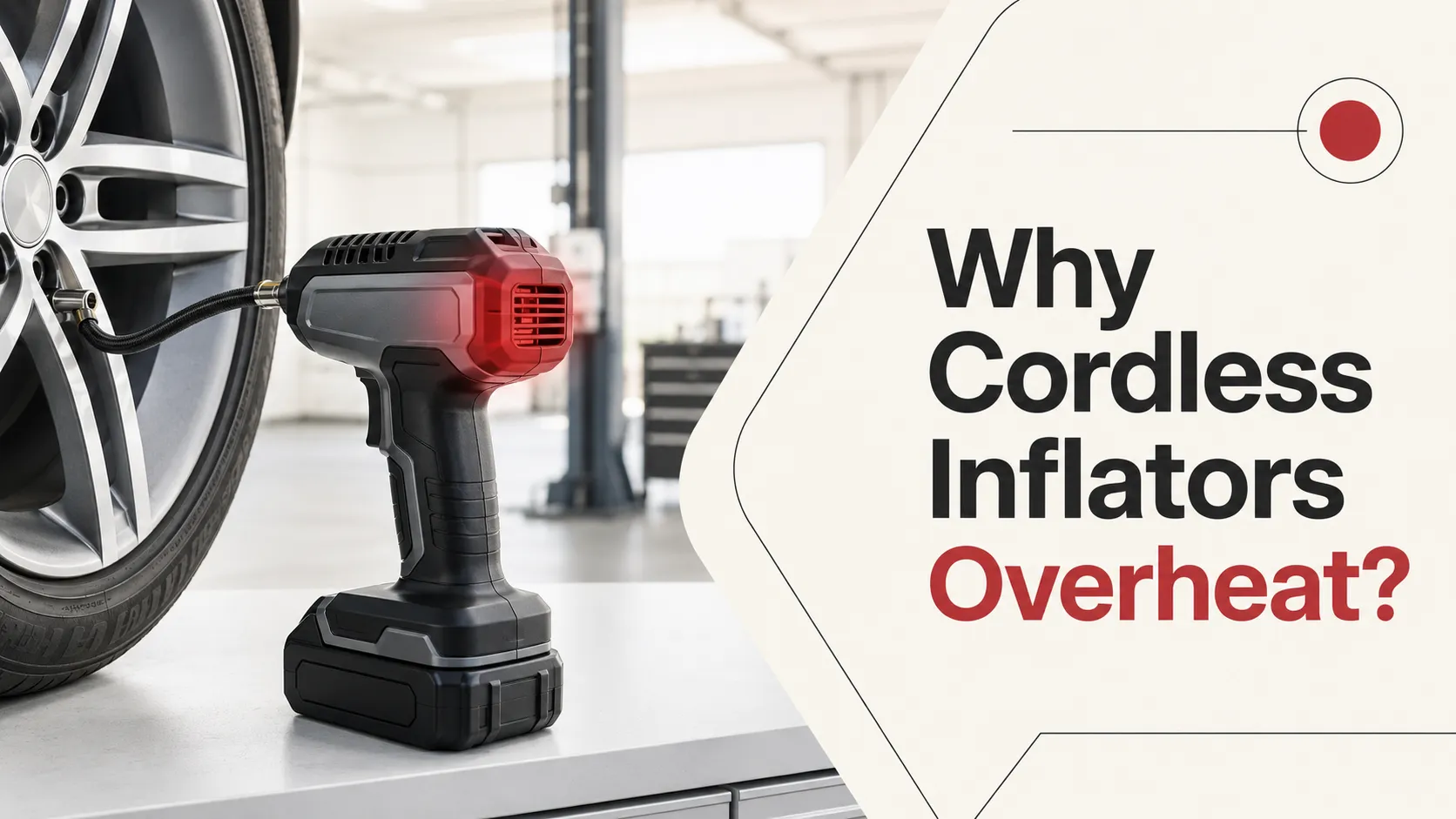
If you are asking why cordless inflators overheat, the main cause is often long or heavy use. The motor and pump create heat as they compress air. Poor airflow, a large tire, a weak battery, or an air leak can make the unit work even harder.
A warm pump or hose fitting can be normal. Severe heat is different. Turn the inflator off if it smells burned, smokes, sparks, melts, or becomes too hot to use safely.
Cordless inflators overheat when the motor, pump, or battery creates heat faster than the tool can release it. Common causes include running past the duty cycle, blocked vents, hot weather, large tires, low battery power, air leaks, and worn parts. Stop the tool, disconnect it, and let it cool in an open, dry place. Follow the exact run time in its manual.
The motor and pump warm up each time they compress and move air.
Each model has its own duty cycle and required cooling period.
Covered or dusty vents can trap heat inside the housing.
A hot, swollen, leaking, or damaged pack is a stop-use warning.
Why Cordless Inflators Overheat
A cordless inflator uses a battery to power a small motor. The motor drives a pump. That pump pulls in air, squeezes it, and sends it through the hose.
All of this work makes heat. The case is also small. It cannot cool like a large shop compressor. As a result, heat can build fast during a long fill.
Some warmth does not mean the tool is faulty. The pump head and hose fitting may feel warm after use. The manual should explain what is normal for your model.
8 Common Causes of Inflator Overheating
The inflator may be working past its duty cycle. Heat rises when the motor does not get the required rest.
Carpet, a seat, dust, or loose cargo can block airflow. The heat then stays inside the case.
A large tire holds more air. A nearly flat tire may also keep a small pump running for a long time.
Direct sun and a hot road give the tool less room to cool. A hot car can also heat the battery before use.
A weak pack may struggle under load. The motor may slow down, draw hard, or stop through heat protection.
A loose chuck, split hose, bad valve, or tire leak can make the pump run without reaching the target.
A kinked hose or blocked adapter may reduce flow. The motor can work harder while little air reaches the tire.
A worn bearing, pump seal, fan, motor, or wire can create added heat. These faults need approved service.
Normal Warmth vs. Dangerous Heat
The word “hot” can mean different things. A metal hose fitting may feel hot before the outer case does. A battery may also warm during heavy use.
Use the manual and warning lights as your main guide. Some inflators show a heat icon or shut down on their own. Do not bypass that protection.
| What you notice | What it may mean | What to do |
|---|---|---|
| Mild warmth after a short top-up | Normal motor and pump heat | Turn it off and let it cool before storage |
| Hot hose fitting | Heat moving from the pump | Avoid touching it and allow cooling |
| Heat warning or auto shutdown | Temperature protection has acted | Stop and wait for the manual’s full cooling time |
| Repeated fast overheating | Blocked airflow, overload, leak, or internal wear | Inspect the outside and seek service if it repeats |
| Burning smell or melted plastic | Possible electrical or mechanical fault | Stop using it and do not run another test |
| Swollen, leaking, smoking battery | Serious battery damage | Move away and follow the maker’s emergency advice |
What Is a Cordless Inflator Duty Cycle?
A duty cycle is the allowed work and rest pattern. It tells you how long the inflator may run before it needs to cool. This limit protects the motor and pump.
There is no safe universal number. For example, the official Milwaukee M18 inflator manual calls for a much different work and cooling pattern than the Milwaukee M12 inflator manual. Those model-specific limits should not be copied to another tool.
Find the exact rule in your manual. It may appear under duty cycle, continuous use, temperature protection, or cooling time. Stop sooner if the tool shows a warning.
Do not guess the run time from the inflator’s size or maximum PSI. A high pressure rating does not prove that the tool can run for a long time. Follow the exact instructions for your model.
Why Tire Size Changes Heat Buildup
A pressure number does not tell the whole story. Tire volume also matters. A large SUV or pickup tire needs more air than a small car tire.
A compact inflator may reach the needed pressure. Yet it may take much longer to fill a large tire. That longer run can create more heat.
A nearly flat tire can be hard on the pump as well. First inspect the tire. Look for a cut, bulge, exposed cord, damaged valve, or broken wheel. Do not inflate a tire that looks unsafe.
If a tire loses air while the pump runs, the inflator may never reach its target. The motor then keeps working. Stop and check for a leak instead of running the tool longer.
How Blocked Airflow Causes Overheating
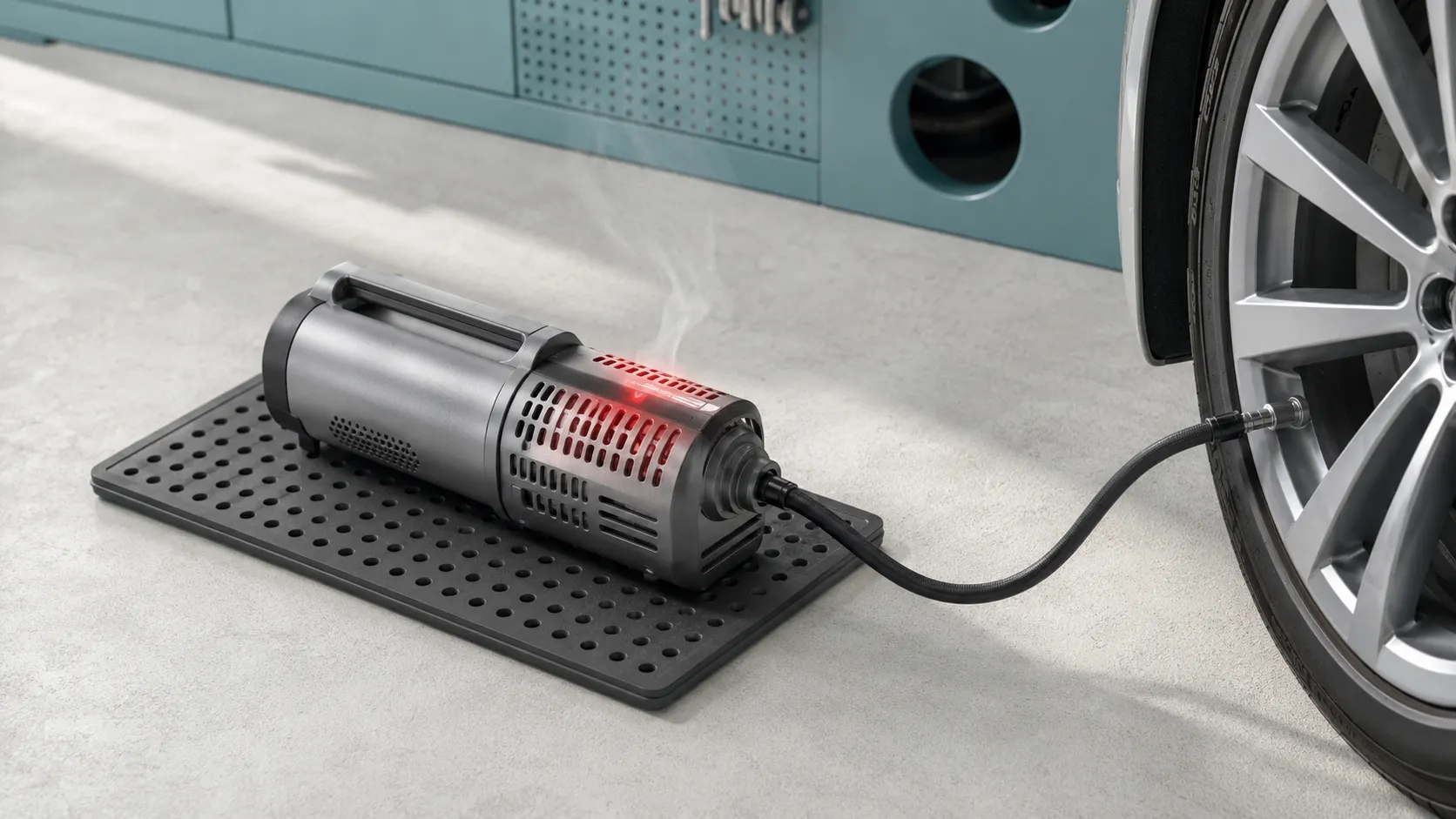
Many inflators cool through slots in the case. A fan may pull fresh air across the motor and pump. Those openings must stay clear.
Do not run the unit on deep carpet, a soft seat, a blanket, or loose clothing. These surfaces can cover a vent. They can also hold heat around the case.
Set the inflator on firm, dry ground. Keep it out of direct sun when possible. Leave open space around each vent.
After the unit cools, remove loose dust with a soft, dry brush. Do not push dirt into the vent. Do not use water, oil, or cleaner near the opening unless the manual allows it.
How the Battery Can Add Heat
The battery sends high current to the motor. Heavy use can warm the pack. A battery that was stored in a hot car may already be too warm before the tool starts.
Some battery systems limit power when the pack is hot. The inflator may slow down or stop. Treat that action as protection, not as a reason to keep restarting it.
Use only the battery and charger approved for the model. Keep the contacts clean and dry. Never bridge the contacts with metal.
The OSHA lithium-battery safety bulletin explains that damage and wrong charging can raise the risk of overheating or fire. The maker’s charging and care steps are important for each device.
How to Cool an Overheated Inflator Safely
Stop the motor
Turn the inflator off. Do not keep running it to reach the last few PSI. A heat warning needs a full stop.
Disconnect it carefully
Remove the hose from the tire if this is safe. Avoid the pump end and metal fitting because they may be hot.
Place it in an open area
Use a firm, dry, stable surface. Keep the vents open. Move it away from fuel, paper, cloth, and other things that can burn.
Wait for the full cooling time
Follow the manual. Do not judge only by the outer case. Parts inside may still be hot.
Inspect before one short test
Check the vents, hose, chuck, battery, and case. Run one short test only if there are no danger signs. Stop if heat returns fast.
How to Prevent Cordless Inflator Overheating
- Read the inflator, battery, charger, tire, and vehicle manuals.
- Follow the stated work time and cooling period.
- Start with a charged battery that is not hot or damaged.
- Place the tool on a firm surface with open vents.
- Keep the unit out of direct sun when possible.
- Make sure the hose is not bent, crushed, or blocked.
- Attach the chuck straight to reduce air loss.
- Stop if the tire will not hold pressure.
- Use a model suited to the tire size and task.
- Let the unit cool before putting it in a case.
- Clean loose dust from the outer vents after use.
- Test the inflator before a long road trip.
Overheating Problems and Safe First Checks
| Problem | Likely cause | Safe first check |
|---|---|---|
| Gets hot after a few minutes | Short duty cycle, blocked vent, or heavy tire load | Stop, cool, clear the outside, and read the manual |
| Stops and shows a heat icon | Temperature protection | Leave it off for the full stated cooling time |
| Runs hot but tire pressure barely rises | Loose chuck, hose leak, tire leak, or blocked air path | Turn it off and inspect the full air path |
| Battery heats more than the pump | Hot storage, weak pack, wrong pack, or battery fault | Stop use and follow the battery manual |
| Overheats on every short test | Fan, motor, bearing, pump, wire, or control fault | Do not keep testing; arrange approved service |
When the Inflator Needs Service
One hot run may come from long use or blocked airflow. Fast heat on every short test points to a deeper fault. A fan may not turn. A bearing may drag. A pump seal or motor may be worn.
Do not open the housing unless the maker clearly allows user service. Hidden springs, hot parts, wiring, and battery power can create risk.
Contact the maker or an approved repair center. Give them the model number. Describe the tire size, run time, warning light, sound, smell, and part that became hot.
Check the warranty before paying for repair. Replacement may be safer when the case, wiring, battery, or sealed pump is damaged.
Frequently Asked Questions
Is it normal for a cordless inflator to get hot?
Some warmth is normal because the motor and pump compress air. Stop if the heat is severe or you notice smoke, sparks, melting, swelling, or a burning smell.
Why does my cordless inflator overheat so quickly?
Its vents may be blocked, the tire may need a lot of air, or the hose may leak. A weak battery or worn internal part can also create fast heat.
How long should I let an inflator cool?
Use the cooling time in the inflator manual. Times vary widely by model. Wait longer if the manual or a heat warning tells you to do so.
Can I cool a hot inflator with water?
No. Water can enter the tool and damage electrical parts. Turn it off and place it on a firm, dry surface with the vents open.
Can a low battery make an inflator overheat?
A weak or worn battery may struggle under load and add heat. Stop if the pack is very hot, swollen, leaking, damaged, or giving off an odd smell.
Can a tire leak cause inflator overheating?
Yes. A leak can keep the pump running because the tire never reaches its target. Stop and have the tire checked if it cannot hold pressure.
When should I replace an overheating inflator?
Consider replacement when approved service is not practical or the battery, case, wiring, motor, or sealed pump is damaged. Check the warranty first.
Conclusion: Why Cordless Inflators Overheat
The main reasons why cordless inflators overheat are long run times, blocked vents, heavy tire loads, hot weather, low battery power, air leaks, and internal wear. Some pump heat is normal. Severe or repeated heat is not.
Follow the exact duty cycle in your manual. Keep the vents open and the hose sealed. Let the unit cool before storage. Stop for smoke, sparks, swelling, leaking, melting, a burning smell, or fast heat that returns after a short test.
Do not solve overheating by forcing the inflator to keep running. Stop, cool, inspect, and follow the manual. If the heat returns fast or any danger sign appears, use maker-approved service or replace the damaged unit.