
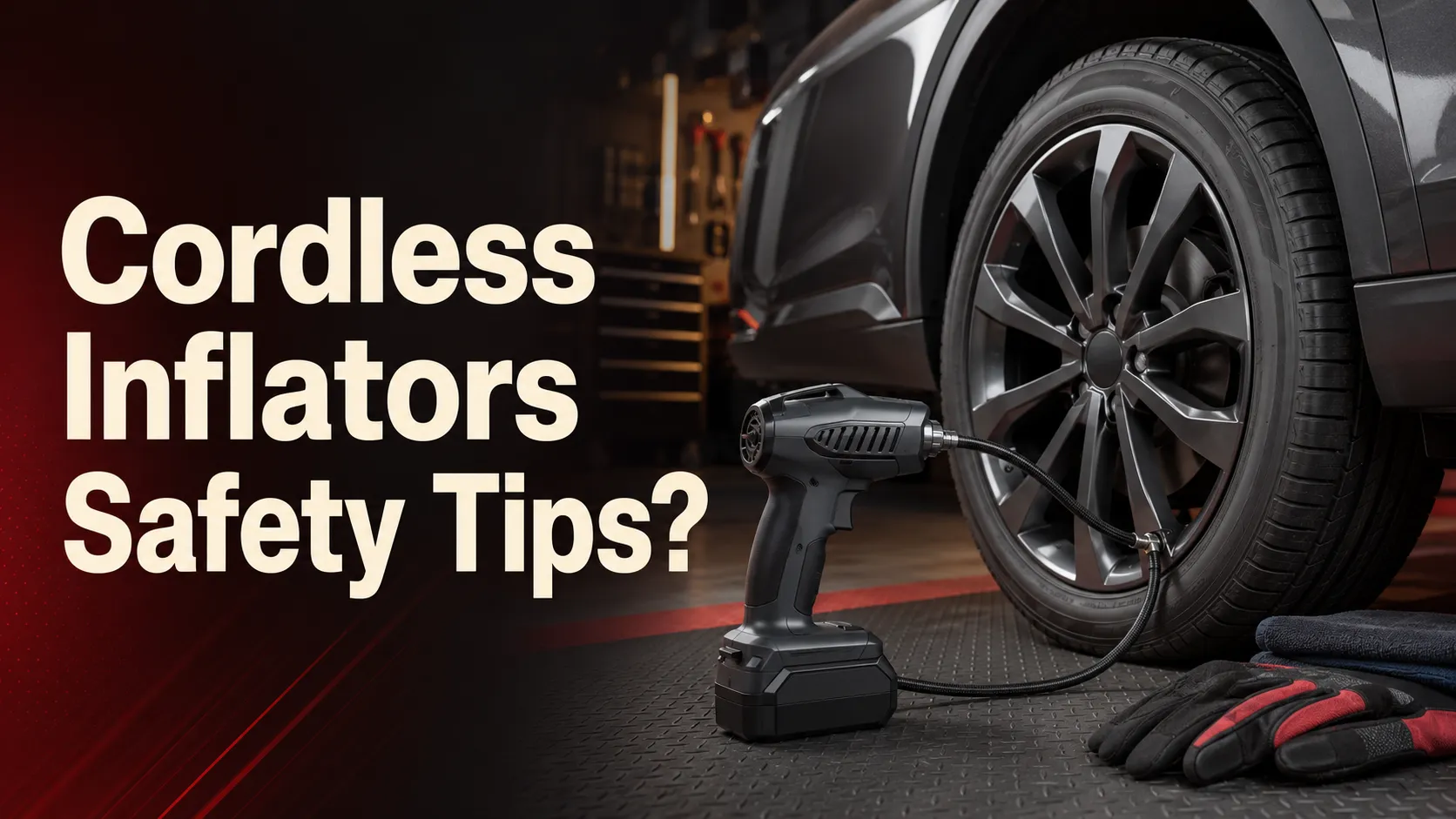
These cordless inflators safety tips can help you add air with less risk. First, check the tire and work area. Find the correct cold pressure. Then stay with the tool while it runs.
A cordless inflator is useful for normal top-ups. It cannot repair a puncture or make a damaged tire safe. Stop if the tire, battery, hose, or tool shows a clear warning sign.
Park on firm ground away from traffic. Read the vehicle placard for the correct cold tire pressure. Check the tire and valve before adding air. Fit the hose straight. Select the right unit. Watch the pump as it runs. Follow its duty cycle. Check the final pressure with a reliable gauge. Do not use a damaged battery. Do not inflate a tire with a bulge, exposed cord, split sidewall, or bent wheel.
Use the cold pressure on the driver-side placard or in the owner’s manual.
Watch the tire, hose, display, sound, and heat while the pump runs.
Each model has its own duty cycle and required cooling period.
A tire that loses air again needs a check by a trained tire shop.
Cordless Inflators Safety Tips Every Driver Should Follow
Safe use starts before you press the power button. The pump must suit the tire and task. Its battery must be in good condition. The hose and fitting must also be free from damage.
Your car matters too. Cars, SUVs, trucks, spare tires, bikes, and sports gear can need a range of pressures and tips. Never assume one saved setting is right for all of them.
The NHTSA TireWise guide says to check pressure when tires are cold. Use the vehicle’s Tire and Loading label or owner’s manual. The maximum number on the sidewall is not the normal target for your vehicle.
Cold means the tire has not built up heat from a trip. NHTSA calls a tire cold when the vehicle has not been driven for at least three hours. Check the owner’s manual if you must add air after a trip.
What to Check Before You Start
Choose firm, flat ground. Stay far from traffic, flames, fuel fumes, and standing water.
Look for a bulge, deep cut, exposed cord, split sidewall, bent wheel, or damaged valve stem.
Check the case, vents, screen, hose, fitting, and switch. Do not use cracked or loose parts.
Make sure the battery fits the tool. It must be charged, dry, locked in place, and free from damage.
Remove loose items from the work area. Keep children and pets away. Tie back long hair and avoid loose clothing near the tool. Use eye protection if the inflator manual calls for it.
Do not start if you feel rushed. Stop if you must stand in a traffic lane to reach the valve. The road may pose more risk than the low tire. Move the car to a safer place when you can. Call for road help when no safe setup is near.
- Cordless inflator with the correct battery
- A good spare tire pressure gauge
- Car owner’s manual or saved pressure notes
- Reflective vest and roadside warning gear
- Flashlight for low-light checks
- Work gloves for handling dirty parts
- Tool manual and the right valve tips
How to Use a Cordless Inflator Safely
-
Park in a Safe Place
Stop on firm, flat ground away from traffic. Set the parking brake. Use hazard lights and road gear when needed and safe.
-
Find the Correct Pressure
Read the driver-side door label or owner’s manual. Note the value for that tire. Front and rear targets may differ.
-
Inspect the Tire First
Check the tread, sidewall, wheel, and valve. Do not inflate a tire with visible damage. The same rule applies if it was driven while flat.
-
Inspect the Tool and Battery
Look for cracks, exposed wire, a damaged hose, blocked vents, leaks, or a swollen battery. Stop if any part looks unsafe.
-
Attach the Connector Straight
Remove the valve cap and seat the fitting firmly. Do not force a poor fit. A steady hiss often means the seal is loose.
-
Select the Right Unit and Target
Check PSI, kPa, or bar before you type the number. A unit mix-up can lead to a very wrong setting.
-
Keep Vents Clear
Place the tool on a stable, dry surface. Do not cover it or set it in loose dirt, tall grass, snow, or a puddle.
-
Stay Beside the Tool
Watch the pressure, tire shape, hose, sound, and heat. Do not leave the pump to run while you sit in the car or walk away.
-
Follow the Duty Cycle
Stop at the run-time limit in the manual. Let the tool cool for the full set time. Do not guess.
-
Verify the Final Pressure
Let the air flow stop. Check the reading with the built-in gauge or a spare gauge. Put the valve cap back on.
Try the tool at home in full light before you need it on the road. Learn how the fitting locks. Learn how to change pressure units and use auto-stop. Keep your vehicle’s correct pressure where you can find it fast.
Use the Correct Tire Pressure
The correct pressure supports the tire’s load and the vehicle’s design. Too little air can add heat and tire flex. Too much air can change how the vehicle feels and leave less room below the tire’s limit.
Use the value set by the car maker. It is often on the driver-side door edge or doorjamb. It may also be in the owner’s manual. Check the spare on its own. Its target may differ.
Do not use the sidewall’s maximum pressure as the daily target. Use the vehicle placard or manual. Check the chosen unit before you start. Check the result when the pump stops.
Auto-stop can help, but do not walk away. A poor seal, wrong unit, inaccurate gauge, or wrong preset can still cause trouble. Stay by the tire until the pump stops.
Safety Before, During, and After Inflation
| Stage | Safe Action | Avoid |
|---|---|---|
| Before use | Read manuals and check the tire, hose, tool, and battery | Starting when you can see damage |
| Pressure setup | Use the cold pressure on the vehicle placard | Using the sidewall maximum as the target |
| Connection | Fit the hose tip straight and firmly | Forcing the fitting or bending the valve |
| Inflation | Stay with the tool and keep vents clear | Walking away or covering the pump |
| Heat control | Follow the model’s duty cycle and cooling time | Running until thermal shutdown |
| Final check | Check pressure after air flow stops | Driving away without checking |
| Storage | Let the tool cool, then store it dry and secure | Putting a hot or wet tool in a closed case |
Prevent Heat and Battery Problems
Small pumps make heat as they press air into a tire. The hose tip and nearby parts can also get hot. Some warmth may be normal. High heat, smoke, melted plastic, a burnt smell, or more than one shutdown is not normal.
Tool makers set their own duty cycles. The Milwaukee M12 inflator manual, for example, has rules and limits for that one model. Those limits do not set a rule for all pumps. Use the manual for your exact tool.
Use only a battery and charger made for the tool. Keep the battery contacts dry and clean. Do not let coins, keys, tools, or other metal items touch exposed terminals in storage.
Do not use or charge a battery that is swollen, cracked, leaking, wet, crushed, or very hot. Stop for smoke, sparks, a sharp smell, or melted plastic. Move away and follow the maker’s fire and disposal rules. Do not put a damaged lithium-ion battery in household trash.
Never cool a hot battery with water or ice. Never heat a cold battery with a flame, space heater, heat gun, or hot water. Let it reach a safe range on its own in a dry place.
When You Should Not Inflate the Tire
A bulge can point to internal damage. Do not add air or drive on it. Call a tire shop.
The tire may be unsafe. Keep away from the sidewall and call for help.
A bent wheel or broken valve may not hold air. Do not force the hose tip.
If air leaves as fast as it enters, stop. Repeated top-ups do not repair the leak.
There may be hidden damage inside the tire. A trained tire shop should check it.
Do not stand in a traffic lane or on loose ground. Move to a safe spot or call for road help.
A cordless inflator only moves air. It cannot seal a puncture, repair a sidewall, straighten a wheel, or fix a damaged valve. A tire can reach the target pressure and still be unsafe.
Stop if the tire changes shape, the sidewall grows a bulge, or the wheel looks bent as you add air. Step away from the sidewall. Call a tire shop or roadside service.
Common Safety Mistakes to Avoid
Safer Habits
- Check the vehicle placard before you set pressure.
- Inspect the tire before connecting the hose.
- Keep vents open and stay with the tool.
- Check the final reading with a gauge.
- Let the unit cool before storage.
Risky Mistakes
- Using the sidewall maximum as the target.
- Forcing a hose tip onto the valve stem.
- Ignoring the duty cycle or heat warnings.
- Using a swollen or damaged battery.
- Repeatedly filling a tire with a fast leak.
It is also easy to mix up PSI, kPa, and bar. The same number does not mean the same force in each unit. Check the screen each time you change a preset or use the tool on a new item.
Do not hold the pump in your hand unless its manual says you can. A firm base gives you more control. It also keeps your hand away from hot parts. Keep the hose away from sharp edges, hot exhaust parts, fans, belts, and other parts that move.
Safe Storage and Routine Checks
Let the tool cool after use. Wipe off loose dirt and water. Remove the battery first if the manual says to do so. Do not wash the inflator or spray cleaner into its vents.
Store the hose without a sharp bend. Keep dirt out of the fitting. Place the unit where heavy cargo cannot crush it. Strap down the case so it does not slide through the car in a hard stop.
Before a long trip, check the battery charge, hose, fitting, controls, screen, valve tips, and case. From time to time, compare the built-in gauge with a reliable gauge. Seek approved service if the gap is not safe.
Keep the pump within its set range for storage heat and cold. A parked car can get very hot or cold. Read the pack manual before you leave it in the car for a long time.
If the switch, gauge, auto-stop, hose, battery latch, or charger does not work well, stop using the tool. Remove the battery if it is safe. Use an approved shop for service. Do not open a sealed battery pack.
Frequently Asked Questions
What pressure should I set on a cordless tire inflator?
Use the cold pressure on the vehicle’s driver-side tire placard or in the owner’s manual. Do not use the sidewall maximum as the normal target.
Can I leave a cordless inflator running by itself?
No. Stay with the tool. Watch the tire, hose, screen, sound, and heat. Auto-stop can help, but you still need to be there.
How long can a cordless inflator run continuously?
There is no set run time for all pumps. Follow the duty cycle and cool-down time in your tool’s manual. Stop sooner for high heat or odd behavior.
Is it safe to inflate a completely flat tire?
Check it first. A tire driven flat may have hidden damage. Do not inflate it if you see a bulge, split sidewall, exposed cord, bent wheel, or fast leak.
What should I do if the inflator gets very hot?
Turn it off. Remove the pack if the manual says it is safe. Let the tool cool on a firm base. Stop for smoke, a sharp smell, melting, or more shutdowns.
Can I use a cordless inflator in rain or snow?
Use it only where the manual allows. Keep the tool, battery, contacts, and vents dry. Do not run a wet or damaged inflator.
Should I verify pressure after automatic shutoff?
Yes. Let the air flow stop, then check the pressure again. A spare tire gauge can help check the built-in reading.
Related Guides
Conclusion: Cordless Inflators Safety Tips
These cordless inflators safety tips make tire top-ups easier to manage. Park in a safe place. Check the tire and tool. Use the pressure on the vehicle placard. Stay by the pump. Follow its duty cycle and check the final reading.
Stop for tire damage, a fast leak, high heat, smoke, odd smells, exposed wire, or a swollen battery. Follow the tool, battery, tire, and vehicle manuals. Ask a tire shop or approved tool shop for help when the task is more than a normal top-up.
A cordless inflator is a pressure tool, not a tire repair. Use the correct cold pressure. Watch each fill. Follow the duty cycle. Stop when the tire or tool shows damage. Good judgment matters more than a number on the screen.