
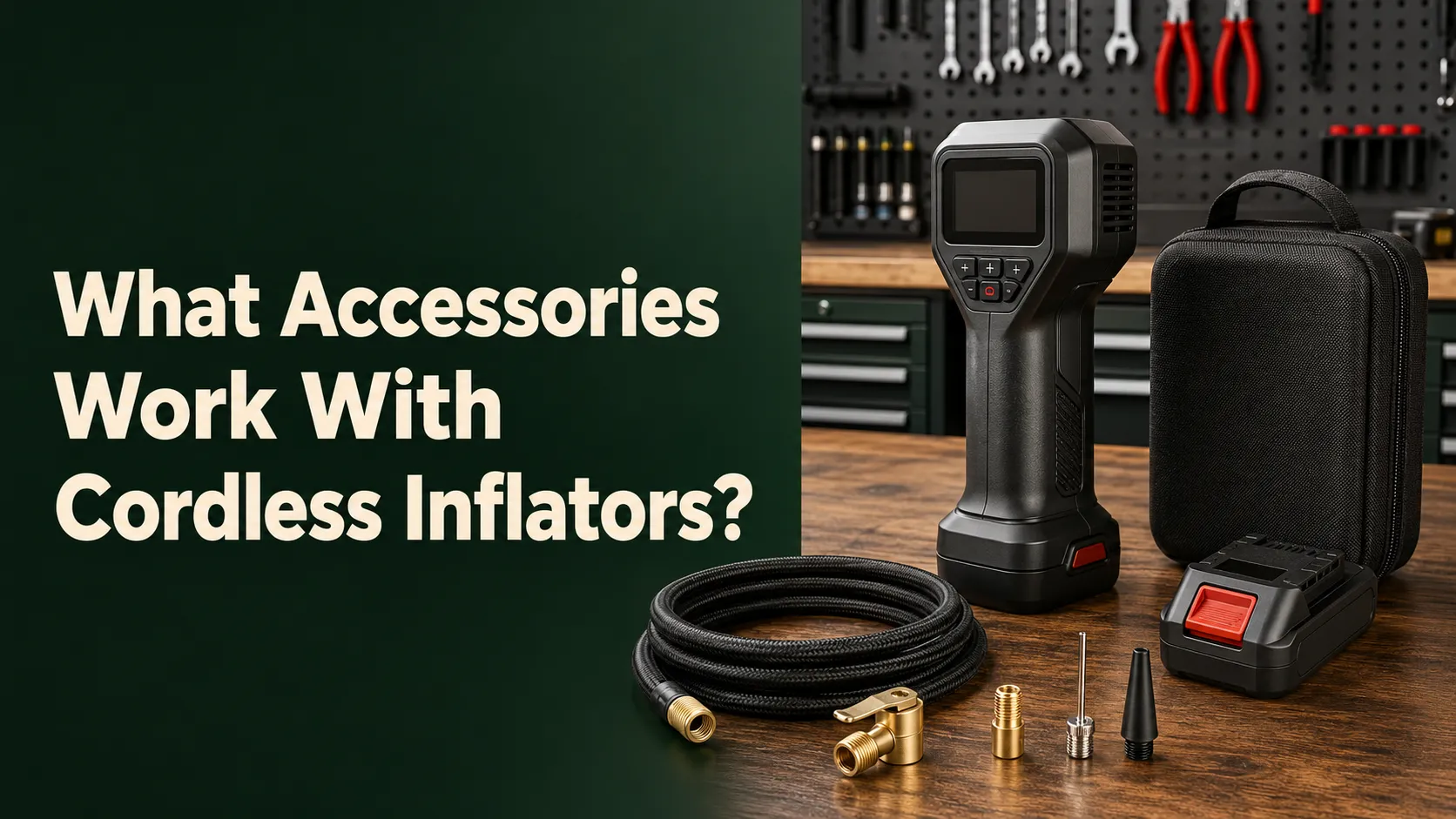
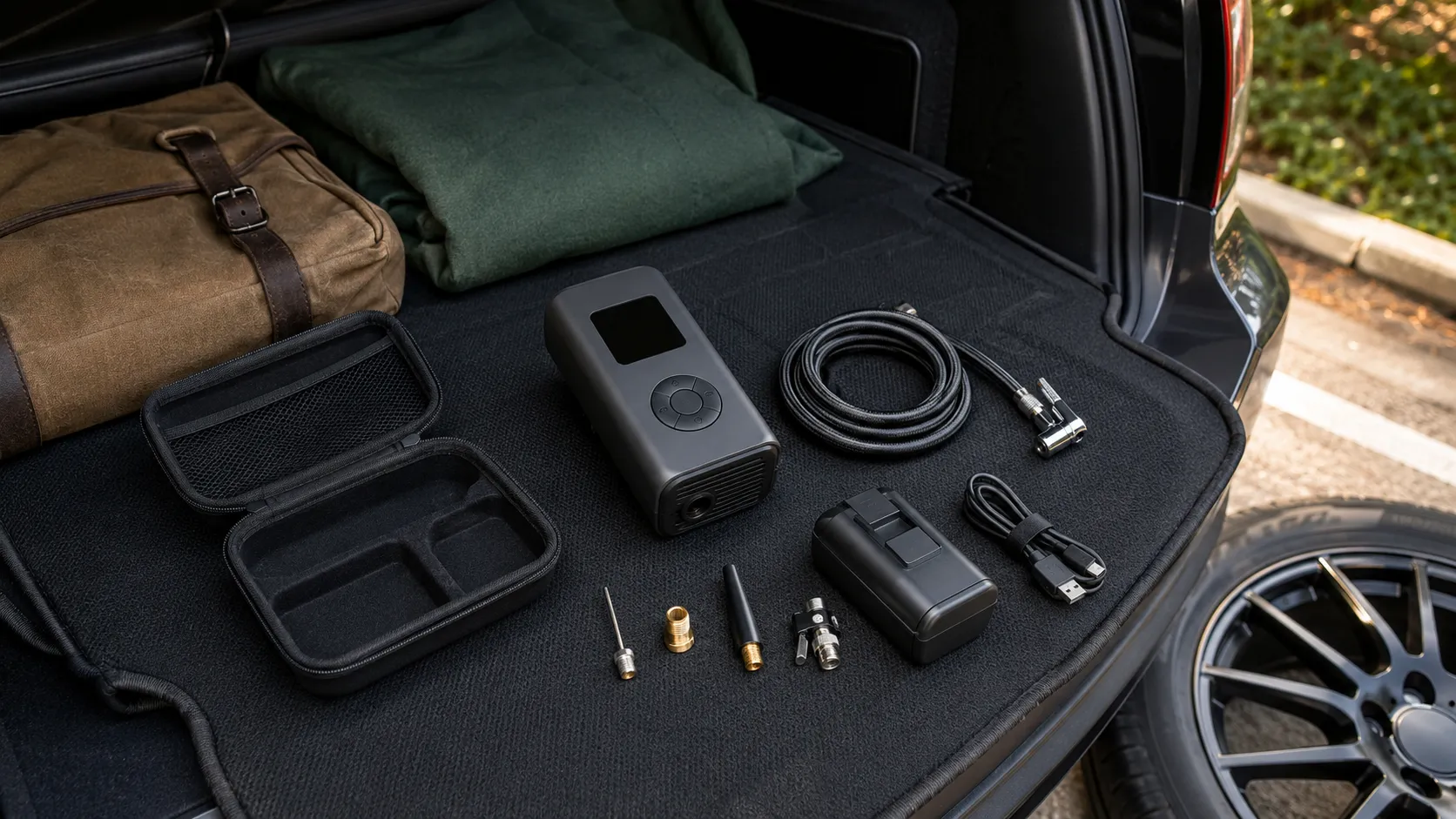
What accessories work with cordless inflators? Common options include a Schrader air chuck, Presta adapter, sports-ball needle, tapered inflatable nozzle, extension hose, spare battery, charger, and storage case. Each accessory must match the inflator’s outlet, pressure range, airflow type, and manufacturer requirements.
Compatibility Rule“Universal” on an accessory package does not guarantee a safe fit. Thread size, quick-connect style, hose rating, battery platform, charger voltage, and intended application can differ between inflators.
The most useful cordless-inflator accessories are valve adapters and nozzles suited to the object being inflated. Standard vehicle and many bicycle tires use Schrader valves and usually connect to the included chuck. Presta bicycle valves need a Presta-to-Schrader adapter unless the hose has a compatible head. Sports balls need a ball needle, while small pool toys and similar inflatables often use a tapered nozzle. Extension hoses can improve reach, but replacement hoses, chucks, batteries, and chargers must be approved for the exact model.
What Accessories Work With Cordless Inflators?
Accessories fall into three groups: air-side attachments, power accessories, and storage or protection accessories. Air-side parts include chucks, adapters, needles, nozzles, hoses, and deflator fittings. Power accessories include removable batteries, chargers, and sometimes manufacturer-specified 12-volt cords. Cases, organizers, spare valve caps, and a separate tire gauge help keep the kit ready.
The accessory that physically attaches is not automatically suitable. It must also tolerate the pressure and heat produced by the inflator, seal without damaging the valve, and allow the tool to operate within its duty cycle. For a removable battery or charger, physical fit is especially unreliable as a safety test: the voltage, electronics, battery chemistry, and platform must be explicitly approved by the manufacturer.
A tire inflator is normally designed for relatively high pressure and modest airflow. A high-volume pump moves more air at lower pressure. Some dual-function units do both, but a tapered nozzle does not turn every compact tire inflator into an efficient mattress or raft pump.
Cordless Inflator Accessory Compatibility Table
| Accessory | Common Use | Compatibility Check | Main Limitation |
|---|---|---|---|
| Schrader air chuck | Car, SUV, pickup, motorcycle, trailer, and many bicycle tires | Chuck style, valve access, hose connection, and pressure rating | A worn seal can leak or damage valve threads |
| Presta adapter | Road, gravel, and some mountain-bike tires | Adapter direction, valve condition, supported pressure, and gauge control | Presta valve tips are slender and can bend if handled roughly |
| Ball needle | Basketballs, footballs, soccer balls, and similar equipment | Needle base fits the chuck or adapter and pressure can be controlled | High-output inflation can overinflate a small ball quickly |
| Tapered nozzle | Small pool toys, floats, and pinch-valve inflatables | Nozzle size, valve shape, material condition, and item pressure limit | Often slow for large-volume items |
| Extension hose | Hard-to-reach valves and easier tool placement | Correct inlet and outlet threads, rated pressure, and secure seals | Extra joints create more places for air leaks |
| Locking or clip-on chuck | Hands-free attachment to a Schrader valve | Chuck fits the existing hose and locks without stressing the stem | Poor-quality levers or seals may not hold pressure |
| High-volume hose or nozzle | Air mattresses, rafts, and larger inflatables on dual-function models | Inflator has a dedicated high-volume port and supports the accessory | Not interchangeable with a high-pressure tire outlet |
| Battery and charger | Cordless power and battery readiness | Exact manufacturer-approved platform, voltage, chemistry, and model | Similar shape does not prove electrical compatibility |
The Most Useful Air-Side Accessories
Air Chuck
The chuck forms the seal between the hose and a Schrader valve. Screw-on chucks can provide a firm seal, while clip-on or locking chucks may be faster. Choose the type supported by the original hose and make sure it does not place sideways force on the valve stem.
Presta Valve Adapter
A small threaded adapter converts a Presta valve so a Schrader-style chuck can attach. Open the Presta valve tip first, install the adapter gently, and use controlled bursts if the inflator is difficult to regulate at low volume.
Sports-Ball Needle
A hollow needle delivers air through a ball’s valve. Moisten it only as the equipment maker recommends, insert it straight, and avoid bending. Store it in a protective holder because a damaged needle can puncture the valve or skin.
Tapered Inflatable Nozzle
Tapered adapters fit certain pinch valves on small inflatables. They need a steady hand to maintain a seal and should never be forced into a valve. The item’s own inflation instructions set the safe pressure and suitable pump type.
Extension Hose
An extension can reach inner dual-wheel valves, awkward motorcycle stems, or a spare tire stored under a vehicle. It should have compatible ends, an adequate pressure rating, heat-resistant materials, and minimal leakage.
Deflator Attachment
Some dual-purpose inflators include a separate high-volume deflation port or hose. Use it only where the manual allows. A tire chuck is not a general-purpose vacuum, and road tires should never be intentionally deflated without a valid reason.
How to Check an Accessory Before Using It
A five-minute compatibility check can prevent leaks, broken valves, damaged threads, and electrical problems. Perform the check at home before placing the accessory in an emergency kit.
-
Identify the Inflator Model
Record the full model number, hose outlet type, battery platform, and manual revision. Accessories for a similar-looking model may use different threads or electronics.
-
Identify the Valve or Item
Determine whether the target uses Schrader, Presta, a sports-ball valve, a pinch valve, or a proprietary high-volume opening. Check the item maker’s pressure and pump instructions.
-
Confirm Mechanical Fit
Match the thread, quick-connect fitting, chuck style, and hose diameter using the inflator manual or manufacturer accessory list. Do not force mismatched threads or stack several questionable adapters.
-
Confirm Pressure and Airflow Suitability
Verify that the hose and fitting are rated for the inflator’s pressure. For mattresses or rafts, confirm that the inflator has a supported high-volume mode rather than relying only on a tapered tip.
-
Inspect Every Seal and Fitting
Look for cracked hoses, flattened O-rings, loose collars, damaged threads, bent needles, corrosion, or debris. Replace questionable parts with manufacturer-approved components.
-
Perform a Controlled Test
Test at low demand while monitoring for leaks, heat, movement, unusual noise, and stable pressure. Stop immediately if the accessory loosens, deforms, or cannot hold a seal.
Build one labeled pouch for the inflator’s small parts. Keep the Presta adapter, ball needle, tapered nozzle, spare valve caps, and any required O-rings together. A compatible adapter is not useful during a roadside stop if it is loose in a garage drawer.
Which Accessory Should You Use?
| Inflation Job | Likely Accessory | Before You Start |
|---|---|---|
| Passenger-car tire | Original Schrader chuck | Use the cold pressure on the driver-side placard or owner’s manual |
| Schrader bicycle tire | Original chuck, carefully attached | Confirm tire pressure range and avoid stressing the valve |
| Presta bicycle tire | Presta-to-Schrader adapter or approved dual-valve head | Open the valve tip and protect the slender stem |
| Sports ball | Ball needle | Check the ball’s printed or manual-specified pressure |
| Small inflatable toy | Correct-size tapered nozzle | Confirm the valve and material are undamaged |
| Large air mattress or raft | Dedicated high-volume hose/nozzle on a compatible pump | Do not assume a high-pressure tire outlet will move enough air |
| Hard-to-reach tire valve | Approved extension hose or angled chuck | Check every extra connection for leaks |
An accessory changes how the inflator connects; it does not change the correct tire pressure. For road vehicles, use the cold pressure on the vehicle placard or in the owner’s manual. Do not use the maximum pressure molded into the tire sidewall as the normal target. See NHTSA’s tire-safety guidance for basic pressure and inspection advice.
Batteries, Chargers, and Power Cords
Power accessories require stricter compatibility than nozzles. A battery that slides into an inflator can still have the wrong voltage, terminal layout, communication system, current capability, or protective electronics. Use only batteries and chargers approved for that inflator and battery platform. Never modify contacts, bypass a safety latch, or use a homemade adapter.
If an inflator supports both a removable battery and vehicle power, use only the specified cord, plug, fuse rating, and input voltage. A generic cord with the same plug shape may have inadequate wire size or reversed polarity. Keep connector covers in place and do not use a cable with melted insulation, bent contacts, or a loose plug.
Stop using a battery or charger that is swollen, cracked, unusually hot, leaking, corroded, or giving off an unusual odor. Move away from flammable materials without touching a dangerously hot pack, follow the manufacturer’s emergency guidance, and arrange approved service or disposal. Do not open or repair a lithium-ion battery pack yourself.
Accessories That May Not Work Well
Generic Replacement Hose Leaks
The fitting may have the wrong thread pitch, seat depth, or seal. Stop tightening before threads strip and obtain the correct manufacturer-approved hose or adapter.
Presta Adapter Loses Air
Check that the valve tip is open, the adapter is straight, and the chuck seal is sound. Remove and reinstall gently rather than overtightening the delicate stem.
Tapered Nozzle Is Too Slow
The item may need high-volume airflow. Use a compatible high-volume port or a dedicated inflatable pump if the manual does not approve the tire inflator for the job.
Ball Inflates Too Quickly
Small-volume equipment can gain pressure fast. Use short controlled bursts, stop often, and verify with a suitable low-range gauge if the inflator cannot regulate accurately.
Extension Hose Changes the Reading
A leaking joint or trapped pressure can affect the displayed value. Stop the inflator, check the connections, and confirm final tire pressure with a dependable separate gauge.
Battery Fits but Tool Will Not Run
Do not force, bridge, or modify terminals. The pack may be electrically incompatible even if its rails look similar. Use the exact approved battery and charger combination.
How to Store and Maintain Inflator Accessories
- Wipe dirt from chucks and adapters before storing them.
- Keep ball needles in a rigid cap or small protective tube.
- Store O-rings and tiny adapters in a sealed, labeled pouch.
- Coil hoses loosely without sharp bends or heavy objects on top.
- Keep battery terminals covered, dry, and away from loose metal items.
- Inspect the full kit before road trips and seasonal weather changes.
- Replace cracked, corroded, bent, or leaking parts with approved replacements.
Do not add oil, sealant, thread tape, or lubricant unless the inflator or accessory maker specifically directs it. Unapproved materials can contaminate valves, interfere with seals, or enter the air path. Clean and service the kit only as described in the manual.
Frequently Asked Questions
Are cordless inflator accessories universal?
No. Many nozzles look similar, but hose threads, chucks, quick-connect fittings, pressure ratings, battery platforms, and charger electronics can differ. Confirm compatibility with the exact inflator model and manual.
Can I use a cordless inflator on a Presta bicycle valve?
Yes, if the inflator has a Presta-compatible head or you use the correct Presta-to-Schrader adapter. Open the Presta valve tip first, attach the adapter gently, and avoid bending the valve stem.
What attachment inflates sports balls?
A sports-ball needle is the usual attachment. Make sure its base fits the inflator chuck, insert it straight, and use the pressure recommended by the ball manufacturer.
Can a tapered nozzle inflate an air mattress?
It may fit some valves, but many compact tire inflators deliver too little air volume for a large mattress. Use a dedicated high-volume mode or pump when the inflator manual does not approve the job.
Can I add a longer hose to my cordless inflator?
Only when the hose or extension has the correct fittings, pressure rating, seals, and manufacturer approval. Extra connections can leak and may affect pressure readings or inflation speed.
Can I use another brand’s battery or charger?
Do not assume so. Use only a battery and charger explicitly approved for the inflator and battery platform. Similar shape does not prove that voltage, terminals, electronics, or safety protections match.
Should I keep a separate tire gauge with the inflator?
Yes, a dependable separate gauge is useful for confirming final pressure, especially after using an extension hose or adapter. Always compare the result with the vehicle’s recommended cold pressure.
Related Guides
Conclusion
So, what accessories work with cordless inflators? The practical core is a sound Schrader chuck plus the correct Presta adapter, ball needle, tapered nozzle, or approved high-volume attachment for the job. An extension hose can improve reach, while a case and separate gauge improve readiness. Batteries, chargers, replacement hoses, and power cords require exact model approval—not a visual guess.
Start with the inflator manual, identify the valve and required airflow, inspect every connection, and test the setup under controlled conditions. For vehicle tires, use the placard pressure and stop if the tire, valve, hose, battery, or inflator shows damage, excessive heat, leakage, or abnormal behavior.
The best accessory is the one that matches all four requirements: the inflator connection, the target valve, the pressure or airflow needed, and the manufacturer’s approval. A small adapter can expand what a cordless inflator does, but it cannot safely override the tool’s design limits.