
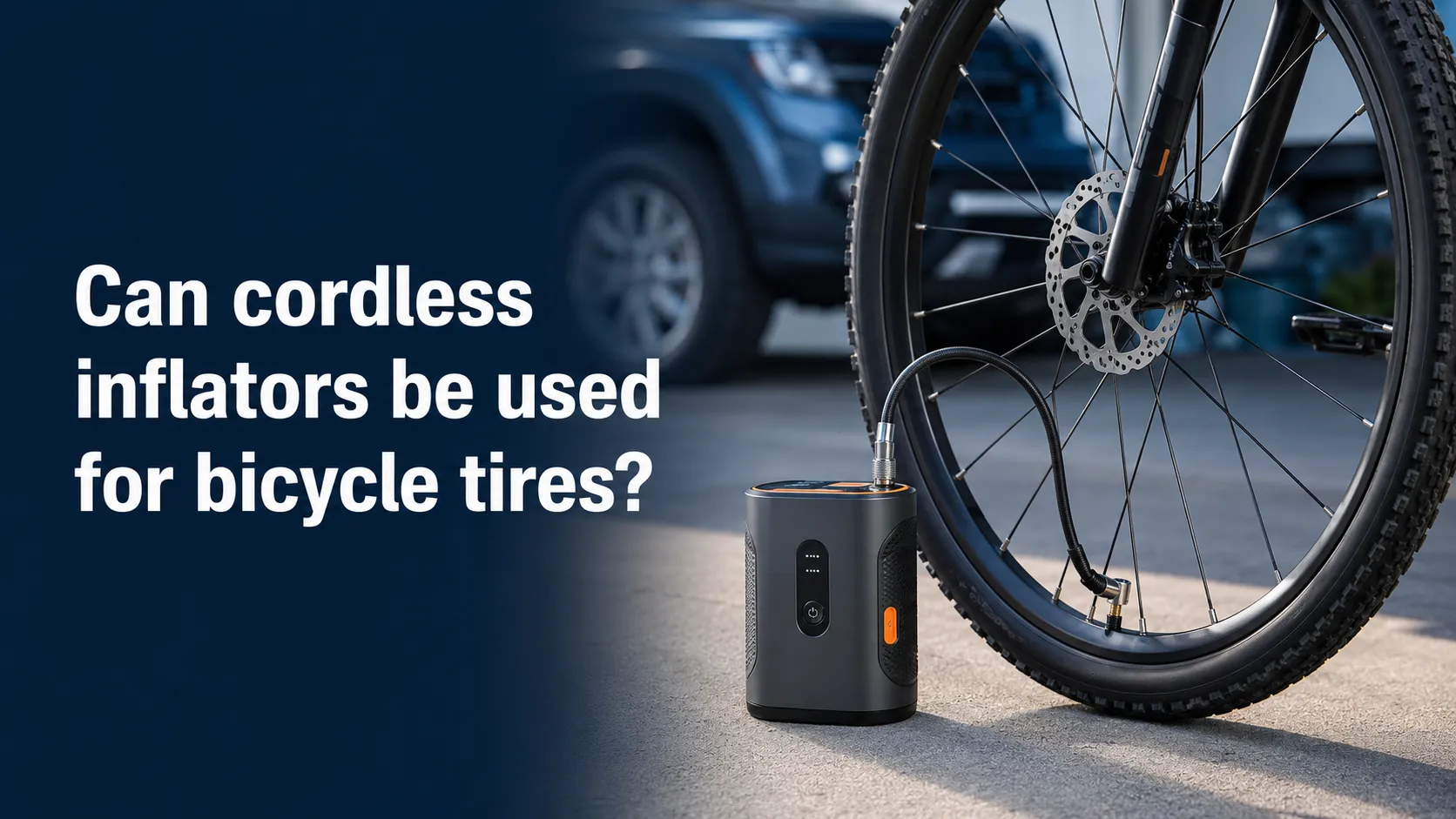
Yes, many cordless inflators can fill bicycle tires when the valve connection and pressure range are compatible. Check the tire sidewall, bicycle manual, valve type, and inflator instructions before you begin.
Quick Answer
Can cordless inflators be used for bicycle tires? Yes. Most models can inflate common bike tires if you use the correct valve connector or adapter. Set the target pressure from the tire sidewall or bicycle manual, inflate in short bursts, and confirm the final pressure with a reliable gauge.
Practical Verdict
A cordless inflator is a useful choice for home maintenance, road trips, and shared car-and-bike emergency kits. It is fast and requires less effort than a hand pump. However, a compact bicycle pump is often easier to carry, quieter to use, and better for making small pressure changes.
Can a Cordless Tire Inflator Really Fill a Bike Tire?
In most cases, it can. The main challenge is not power. It is matching the inflator to the bicycle tire’s valve and required pressure.
Bike tires hold much less air than car tires. That means the pressure can rise quickly. A careless setting or poor connection may overinflate the tube, damage the valve, or cause the tire to leave the rim.
In this guide, I will explain valve compatibility, pressure settings, safe inflation steps, common problems, and storage. The advice applies to riders who want to use the same portable inflator for a car, SUV, pickup truck, and bicycle.
2
Common bicycle valve types: Schrader and Presta
3
Key checks: valve, pressure range, and connector
1
Correct target: the pressure specified for your tire and bike
What Must Match Before You Use the Inflator?
Check four things before connecting a cordless inflator: the valve, connector, pressure capability, and gauge. Do not assume that a tool designed for car tires will fit every bicycle without an adapter.
| Item to Check | What to Look For | Why It Matters |
|---|---|---|
| Valve type | Schrader or Presta | Determines the connector or adapter |
| Tire pressure | Marking on the tire or bicycle guidance | Prevents underinflation or overinflation |
| Inflator range | Support for the required pressure | Some units are better suited to car tires |
| Chuck connection | Secure fit without air leakage | Protects the valve and improves accuracy |
| Gauge | Readable display or separate gauge | Helps confirm the final pressure |
Pro Tip
Read the inflator manual before using an unfamiliar adapter. A connector that feels tight may still be fitted incorrectly and can bend a narrow Presta valve stem.
Which Bicycle Valves Work With Cordless Inflators?
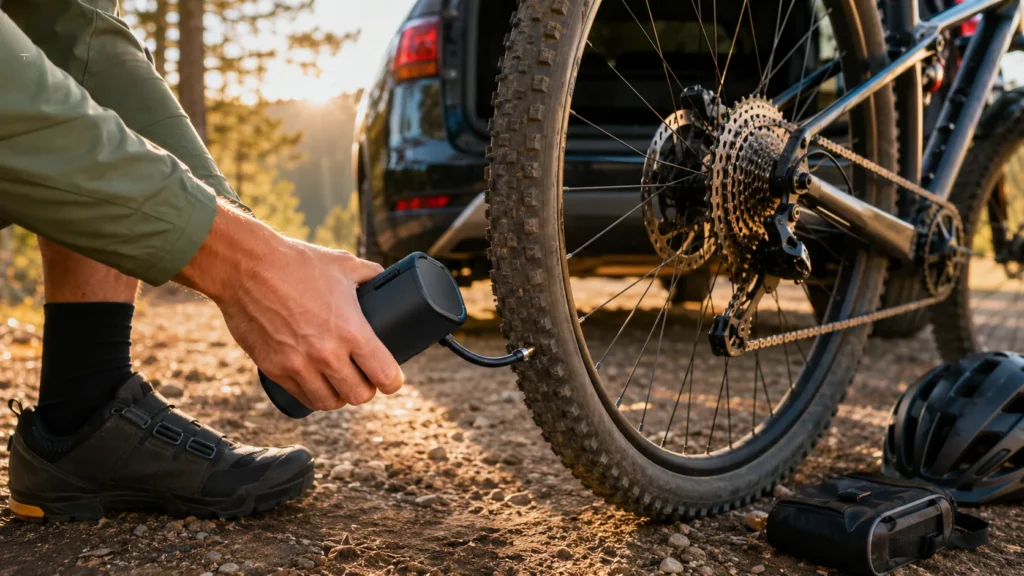
Schrader valves
A Schrader valve is similar to the valve found on most passenger vehicles. It has a wider stem and a small pin in the center. Many cordless inflators connect directly to it.
Schrader valves are common on comfort bikes, children’s bikes, mountain bikes, and some hybrid bikes. Even with a direct connection, hold the hose straight so it does not pull sideways on the valve.
Presta valves
A Presta valve is narrower and has a small threaded tip. You normally loosen the tip before adding air. Many automotive-style inflators need a suitable Presta adapter.
Install the adapter gently. Do not force or overtighten it. After inflation, remove the adapter carefully, tighten the valve tip by hand, and replace the valve cap.
Typical Compatibility
Schrader: Often direct fitPresta: Adapter often neededTubeless: Follow system instructionsSpecial valves: Check the bike manual
Good to Know
A valve adapter changes the physical connection. It does not make every inflator suitable for every pressure. Confirm that the inflator can handle the pressure required by the tire.
How Much Pressure Should You Put in a Bicycle Tire?
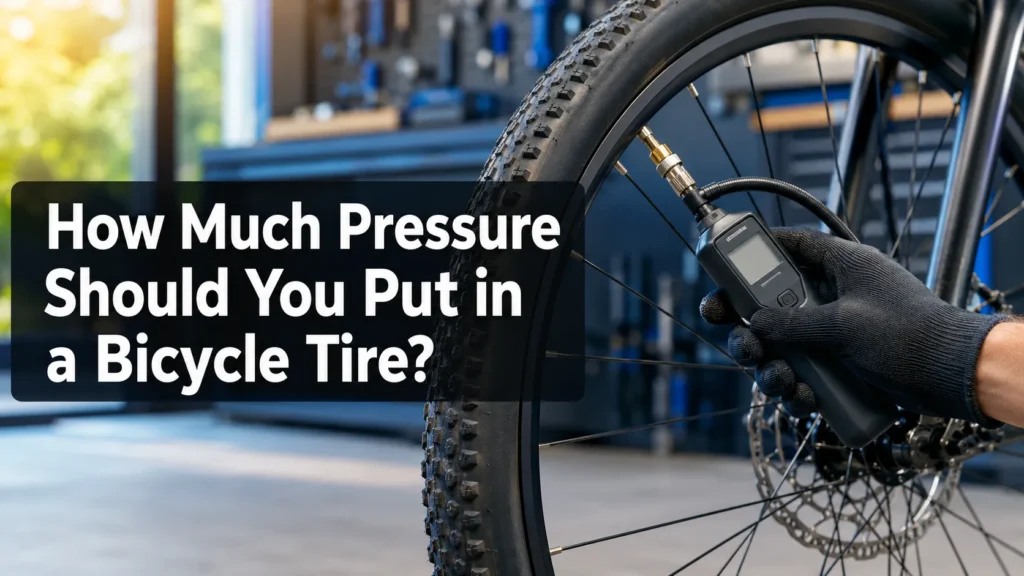
Use the pressure guidance printed on the tire sidewall and any instructions from the bicycle, tire, rim, or wheel maker. Bicycle pressure varies with tire size, rider load, terrain, tube type, rim, and riding style.
Do not copy the pressure used in a car tire or another bicycle. Also, do not exceed the lowest applicable limit listed for the tire, rim, or bicycle system.
Warning
Never keep inflating simply because the tire still feels soft when squeezed by hand. A narrow tire can feel firm before or after it reaches the correct pressure. Use a gauge and follow the marked limits.
Pressure terms: PSI means pounds per square inch. It is the pressure unit commonly shown on tires and inflator displays in the United States. Some equipment also shows bar or kPa, so select the correct unit before setting an automatic shutoff value.
Is a Cordless Inflator Better Than a Bicycle Pump?
Each tool has a different strength. A cordless inflator is convenient when you maintain several tires at home or keep one in a vehicle. A hand or floor pump gives the rider more control and does not depend on a charged battery.
| Option | Main Advantage | Main Limitation | Useful For |
|---|---|---|---|
| Cordless inflator | Fast and low effort | Battery, heat, and noise | Home or vehicle kit |
| Floor pump | Good control and stable base | Too large for many rides | Regular home maintenance |
| Mini hand pump | Light and portable | More time and effort | Roadside bike repairs |
| Manual gauge | Confirms pressure | Does not add air | Final pressure checks |
Pros
- Requires little physical effort
- Can serve both a vehicle and a bicycle
- Useful for several family bikes
- May offer preset pressure and automatic shutoff
- Easy to store in a garage or cargo area
Cons
- May require a Presta adapter
- Can add air too quickly to a small tire
- Gauge accuracy may vary
- Motor and hose can become hot
- Depends on battery charge
What Should You Check Before Inflating?
Bike Tire Inflation Checklist
- Read the bicycle and inflator instructions.
- Find the pressure information on the tire.
- Check the rim or wheel pressure limit when provided.
- Identify the valve as Schrader, Presta, or another type.
- Inspect the tire for cuts, bulges, exposed cords, or poor seating.
- Check that the valve stem is straight and not damaged.
- Confirm that the battery has enough charge.
- Select the correct pressure unit on the inflator.
- Keep your hands and face away from the tire sidewall during inflation.
If the bicycle uses a special tubeless setup, suspension component, or uncommon valve, follow its manufacturer instructions. A standard tire inflator may not be suitable for every bicycle component.
How to Inflate a Bicycle Tire With a Cordless Inflator
1
Inspect the tire and wheel
Look for cuts, bulges, loose tire beads, damaged rims, or a crooked valve. Do not inflate a visibly damaged setup.
2
Find the correct pressure
Read the tire marking and bicycle guidance. If the tire, rim, and bike provide different maximum limits, do not exceed the lowest applicable limit.
3
Prepare the valve
Remove the cap. For a Presta valve, gently loosen the small tip and attach the correct adapter if your inflator requires one.
4
Connect the hose straight
Push or thread the connector on as directed by the inflator manual. Avoid twisting or pulling the valve sideways.
5
Set the target carefully
Choose the correct unit and set a suitable pressure within the approved range. Double-check the display before starting.
6
Inflate in short bursts
Watch the tire bead and pressure reading. Stop immediately if the tire shifts, the valve bends, or the inflator behaves abnormally.
7
Confirm the final pressure
Let the reading settle. Check it with a separate reliable gauge when accuracy is important or the inflator reading seems unusual.
8
Disconnect and finish
Turn off the inflator before removing the connector. Tighten a Presta valve tip by hand, replace the cap, and check for air leakage.
Pro Tip
Small bicycle tires fill quickly. Pause before the target pressure, let the gauge settle, and then add air in short bursts. This gives you more control.
Why Is the Inflator Not Working on the Bicycle Tire?
Most problems come from a poor valve connection, the wrong adapter, an incorrect display unit, or a low battery. Start with simple checks and stop if the tire, valve, or inflator appears damaged.
| Common Symptom | Likely Cause | Safe First Check | When to Stop |
|---|---|---|---|
| Air leaks at the valve | Loose or wrong connector | Reconnect it straight | Valve bends or appears cracked |
| Pressure does not rise | Puncture or poor seal | Check the hose and tire | Tire has a cut, bulge, or loose bead |
| Reading looks too high | Wrong unit or trapped hose pressure | Stop and verify the unit | Pressure cannot be confirmed safely |
| Inflator stops early | Preset reached, low battery, or heat protection | Check the display and manual | Unit smells hot, smokes, or shows damage |
| Presta valve will not accept air | Valve tip closed or adapter fitted poorly | Loosen the tip and refit gently | Stem is bent, loose, or broken |
| Tire loses air after filling | Puncture or valve leak | Listen for leakage | Wheel or valve needs repair |
When to Get Help
Ask a qualified bicycle technician to inspect the bike if the rim is damaged, the tire bead will not seat evenly, the valve stem moves at its base, or the tire repeatedly loses air. Do not continue riding on a wheel that may be unsafe.
How Can You Use a Cordless Inflator Safely?
Place the bicycle on stable ground and keep it away from traffic. Keep children and pets clear while the inflator is running. Wear eye protection if the tire or wheel condition is uncertain.
Do not exceed the tire, rim, bicycle, or inflator limits. Keep your face away from the sidewall because a damaged or poorly seated tire can fail during inflation.
Inflator motors, connectors, and hoses can become hot. Follow the duty-cycle and cooling instructions in the tool manual. Do not touch a hot metal fitting until it cools.
If the inflator is connected to a vehicle power outlet, park safely, switch off the vehicle, remove the key when appropriate, and follow the vehicle owner’s manual. Keep cables away from moving parts, hot exhaust components, damaged wiring, batteries that are leaking, fuel systems, and high-voltage hybrid or EV parts.
Stop Immediately
Stop if you see a tire bulge, an uneven bead, a cracked rim, smoke, sparks, a burning smell, or a damaged battery. Move away from the equipment and seek qualified help when it is safe to do so.
For broader bicycle safety guidance, review the National Highway Traffic Safety Administration bicycle safety resources. Manufacturer instructions remain the primary source for your tire, wheel, bicycle, inflator, and vehicle.
How Should You Maintain and Store the Inflator?
Let the unit cool before storage. Wipe dirt from the hose, connector, and adapter with a dry cloth. Do not store a damp inflator in a sealed bag.
Keep valve adapters together in a labeled pouch. Inspect the hose for cracks and the battery case for swelling, leaks, or impact damage. Stop using a damaged battery or charger and follow the manufacturer’s disposal instructions.
| Maintenance Task | When to Do It | What to Check |
|---|---|---|
| Inspect the hose | Before use | Cracks, cuts, or loose fittings |
| Check adapters | Before a bike trip | Correct type and clean threads |
| Check battery charge | Before travel or storage | Useful charge and normal battery condition |
| Clean the unit | After dusty or wet use | Dry housing and clear vents |
| Compare the gauge | If readings seem unusual | Difference from a reliable gauge |
| Review storage condition | Periodically | Heat, moisture, and battery damage |
Did You Know? A vehicle cargo area can become very hot or cold. Check the inflator’s storage instructions before leaving a battery-powered unit in a car, SUV, or pickup for long periods.
When Is a Manual Bike Pump the Better Choice?
Choose a manual mini pump when you need a light tool that stays on the bicycle. It will work even when a battery is empty, and it gives you direct control over each stroke.
A floor pump is often better for routine home checks because it is stable and easy to control. A cordless inflator makes more sense when speed, low effort, or shared use with a vehicle matters most.
Good to Know
A cordless inflator should not be your only roadside plan if you take long bicycle rides. Carry a suitable repair kit and a manual inflation method that fits your valve.
Frequently Asked Questions
Can a car tire inflator inflate a bicycle tire?
Yes, many car tire inflators can fill bicycle tires. The connector must fit the bicycle valve, and the inflator must support the required pressure. Inflate slowly because a bike tire contains much less air than a car tire.
Do I need an adapter for a bicycle tire?
You may need an adapter for a Presta valve. Many inflators connect directly to Schrader valves. Check the valve type and the inflator instructions before attaching anything.
Can a cordless inflator overinflate a bike tire?
Yes. A bicycle tire can gain pressure quickly, especially when it is small. Set the correct unit and target pressure, watch the tire, and use short bursts rather than relying only on automatic shutoff.
What pressure should I use for my bicycle tire?
Follow the pressure information on the tire and the guidance from the bicycle, rim, and tire makers. Do not exceed the lowest applicable limit. The correct pressure varies with the tire, wheel, load, and riding conditions.
Can I use a cordless inflator on a tubeless bike tire?
You may use one for routine pressure adjustment if it is compatible. Seating a loose tubeless tire bead may require different equipment and procedures. Follow the tire and rim manufacturer instructions or ask a bicycle technician for help.
Why does the inflator show pressure but add no air?
The connector may not be opening the valve, the Presta tip may still be closed, or the adapter may be fitted incorrectly. Turn off the inflator, release the connection, and reinstall it gently.
Should I trust the gauge on a cordless inflator?
Use the built-in gauge as directed, but confirm unusual readings with a reliable separate gauge. Stop if the two readings differ enough to make safe inflation uncertain.
Is a cordless inflator good for bicycle emergencies?
It can be useful if it is charged, portable, and compatible with your valve. For longer rides, carry a manual pump as a backup so a dead battery does not leave you without a way to add air.
Related Guides
- How Do Cordless Tire Inflators Work?
- Are Cordless Inflators Safe to Use?
- Can Cordless Inflators Inflate Car Tires?
- How to Use a Portable Tire Inflator Safely
- Why Does a Tire Inflator Stop Before the Tire Is Full?
Conclusion
So, can cordless inflators be used for bicycle tires? Yes, provided the inflator matches the valve and can safely reach the pressure required by the tire.
Start by identifying the valve, reading the tire and bicycle instructions, and checking the wheel for damage. Use the correct adapter, select the right pressure unit, and add air in short bursts. Never exceed the lowest applicable limit for the tire, rim, or bicycle.
If the valve is damaged, the bead will not sit evenly, or the tire has a cut or bulge, stop and ask a qualified bicycle technician for help. For regular rides, I also recommend carrying a compatible manual pump as a simple backup.
Quick Recap
- Many cordless inflators work with bicycle tires.
- Schrader valves often fit directly.
- Presta valves commonly need an adapter.
- Use the pressure specified for your tire and bicycle.
- Inflate slowly and verify unusual gauge readings.
- Stop if the tire, rim, valve, hose, or battery is damaged.
Final Key Takeaway
A cordless inflator can be a safe and convenient bicycle tool, but compatibility comes first. Check the valve, pressure requirements, connector, and tire condition before every use, and keep a manual pump available for roadside backup.