
Amazon affiliate disclosure: As an Amazon Associate, we earn from qualifying purchases. Links marked as Amazon links may earn us a commission at no additional cost to you.
Choose for your engine, then your storage routine
The NOCO GB40 vs GB50 decision starts with your vehicle’s battery system and engine size. Buying the bigger model can make sense, but paying more does not solve every reason a car refuses to start.
Check the NOCO GB40 on AmazonCheck the NOCO GB50 on AmazonConfirm model, connector revision, seller, and included accessories before ordering.
Quick answer
Choose GB40 if your compatible vehicle falls comfortably within NOCO’s 6.0L gasoline or 3.0L diesel guidance and you want the smaller published capacity. Choose GB50 when its wider 7.0L gasoline or 4.5L diesel guidance better matches your engine, or you prefer more rated stored energy. Both are for 12V lead-acid starting batteries. Neither is a battery charger.
This guide compares published manufacturer information and practical buying choices. We have not conducted hands-on starting tests, timed winter trials, or a durability comparison. Recommendations below are editorial judgments, not measured performance rankings.
1,000A peak rating
1,500A peak rating
12V lead-acid
Temporary starting assistance
NOCO GB40 vs GB50 at a glance
The table uses NOCO’s current model-specific specification pages, checked October 13, 2026. Engine limits are the manufacturer’s selection guidance. They are not a promise that every engine at the stated limit will start under every condition.
| Published specification | GB40 | GB50 |
|---|---|---|
| Starting current | 1,000A peak | 1,500A peak |
| Gasoline engine guidance | Up to 6.0L | Up to 7.0L |
| Diesel engine guidance | Up to 3.0L | Up to 4.5L |
| Internal battery energy | 24Wh lithium-ion | 35Wh lithium-ion |
| Vehicle battery compatibility | 12V lead-acid | 12V lead-acid |
| LED flashlight | 100 lumens | 200 lumens |
| USB input on current specs pages | USB-C, 5V / 2.1A maximum | USB-C, 5V / 2.1A maximum |
| Main buying distinction | Smaller stated energy and engine envelope | Larger stated energy and engine envelope |
Sources: NOCO GB40 specifications and NOCO GB50 specifications. The final row is our editorial summary.
NOCO’s current specs pages list USB-C, while parts of its shared how-to FAQ still describe Micro-USB. Some published weight information also differs between those pages. Check the actual unit, listing photos, box contents, and matching manual. We have left weight and exact recharge-time comparisons out rather than treating inconsistent information as settled.
Which buyer fits each option?
Everyday compatible car
Start with GB40 if the engine is comfortably within its guidance. Keep the money decision tied to your actual vehicle.
Larger compatible engine
Consider GB50 if your engine exceeds the GB40 envelope but remains within GB50 guidance.
Unknown battery system
Pause the purchase. Confirm battery voltage, chemistry, and the vehicle’s permitted jump-start procedure first.
NOCO GB40: the simpler starting point for many buyers
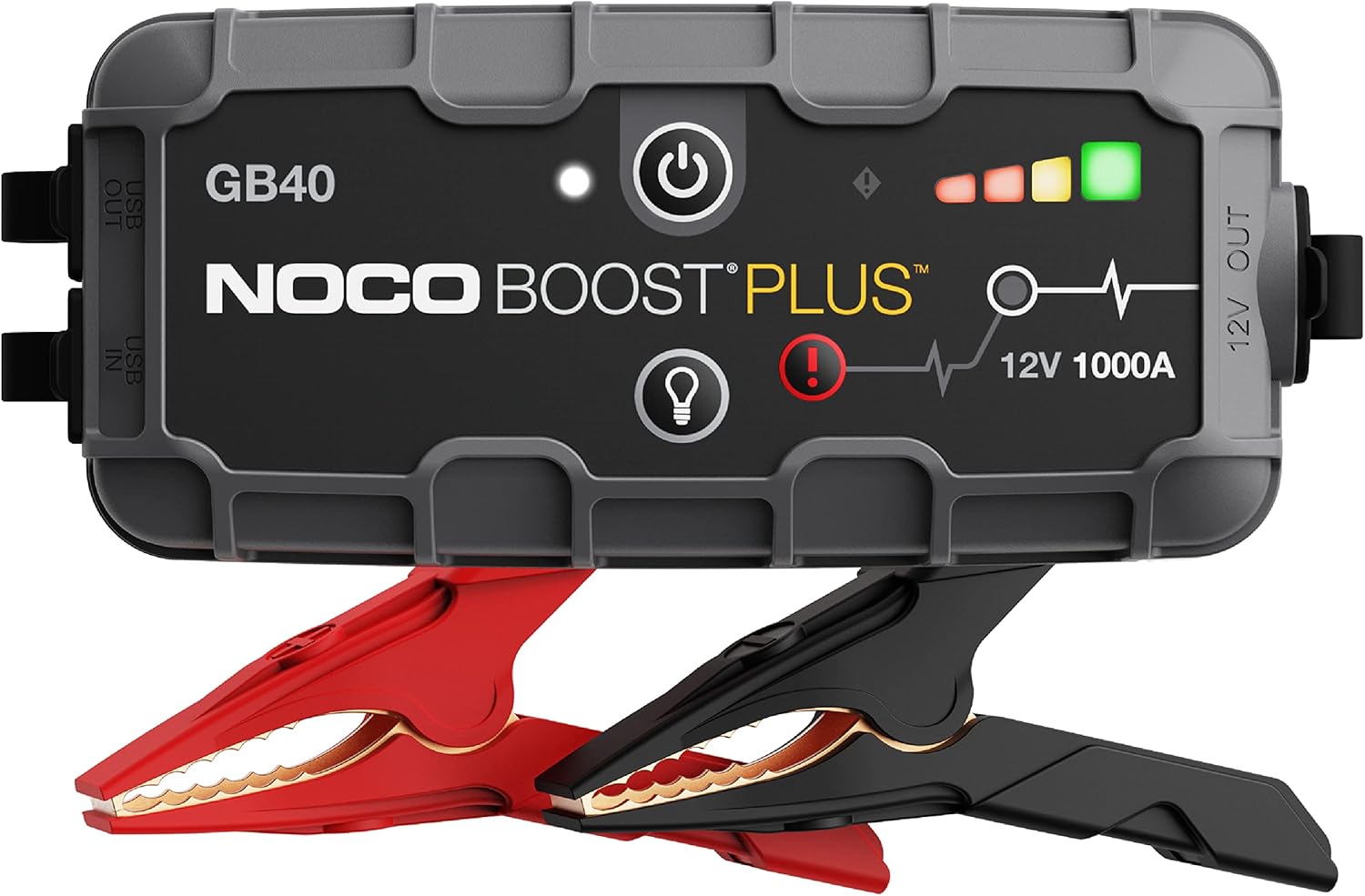
Retailer product image; check the purchased revision.
Choose it when its engine guidance fits
Benefits: Its stated engine envelope covers many ordinary passenger vehicles, and its lower published stored energy gives you a clear comparison point without needing to decode inflated marketing language.
Limitations: It does not cover engines outside its published guidance, and it cannot repair a failing battery or replace a compatible maintenance charger.
View GB40 model and package details on AmazonOur editorial starting point is simple: do not buy extra capacity before confirming the smaller model is unsuitable. A commuter choosing backup for one compatible vehicle has a different problem from a household sharing one pack between several engine sizes.
Make a short vehicle list before shopping. Write down the model year, gasoline or diesel fuel type, engine displacement, battery voltage, and battery chemistry. A vehicle’s badge or body size does not reliably answer all of those questions. Two similar-looking SUVs can need different selection checks.
Storage is part of the purchase decision. A pack that gets buried under luggage, left at home, or forgotten after use may be less useful than one that has a dedicated place and a charging reminder. Check whether the unit and detached clamps fit your chosen organizer without bending cables tightly.
NOCO GB50: when the wider engine envelope matters

Retailer product image; check the purchased revision.
A step up in published capacity
Benefits: The larger published engine envelope and 35Wh capacity give buyers a reason to compare it when GB40 is near or below their needs. Its stated flashlight output is also higher.
Limitations: More rated capacity does not guarantee a successful start. Battery condition, contact quality, temperature, and vehicle faults still matter.
View GB50 model and package details on AmazonGB50 is the more logical candidate if the engine falls outside GB40 guidance but inside GB50 guidance. That is a more useful reason to upgrade than assuming a bigger peak-amp number makes every small car safer or starts it faster.
For a shared household pack, choose around the largest compatible engine that may actually need help. Then decide how the pack will move between vehicles. One unit stored permanently in the wrong car is not much help when the other car is stranded somewhere else.
A buyer frequently driving away from assistance may value a wider selection envelope. That is a preference about preparedness, not proof of a measured reliability advantage. Keep roadside assistance available and consider your own comfort with the procedure before relying on either pack.
What the amp and watt-hour numbers actually tell you
Peak amps and watt-hours describe different things. NOCO labels starting current as a peak figure. Watt-hours describe the stated energy stored in the internal battery. Comparing those columns is useful, but neither column tells you exactly how your individual vehicle will behave.
Do not interpret the change from 1,000A to 1,500A as a guarantee of a 50 percent faster start. That conclusion would require controlled vehicle testing under defined conditions. We do not have that evidence, and the manufacturer ratings alone do not establish it.
Likewise, a larger internal energy figure is not a fixed number of extra real-world jump starts. A pack helping a lightly discharged battery has a different task from one facing repeated unsuccessful attempts. For an emergency purchase, focus on having a charged, compatible unit ready for your vehicle rather than chasing an advertised maximum count.
This also explains why a flashlight or phone output should be a secondary feature. If you routinely use an emergency pack as a daily power bank, you create another charging task. A dedicated phone power bank can make the emergency equipment easier to keep reserved and ready.
Compatibility checks before clicking Buy
1. Confirm battery voltage and chemistry
Both model specification pages identify 12V lead-acid vehicle batteries. The internal pack being lithium-ion does not make these units suitable for jump-starting every lithium vehicle battery. Read the vehicle manual and the battery label; do not transfer compatibility from one battery chemistry to another.
2. Confirm the engine rather than the vehicle category
Use actual engine displacement and fuel type. A compact diesel and a gasoline pickup cannot be compared by body size alone. If the engine exceeds GB50 guidance, do not assume this comparison identifies the right product. Ask the manufacturer about the appropriate model for that vehicle.
3. Find the approved jump-start points
Locate the vehicle’s designated connections before an emergency. Some vehicles use remote terminals. A product listing cannot tell you which under-hood metal part is a suitable ground. Use the vehicle instructions and the pack’s matching manual for connection and removal.
4. Check hybrid and EV instructions separately
Do not treat a conventional engine-size chart as permission to work on a hybrid or EV. Their low-voltage system and approved recovery procedure need a vehicle-specific check. Never use these packs on a traction battery or high-voltage components.
Check the exact listing and charging connector
Online listings can contain older photos, updated bullet points, accessory bundles, and multiple purchase options. Before paying, confirm that the selected item is GB40 or GB50 itself rather than a protective case or a related model. Read the included-items section and review the seller information.
The USB-C entries in the comparison table reflect NOCO’s current specification pages, not a promise about every unit already in retail circulation. If the connector matters to you, ask the seller to confirm it for the shipped unit. A photo of the port and the correct manual are more useful than an ambiguous title.
Do not assume that a USB-C-shaped connector means laptop-style fast charging. Use the stated input requirements for the exact unit and the charging instructions that came with it. Buying an adapter solely because its wattage is large may not improve the pack’s recharge behavior.
Price should be compared at the time you buy. We are not publishing a current price, discount, customer star score, or a claim that one listing is the best deal. Compare the total package, return conditions, seller, and whether the accessories match your intended storage setup.
Safety and ownership habits that matter more than an upgrade
Read the full NOCO GB50 user guide and the GB40 instructions and manual links before use. Follow the matching product and vehicle instructions. This buying comparison is not a substitute for their procedure.
NOCO warns against jump-starting damaged or frozen batteries and calls for ventilation and eye protection. Do not proceed with a leaking, swollen, visibly damaged, or suspect battery. Get qualified help when the condition or connections are uncertain.
Manual override deserves special caution. NOCO describes it for low-voltage situations and warns that it disables safety protection. Do not treat it as the normal next step whenever a pack does not work. Stop and use the manual or professional assistance rather than guessing.
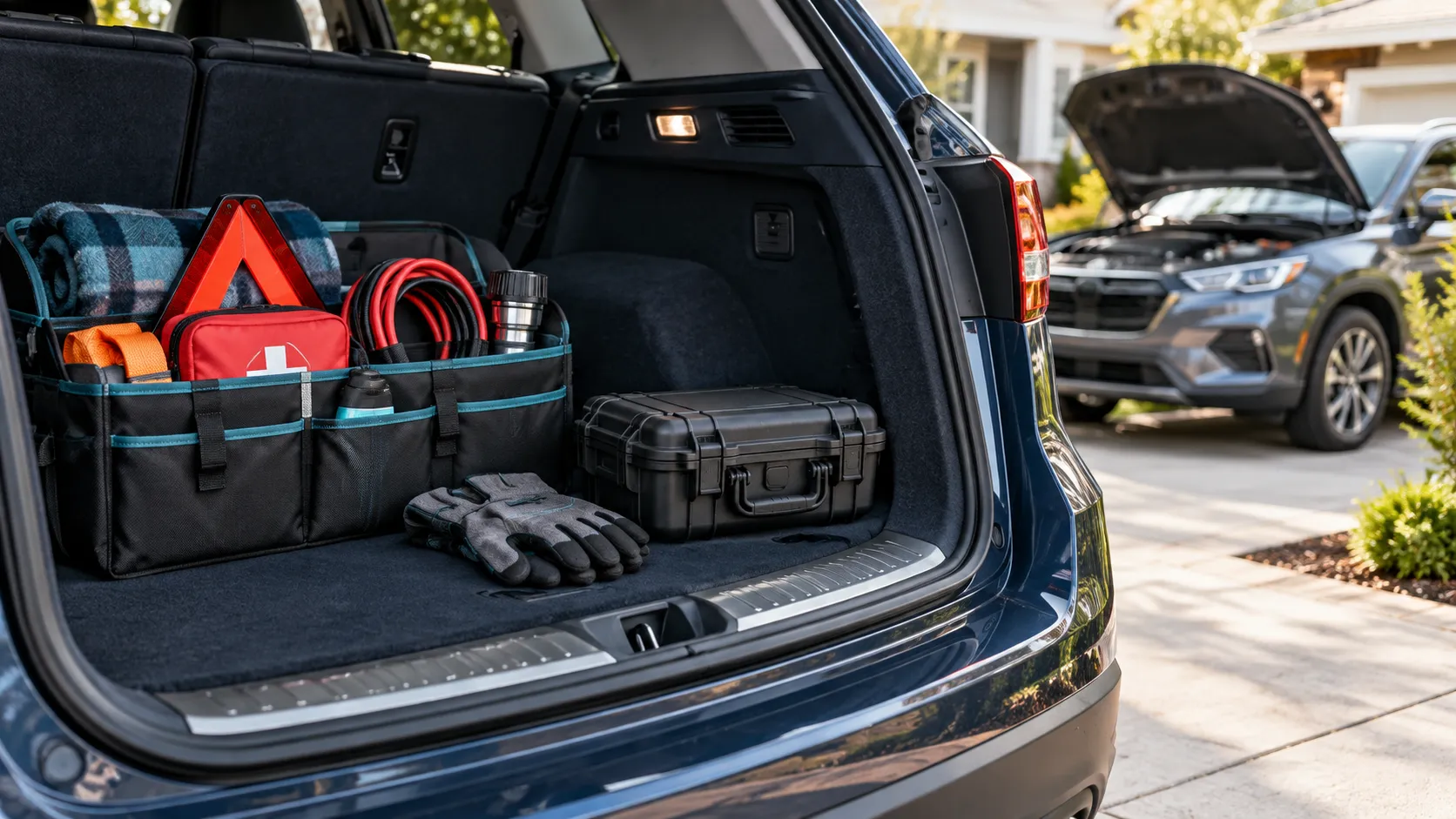
After using the pack, return it to your charging routine before putting it back in storage. Check it before a trip and follow NOCO’s storage and temperature guidance. Do not use a hot dashboard or loose cargo space as a default home for electrical equipment.
For a broader choice between backup methods, read our jump starter vs jumper cables guide. If your main goal is restoring charge while parked, our jump starter vs battery charger comparison explains why the shopping decision changes.
When neither model is the right answer
If the engine cranks normally but does not run, do not assume more starting capacity addresses the fault. A jump starter is one piece of emergency equipment, not a diagnostic result. Repeated no-start events should lead to a battery, charging-system, or vehicle inspection appropriate to the symptoms.
If a car sits unused for long periods, a suitable charger or maintainer may deserve priority over upgrading from GB40 to GB50. If you are uncomfortable identifying terminals or following the procedure, professional roadside help may be the better emergency plan.
If the battery system is incompatible, or the engine exceeds both published envelopes, neither choice becomes suitable because it is discounted. Resolve compatibility first. A return policy is useful for a purchasing mistake but does not make experimenting on the vehicle a sound plan.
Frequently asked questions
Is GB50 always better than GB40?
No. GB50 has higher published starting-current and stored-energy figures and a wider engine envelope. Whether that is worth buying depends on your compatible vehicle, storage plan, and current package cost. This guide does not establish a hands-on performance winner.
Can GB40 handle an ordinary gasoline car?
Check its actual engine and battery system. NOCO publishes guidance up to 6.0L gasoline for GB40, but that is not a universal guarantee. Confirm the vehicle’s permitted jump-start procedure and keep the pack charged.
Can these charge a discharged car battery?
They provide starting assistance rather than a full battery-charging or maintenance program. If you need to restore or maintain charge while parked, choose a charger approved for the battery type and follow its instructions.
Should I choose GB50 for winter?
Do not promise yourself guaranteed winter starts from the larger model. Consider your engine, battery health, permitted operating conditions, and how the pack is stored. We have not conducted cold-weather tests of these two products.
Do both models use USB-C?
NOCO’s current model-specific specs pages list USB-C inputs. Older how-to text still mentions Micro-USB. Confirm the physical port and matching manual for the exact unit being sold.
Can I keep one pack for two cars?
Yes, if both vehicles are compatible and the chosen model fits their requirements. The practical problem is access: decide which car carries it and how you will keep it charged. A shared pack cannot be in two locations at once.
Our buying recommendation
Choose GB40 when it comfortably fits your compatible vehicle and you prefer the simpler purchase. Choose GB50 when its wider published engine guidance is the reason you need the step up. For either option, verify the shipped revision, read the manuals, and create a charging and storage routine before relying on it.
Research basis: manufacturer specifications, user guides, and retailer model identification. Recommendations are editorial judgments. No hands-on testing, vehicle-specific fit guarantee, current price claim, or product star rating is implied.