
Amazon affiliate disclosure: As an Amazon Associate, we earn from qualifying purchases. Amazon links on this page may earn a commission at no additional cost to you.
Pick the charger your battery allows
The NOCO GENIUS5 vs GENIUS10 choice is mainly about charging current, battery capacity, and your available charging window. A larger charger can be useful, but the battery manufacturer’s permitted charging rate comes first.
View GENIUS5 details on AmazonView GENIUS10 details on AmazonCheck the selected model, seller, package contents, and your battery instructions before ordering.
Quick answer
GENIUS5 is the practical starting point when its 5A output and published charging range up to 120Ah fit your compatible battery and schedule. GENIUS10 offers 10A output and a published range up to 230Ah, making it worth comparing for larger batteries or a shorter charging window. Neither is a jump starter. Confirm voltage, chemistry, mode, and the battery’s allowed charging current before choosing.
This is a researched buying comparison, not a hands-on test report. Specifications come from NOCO’s model pages and manuals, checked October 14, 2026. Buying recommendations are editorial judgments. We have not measured actual charge times, battery recovery rates, or long-term reliability for these two units.
5A DC output
10A DC output
AC outlet required
Charging and maintenance
NOCO GENIUS5 vs GENIUS10 comparison table
These figures describe manufacturer specifications. A capacity limit is not a charging-time guarantee, and an output rating does not override a battery’s own restrictions.
| Specification | GENIUS5 | GENIUS10 |
|---|---|---|
| Rated charging current | 5A DC | 10A DC |
| Published charging capacity | Up to 120Ah | Up to 230Ah |
| Voltage selection | 6V and 12V, mode dependent | 6V and 12V, mode dependent |
| Compatible chemistry families | Lead-acid and supported lithium | Lead-acid and supported lithium |
| AC input | 120–240V, 50–60Hz | 120–240V, 50–60Hz |
| Published weight | 1.5lb | 3.33lb |
| 12V Repair mode | Yes; advanced use | Yes; advanced use |
| Supply mode | Not listed | Yes; advanced use with special warnings |
| Our main use case | Routine compatible battery care with time available | Larger compatible batteries or a stronger charging requirement |
Sources: GENIUS5 specifications, GENIUS10 specifications, and model-specific instructions. The last row is editorial guidance.
“6V and 12V” plus “lithium” does not mean every chemistry is supported at both voltages. NOCO’s lithium mode is for supported 12V lithium batteries with a battery management system. Confirm your exact battery against the matching manual.
Choose by the job you actually need done
Routine car care
Consider GENIUS5 if its charging range fits and you can leave enough time for a normal charging session.
Larger battery
Compare GENIUS10 when the battery exceeds the smaller model’s published charging range or supports a higher rate.
Roadside no-start
Look at jump-starting or roadside assistance instead. These chargers need AC power and time.
GENIUS5: when the smaller charger makes sense

Retailer product image; verify the purchased package.
A straightforward option for routine care
Benefits: Lower rated current and smaller published weight can suit an owner caring for one compatible battery with a flexible schedule.
Limitations: Its published charging range is smaller. A low-current choice can also mean a longer wait when significant charge must be restored.
View GENIUS5 details on AmazonOur editorial starting point is to match the charger to the battery, not the size of the vehicle. A passenger car with a compatible battery inside the published range may not need a larger unit simply because it has a powerful engine. Engine displacement is more useful in a jump-starter discussion than in this charger comparison.
GENIUS5 is worth considering when charging is part of an occasional home maintenance routine. If you can organize a charging session without needing the car immediately, a smaller charger may meet the practical need. That is a scheduling decision, not a claim that slower charging is always better for every battery.
Before buying, identify where you will place it and how you will reach the battery safely. A convenient AC outlet does not automatically provide a clear cable route. Avoid planning a setup that requires a cable across a walking route or through a place where a vehicle can crush it.
GENIUS10: when the extra current has a purpose

Retailer product image; verify the purchased package.
Compare it for larger charging tasks
Benefits: Higher rated output and a wider published charging-capacity range offer a clear reason to step up when the battery permits it.
Limitations: The unit is heavier, and its extra modes require understanding. More current does not make an incompatible battery suitable.
View GENIUS10 details on AmazonGENIUS10 is the stronger candidate when your actual battery falls above the GENIUS5 charging range but remains inside the larger model’s guidance. You still need to confirm chemistry, mode, and the battery manufacturer’s charging recommendations. A capacity match alone is incomplete.
It can also make sense when you repeatedly need to restore charge within a limited home charging window. Treat that as a reason to compare the models, not permission to promise yourself a specific completion time. The battery’s starting condition, health, temperature, and charging stages affect the session.
For a household with several vehicles, write down each battery’s requirements before choosing one shared charger. Do not assume the unit can charge multiple batteries independently at the same time. These are individual chargers, and an improvised multi-battery arrangement needs guidance beyond this buying article.
Does GENIUS10 charge twice as fast?
It has twice the published current rating, but a full session is not simply current multiplied by time. Charging does not always continue at the maximum rating until the final moment. A smart charger changes its behavior through stages, and the battery has its own limits.
For a rough planning exercise, suppose a battery needs 30Ah restored. Dividing 30Ah by 5A gives six hours; dividing by 10A gives three hours. This is an ideal arithmetic illustration only. It excludes charging losses, current tapering, temperature effects, and battery condition, so it must not be used as a promised time to full charge.
Use the exercise to understand why output matters, then use the manufacturer’s approximate tables and the actual charging indicators for practical planning. If the car must leave at a fixed time, allow a margin and avoid treating a shopping comparison as a departure-time guarantee.
Do not confuse amp-hours with cold-cranking amps. Ah is a capacity measure relevant to the charging discussion. CCA relates to starting performance under specified conditions. If the label only gives CCA, obtain the battery’s charging information rather than substituting that number into an Ah calculation.
Five checks before choosing either model
1. Battery voltage
Read the battery label and vehicle documentation. Selecting a charging mode by guesswork is unnecessary risk. A larger charger does not protect a battery from choosing the wrong voltage setting.
2. Battery chemistry
Identify flooded lead-acid, AGM, another supported lead-acid type, or the exact supported lithium battery. Use the manual’s specific mode instructions. Do not assume an AGM setting and a lithium setting are interchangeable because both batteries are used in vehicles.
3. Capacity and permitted charging rate
Check Ah capacity where available and the battery maker’s allowed charge rate. This is especially important with small batteries. The fact that a charger offers 10A is not evidence that your battery accepts 10A. Ask the battery manufacturer when its label or instructions leave that unclear.
4. In-vehicle charging instructions
Find the vehicle’s approved connection points and charging restrictions. Remote terminals, battery sensors, and access arrangements vary. Follow the vehicle and charger manuals together; this article intentionally does not supply one universal clamp sequence.
5. Available AC power and environment
Check the purchased unit’s plug and local electrical requirements. U.S. readers should verify that the package is the appropriate version. Plan a dry, ventilated location and the placement required by the manual, rather than relying on a weather-resistance label to justify exposure.
Maintenance, recovery, and starting are different tasks
Maintenance is about keeping a compatible battery ready during periods of low use. Restoring a large amount of missing charge is a different workload. When you compare model capacity, distinguish the charging range from the manufacturer’s maintenance statement; maintenance support does not imply that a depleted large battery will recharge promptly.
Battery recovery is another separate question. A special mode cannot establish that an old battery is safe or reliable. If the battery repeatedly loses charge, has a fault indicator, or no longer performs as needed, arrange a battery and vehicle-system check rather than relying on repeated recovery attempts.
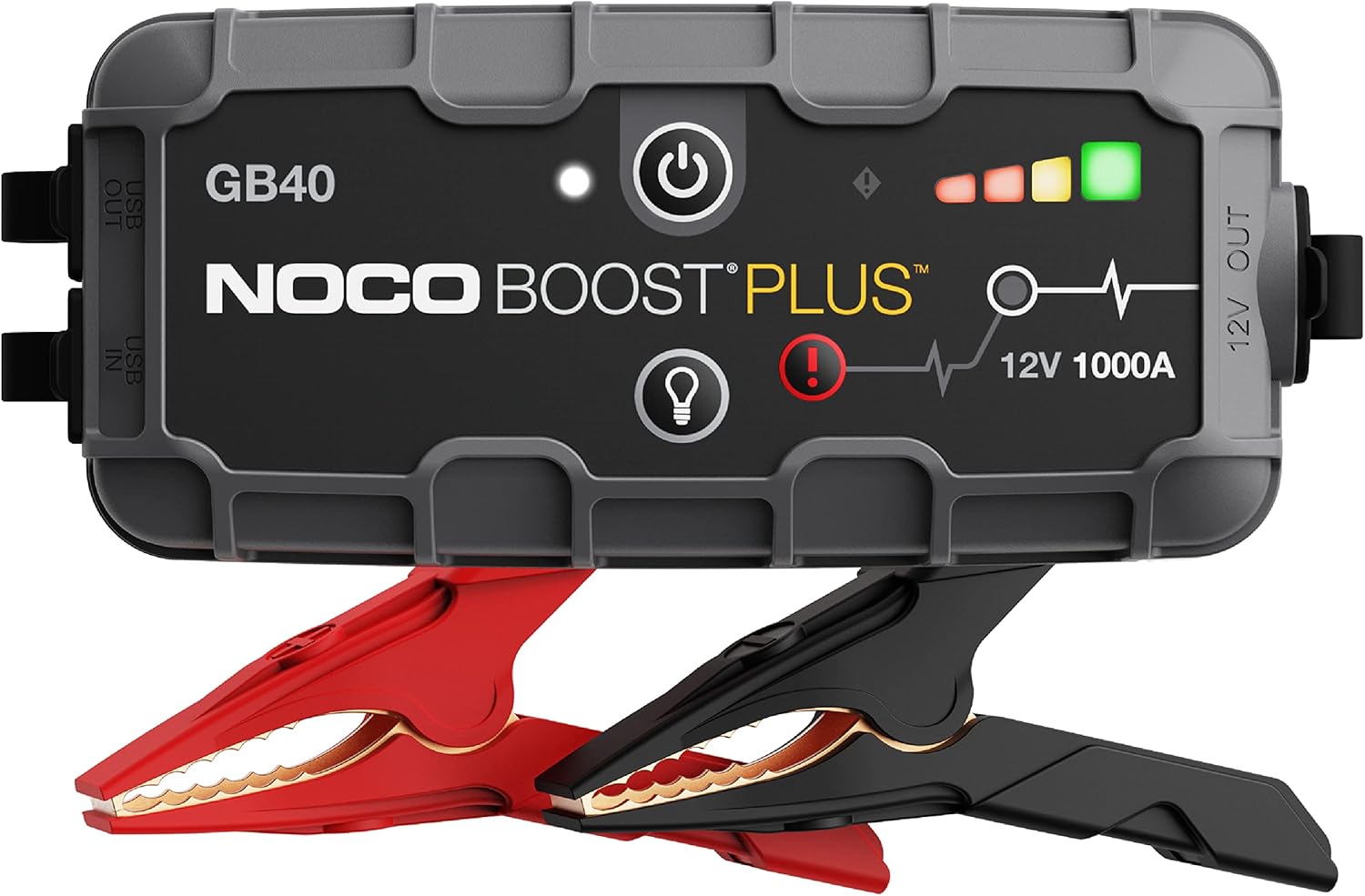
Starting assistance is different again. If the problem occurs away from an outlet and the car needs immediate help, read our jump starter vs battery charger guide. For roadside equipment selection, the NOCO GB40 vs GB50 comparison discusses a different product family and job.
Advanced modes are not everyday shortcuts
Read the GENIUS5 instructions and GENIUS10 user guide before use. NOCO restricts Repair mode to 12V lead-acid batteries and warns about elevated voltage and sensitive electronics. Follow its battery-disconnection guidance before using that mode.
Force mode disables safety features. Do not treat it as an automatic next step when a battery is not detected. Verify the condition, voltage, chemistry, connections, and manual instructions first. Seek qualified help when the reason is uncertain.
GENIUS10 Supply mode also carries special warnings: live power is present and safety features are disabled. It is not a reason for an inexperienced owner to improvise a memory-saver or connect arbitrary accessories. Ordinary charging and maintenance do not require experimenting with this feature.
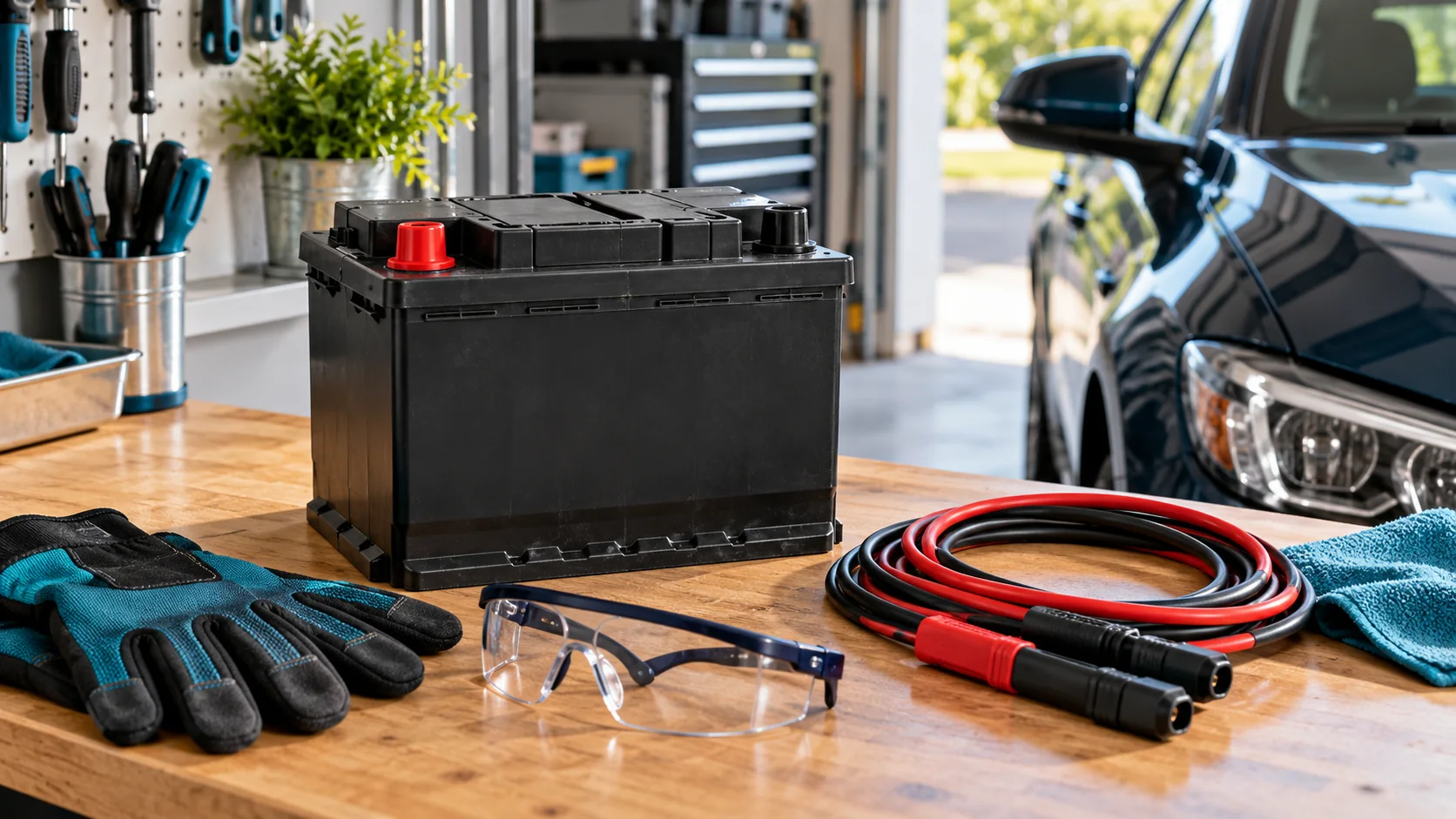
Use eye protection, keep ignition sources away, and do not charge a damaged or frozen battery. Stop when there is damage, leaking, unusual heating, or uncertainty about the battery. Follow the manufacturer’s instructions for the full session, including ventilation and monitoring.
How to compare the purchase without chasing a discount
Open the correct product page and verify the selected model. A listing may present accessories, bundles, or related chargers alongside the item you want. Confirm the model number, included cables, plug version, seller, and return conditions before completing the purchase.
We do not publish a current price, claimed saving, or customer star rating here. Those details can change and are not needed to explain the selection. Compare the actual package cost at checkout and decide whether the larger model solves a real charging need.
Think about storage after use. Keep the charger and its accessories together, protect the cables, and put the manual somewhere easy to find. A routine that records the correct battery mode can prevent having to rediscover the setup months later.
Do not let an accessory purchase distract from compatibility. A storage case or convenient connector is useful only after the charger and battery are a suitable match. Permanent eyelet installation also needs the correct hardware and vehicle instructions; do not modify the connection simply to save a few minutes.
Frequently asked questions
Which is better for a typical car battery?
Start with its voltage, chemistry, Ah capacity, and permitted rate. GENIUS5 may fit a routine compatible battery with time available. GENIUS10 is worth comparing when a larger battery or charging workload justifies the step up.
Can I use GENIUS10 on a small battery?
Do not assume suitability from the charger name. Check the battery manufacturer’s permitted charging current and the matching charger mode. If the recommendation is unclear, obtain confirmation before connecting it.
Can either unit jump-start my car?
These are AC-powered battery chargers, not portable jump starters. Choose the tool for the situation. A roadside emergency and an at-home charging session have different requirements.
Can they charge lithium batteries?
Only use a supported battery and mode. NOCO specifies a BMS requirement for its 12V lithium mode. The general chemistry description does not establish universal lithium compatibility or support at every voltage.
Is Repair mode guaranteed to save an old battery?
No. Recovery is not guaranteed and does not prove future reliability. Follow the special mode warnings and have a battery checked when its condition or performance is questionable.
Should I pay more just for Supply mode?
Only if you have a legitimate application, understand the manual, and can use it safely. It is an advanced feature with special warnings, not a necessary part of ordinary battery charging.
Our recommendation
Choose GENIUS5 when the battery requirements and your available time make it sufficient. Choose GENIUS10 when its higher output or larger published charging range solves your actual task, and the battery permits that rate. Confirm compatibility before comparing price, and keep the manuals central to the setup.
Research method: manufacturer specifications, manuals, and retailer model identification. No hands-on tests, measured recovery claims, current prices, or star ratings are implied.

1 thought on “NOCO GENIUS5 vs GENIUS10: Which Battery Charger Should You Buy?”