

Amazon affiliate disclosure: As an Amazon Associate, we earn from qualifying purchases.
Looking for a hose-style tire gauge? Compare the exact model and pressure range before buying.
View the JACO 100 PSI gauge on AmazonA digital pressure gauge is an electronic tool that measures air or fluid pressure and shows the reading on a screen. For tire care, choose a gauge rated for your valve and pressure range. A digital display can be easier to read, but accuracy depends on the specific gauge, its condition, and how you use it.
This buying and use guide helps drivers choose a suitable digital pressure gauge, compare useful features, and check tires consistently. The priority is matching the instrument to the job: pressure range, stated accuracy, valve access, readable units, and service support.
For the electronics inside the instrument, read our separate guide to how digital pressure gauges work. That article covers sensors, signal conversion, and measurement errors; this page focuses on selecting and using a tool.
Digital Pressure Gauge Basics Before You Buy
Digital Pressure Gauge Definition
A digital pressure gauge is a pressure-measuring device that converts pressure into an electronic signal and displays the result as a number. Instead of a moving needle, you get a screen readout, usually in PSI, bar, or kPa.
I like to think of it as the modern version of a pressure gauge. It still does the same basic job, but the display is easier to interpret at a glance, especially when you need a precise reading.
How the Electronic Sensor Reads Pressure
Most digital pressure gauges use a pressure sensor inside the housing. When pressure pushes against the sensor, the sensor changes its electrical signal. The gauge electronics then translate that signal into a pressure value on the screen.
The exact sensor design can vary. Some gauges use piezoresistive strain elements or capacitive sensors. The important part for most users is simple: pressure enters the gauge, the sensor detects it, and the display turns that data into a readable number.
Many digital gauges can switch between units instantly, which is handy when you work with equipment that uses different measurement systems.
Display, Units, and Measurement Range
A clear screen can show the pressure value, unit, battery status, and, on some models, a held reading. Confirm which features the exact model includes rather than assuming every digital gauge has them.
Measurement range matters just as much. A tire gauge may only need a lower range, while an industrial gauge may need to handle much higher pressures. Always match the gauge range to the job so you do not overload the sensor or get poor readings.
Where Digital Pressure Gauges Are Used
Tire Pressure Checks for Cars, Trucks, and Motorcycles
One of the most common uses is checking tire pressure. Digital gauges are popular because they are quick to read and can help drivers keep tires at the recommended pressure.
For accurate tire inflation guidance, I always recommend checking the vehicle placard and the owner’s manual. If you want a reliable reference for tire pressure and maintenance, the National Highway Traffic Safety Administration tire safety guidance is a solid place to start.
Motorcycle riders also use digital gauges because small pressure changes can make a real difference in handling and comfort. A clear number is useful when you’re working with narrow pressure windows.
HVAC, Plumbing, and Air Compressor Applications
Digital pressure gauges are also used in HVAC service, plumbing systems, and air compressor setups. In those jobs, technicians need to check system pressure quickly and accurately.
For example, an HVAC tech may use a digital gauge when diagnosing refrigerant-related issues. A plumber may use one to check water pressure in a line. A shop owner may use one to verify compressor output before running air tools.
Industrial, Laboratory, and Automotive Diagnostic Uses
In industrial and lab settings, pressure readings often need to be repeatable and easy to document. Digital gauges help because they reduce the chance of misreading a needle or scale.
Automotive fuel, boost, oil, and cooling-system tests require purpose-built tools, compatible fittings, and the vehicle service procedure. A handheld tire gauge is not suitable for fuel, refrigerant, oxygen, hot coolant, or hydraulic systems. Do not adapt it simply because the connector appears to fit.
Digital Pressure Gauge vs. Analog Pressure Gauge
Accuracy and Readability Differences
| Feature | Digital Pressure Gauge | Analog Pressure Gauge |
|---|---|---|
| Readability | Numeric screen is easy to read | Needle and scale can be harder to interpret |
| Accuracy | Compare the stated accuracy and calibration | Compare the stated accuracy and calibration |
| Small changes | Shows changes clearly | Small movement may be harder to judge |
Digital gauges are usually easier to read because the number is right there on the screen. That helps when you are working in dim light, at odd angles, or in a hurry.
Durability and Maintenance Differences
Analog gauges often have fewer electronic parts, so they can be simpler and sometimes tougher in rough conditions. Digital gauges, on the other hand, may need battery changes and more care around moisture and impact.
That said, a well-built digital gauge can still hold up well in daily use. The key is choosing one that matches the environment where you plan to use it.
Cost and Feature Comparison
Analog gauges are often less expensive at the basic level. Digital gauges usually cost more because they include electronics, a display, and extra functions.
What you get for the extra cost is convenience. Features like backlighting, unit switching, and memory functions can make a digital gauge more useful, especially if you use it often.
Key Features That Make a Digital Pressure Gauge Useful
Backlit Screens and Easy-to-Read Displays
A backlit screen is a big advantage if you work in a garage, under a vehicle, or outdoors at night. Large digits also help reduce reading mistakes.
If you’ve ever squinted at a dial gauge in poor light, you already know why this matters.
PSI, Bar, kPa, and Multiple Unit Switching
Many digital gauges let you switch between PSI, bar, and kPa with a button press. That makes them more flexible across different types of equipment and service tasks.
For most U.S. drivers, PSI is the main unit. But unit switching is still useful if you work on imported equipment or compare specs from different sources.
Auto-Off, Hold Function, and Memory Settings
Auto-off helps save battery life. The hold function can freeze a reading on the screen so you can remove the gauge and still note the value. Some models also store previous readings, which is useful when you are tracking changes over time.
Accuracy Rating and Measurement Resolution
Accuracy rating tells you how close the gauge is to the real pressure value. Measurement resolution tells you how small of a change the gauge can display.
A gauge can look impressive and still be a poor fit if the resolution is too coarse for your job. If you need to catch small pressure changes, pay close attention to both numbers.
How to Use a Digital Pressure Gauge Correctly
Check the Gauge’s Pressure Range Before Use
Make sure the gauge can handle the pressure you plan to measure. If the range is too low, you may damage the gauge or get unreliable readings.
Look at the valve, port, or fitting before you start. The gauge should match the connector style so you can get a secure seal.
Wait for the reading to stabilize, then note the unit and the number shown on the screen.
After use, release pressure if needed and keep the gauge dry and protected.
Attach the Gauge Securely to the Valve or Port
A loose connection can leak air and give you a bad reading. Press or thread the gauge on firmly, depending on the design, and make sure it seals before you trust the result.
Read the Measurement and Verify Units
Always confirm the unit before you write down the number. A pressure reading in PSI is not the same as a reading in bar or kPa, and mixing them up can lead to mistakes.
Do not assume the gauge is set to PSI just because you expect it to be. Unit mix-ups can lead to incorrect inflation targets.
Release Pressure and Store the Gauge Properly
When the job is done, remove the gauge carefully and store it in a clean, dry place. If the model has a protective case, use it. That small habit can extend the life of the tool.
Advantages of Using a Digital Pressure Gauge
Faster and Easier-to-Read Measurements
Digital gauges save time because the reading is immediate and clear. You do not need to estimate needle position or compare marks on a dial.
Better Precision for Small Pressure Changes
When pressure matters in small increments, digital readouts are helpful. That is true for tire pressure, diagnostic work, and many service tasks where a slight change can affect performance.
Helpful Features for Everyday and Professional Use
Backlights, memory functions, and unit switching make a digital gauge more versatile. Those features can be useful whether you are checking one car at home or working on multiple systems in a shop.
- Check tire pressure when tires are cold for the most consistent reading.
- Keep the gauge’s sensor and connector clean so it seals properly.
- Replace batteries before they run low if you rely on the gauge often.
- Compare readings against a known reference if accuracy is critical.
Limitations and Common Problems With Digital Pressure Gauges
Battery Dependence and Power Failure Risks
Digital gauges need power, which means dead batteries can stop the tool from working when you need it most. That is a simple limitation, but it matters in real-world use.
Sensitivity to Drops, Moisture, and Extreme Conditions
Electronics can be more vulnerable than a basic analog dial. A hard drop, water intrusion, or long exposure to heat and cold can affect performance.
Calibration Drift and Accuracy Concerns Over Time
Like any measuring tool, a digital gauge can drift over time. If accuracy matters for your work, check calibration periodically or compare it with a trusted reference.
Your pressure readings keep changing without a clear reason, or the gauge seems inconsistent after a drop, battery change, or long storage period. In automotive work, inconsistent pressure readings can point to a tool issue or a real system problem.
Choose a Tire Gauge Before Choosing an Inflator
A standalone gauge is useful even when your inflator has a digital screen. It gives you a separate way to check pressure after disconnecting the pump. This is a practical workflow recommendation, not a claim that a separate tool will always be more accurate. If two tools disagree, compare their tolerances and measuring conditions before deciding which one to trust.

JACO ElitePro Digital — 100 PSI model
Consider it for: regular passenger-car tire checks when you prefer a hose-style gauge and a readable digital number.
JACO lists a 5–100 PSI range, 0.10 PSI resolution, and ±0.50% of full-scale accuracy for this model. The full-scale tolerance is about ±0.5 PSI; a display showing tenths does not promise accuracy to a tenth.
Limitations: it needs power and is not the same as JACO’s 200 PSI version. Confirm pressure range, valve access, battery instructions, seller, and the exact model before ordering. It measures tire pressure; it does not inflate a tire.
View the JACO 100 PSI gauge on AmazonEditorial note: this is a specification-based recommendation. We have not performed hands-on testing for this article and do not assign a product score. Product availability and seller details can change.
Three sensible buying routes
| Your situation | What to look for | What to avoid |
|---|---|---|
| One daily-driver car | Readable screen, easy valve seal, suitable range | Buying features you will not use |
| Frequent checks or awkward wheels | Hose and chuck geometry that reaches the valve | Assuming a hose fits every wheel opening |
| Truck, RV, or low-pressure specialty use | Range and accuracy specified for the actual application | Using a passenger-car gauge outside its rating |
For occasional use, a basic gauge with a clear specification may be enough. A more elaborate gauge is worthwhile when its connector or readout solves a problem you actually have. If you cannot reach the valve without bending it, change the approach or tool. Do not force the valve stem to accommodate the gauge.
A Practical Cold-Tire Checking Routine
NHTSA recommends checking all tires, including the spare, at least monthly while cold: the vehicle has not been driven for at least three hours. Use the vehicle placard or owner’s manual pressure, rather than the maximum shown on the tire sidewall. Front, rear, and spare requirements may differ.
- Read the placard and write down the target for each axle. Follow any separate loaded-vehicle guidance in the manual.
- Inspect the tire and valve before measuring. A gauge cannot determine whether a damaged tire is safe.
- Switch the gauge to the correct unit. Remove the cap and align the chuck straight with the valve.
- Obtain a sealed reading, remove the gauge, and record it. Repeat if the connection hissed continuously or the result looks inconsistent.
- Adjust with an appropriate inflator, disconnect it, and check again. Replace the valve cap and include the spare where applicable.
Do not release air from a warm tire merely to make its reading match a cold-pressure target. Recheck under the conditions specified by the vehicle maker. If a tire repeatedly loses pressure, have a tire professional inspect the tire, valve, and wheel instead of repeatedly topping it up.
A tire-pressure warning system supports the driver, but it is not a replacement for scheduled checks. A portable gauge also does not diagnose every TPMS fault. For vehicle-specific reset or relearn steps, follow the owner’s manual.
Understand disagreement between two gauges
Imagine one tool reads 35.0 PSI and another reads 35.6 PSI. That difference alone does not prove either is defective. Each tool has a tolerance, and small amounts of air can escape during successive measurements. Temperature, valve alignment, and unit settings can also change the comparison. Measure under the same conditions and avoid repeatedly releasing air while trying to make the displays identical.
Resolution is the smallest step displayed. Accuracy describes closeness to the reference value. Repeatability describes how consistently a tool reads under the same conditions. A gauge can repeat the same wrong number, so repeatability does not establish accuracy. When the disagreement affects your inflation decision, compare with a maintained reference gauge or ask a tire shop to check.
When to replace or service the tool
Start with the manufacturer’s instructions for a weak display or inconsistent reading. Inspect the valve seal, check the selected unit, and replace the battery only with the specified type. Do not open a sealed sensor assembly or attempt to adjust calibration without an approved procedure. After a hard impact, stop relying on the tool until its readings have been checked. Not every inexpensive consumer gauge supports user calibration.
Keep the gauge in a protective case where practical. Avoid storing it where it can be crushed by loose tools. A stated pressure range does not establish water resistance, chemical compatibility, or safe operating temperature. Look for those separate specifications when your use requires them.
Amazon vs Walmart: Compare the Exact Gauge
Compare the JACO ElitePro Digital 100 PSI model with the same pressure range and included accessories. Walmart results may include other versions or third-party sellers. Match the model before comparing the delivered total.
| Check before buying | Amazon | Walmart |
|---|---|---|
| Current price | Check the live listing | Check a matching listing in search results |
| Model match | Confirm 100 PSI digital version | Confirm 100 PSI digital version |
| Final value | Include shipping, tax, seller and returns | Include shipping, tax, seller and returns |
Check Amazon listing Search Walmart for this gauge
Price-check note: We have not verified a matching live price at both retailers, so we do not name a cheaper store. Availability, shipping and seller terms can change. We may earn a commission through qualifying retailer links.
Related Tire-Care Guides
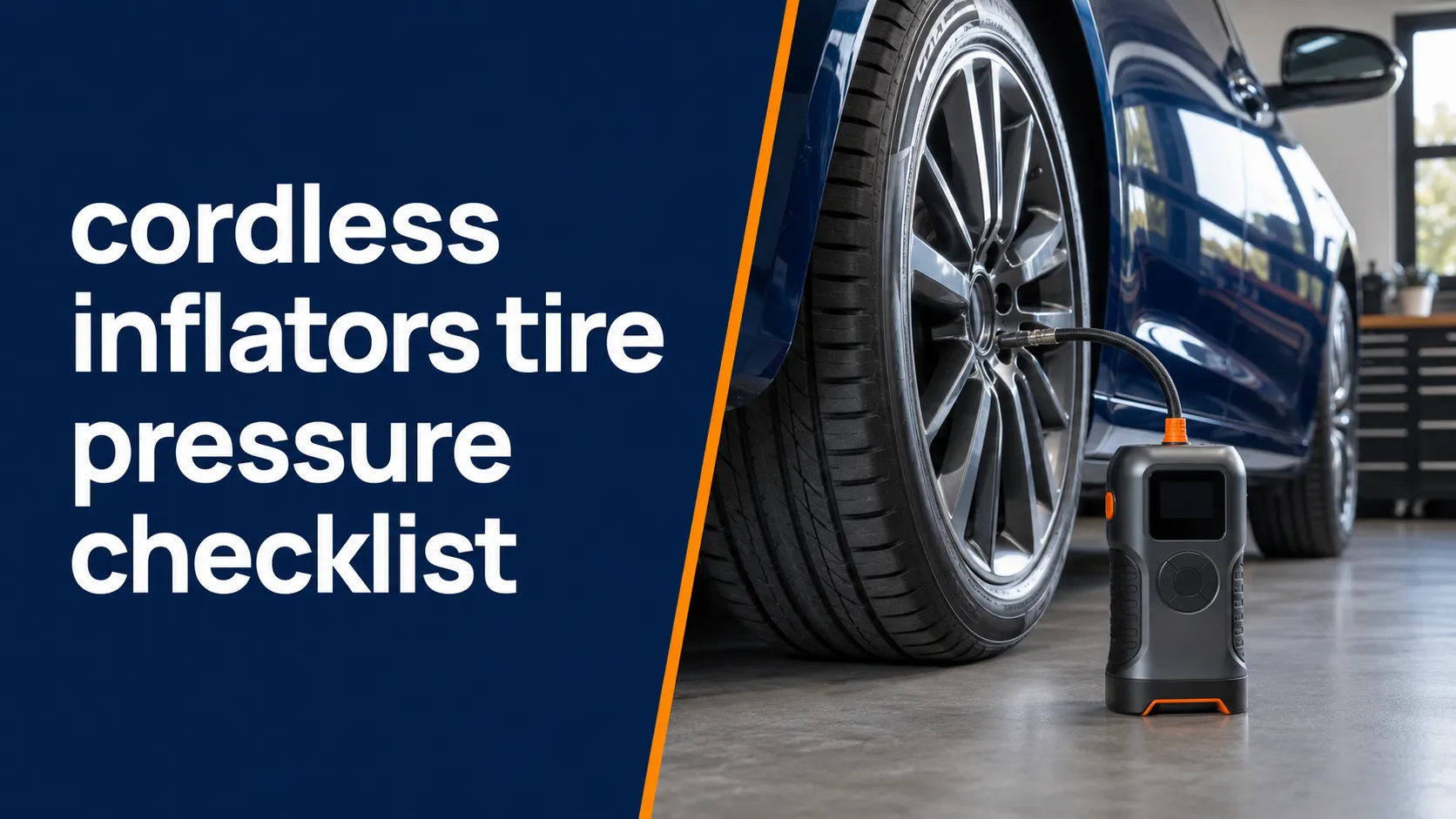
For the inflation side of the job, read our tire-pressure checklist and guide to cordless-inflator accuracy. If you need a pump, our cordless inflator guide for car tires explains the separate buying decision. A dashboard display is a different tool; see digital dashboard gauges versus analog for that comparison.
How to Choose the Right Digital Pressure Gauge
Match the Gauge to the Pressure Type and Range
Start with the job. A tire gauge, HVAC gauge, and industrial gauge may all look similar, but they are built for different pressure ranges and system types.
Check Accuracy, Build Quality, and Calibration Options
Look for a gauge with a stated accuracy rating and a design that fits your environment. If you need dependable readings, calibration support is worth paying attention to.
Look for the Right Display, Units, and Connector Type
Choose a screen you can read easily. Make sure the gauge supports the units you use most, and confirm that the connector fits the valve or port you plan to measure.
Compare Home-Use vs. Professional-Grade Models
Home-use models are often fine for occasional tire checks. Professional-grade gauges usually offer better durability, tighter accuracy, and more features, but they cost more. The right choice depends on how often you will use it and how critical the readings are.
If you use a gauge only a few times a year, a basic model may be enough. If you use it daily, it is usually smarter to pay for better build quality and a more reliable display.
A digital pressure gauge is a simple tool with a digital display that makes pressure readings easier to see. If you choose the right range, keep it calibrated, and use it correctly, it can be a very practical tool for tire care, diagnostics, and many other jobs.
Common Questions About What a Digital Pressure Gauge Is
Neither display type guarantees greater accuracy. A digital display may offer finer resolution, but the stated tolerance, calibration, condition, and valve seal determine whether the measurement is dependable.
Yes, if you want dependable results over time. Digital gauges can drift, especially after heavy use, impact, or long storage. Periodic calibration or comparison with a trusted reference is a smart habit.
Yes, many are made for tire valves and are used that way every day. Just make sure the gauge is designed for the valve type on your vehicle, motorcycle, or trailer.
Battery life depends on the model, how often you use it, and whether it has auto-off. Some last months or longer with normal use, while others need more frequent battery changes. Low-power features help a lot.
Most show PSI, and many also show bar and kPa. Some models include additional units, which is useful if you work with different equipment or compare specs from multiple sources.
- A digital pressure gauge measures pressure electronically and shows the result on a screen.
- It is commonly used for tires, HVAC, plumbing, compressors, and diagnostic work.
- Digital models are easier to read, but they depend on batteries and need care.
- Choose the right pressure range, units, connector, and accuracy rating for your job.
- For critical use, check calibration and compare readings over time.

1 thought on “Digital Pressure Gauge Buying Guide: Features & Tire Checks”