
Are 12V air compressors worth it? For many drivers, yes. A well-matched unit makes routine tire top-ups easier and adds a useful roadside backup. Its real value depends on your tires, driving habits, power source, expected fill speed, and willingness to maintain it.
It is most useful when you check pressure at home, travel far from service stations, or deal with seasonal pressure changes. It is less compelling if you rarely drive, already own a capable inflator, or expect a small unit to perform like a shop compressor.
Value RuleA 12V label only describes the power source. The compressor is worth buying only when its airflow, duty cycle, cable reach, gauge, and tire-size support match your vehicle.
A 12V air compressor is usually worth it for drivers who want convenient tire top-ups and an extra roadside option. It draws power from the vehicle, so there is no battery pack to recharge. Choose one that matches your largest tire and approved power connection. It is not a repair tool, and a compact model may be slow on large truck or SUV tires.
Routine pressure corrections, seasonal top-ups, and tested roadside backup.
Compact pumps can be slower and need cooling breaks during long fills.
Vehicle power removes the need to charge and monitor a separate battery.
A dependable pump still cannot repair a puncture or damaged tire.
Are 12V Air Compressors Worth It for Most Drivers?
They are often worth owning when tire care is the main job. A compressor at home can correct a small pressure loss before a commute. In the trunk, it can add air to a sound tire when a working station pump is not nearby.
The value becomes stronger for road-trip drivers, families with more than one car, and people who live far from tire services. Cold weather can reduce measured tire pressure. A ready compressor makes seasonal corrections more convenient.
However, not all models deliver the same experience. A small outlet-powered pump may suit a sedan. It may feel frustrating on large pickup tires. A stronger clamp-on unit can move more air, yet it may cost more, occupy more space, and need direct battery access.
Think of it as a tire-care tool, not emergency insurance. It may restore correct pressure after a minor loss. It cannot seal a puncture, repair sidewall damage, reset a separated bead, or make a damaged tire safe.
The “12V” label only tells you how the pump gets power. It does not prove useful speed, airflow, build quality, gauge accuracy, or tire-size support. Compare the full specifications and manual before deciding.
What Makes a 12V Compressor Worth Buying?
The right features reduce hassle every time you use the pump. A poor match can turn a simple top-up into a slow or failed job. Look beyond maximum PSI and compare the factors that affect normal use.
A snug plug or well-fitted clamps help give steady power. Loose, dirty, or weak links can cause stops and heat.
Airflow affects how quickly the tire fills. Large tires contain more air, so they need a pump suited to their volume.
Duty cycle controls run and rest periods. A pump used past its limit may overheat or shut down.
A sound hose and tight valve connection keep air moving into the tire. A poor seal wastes time and creates misleading readings.
A clear gauge helps you stop near the target. A second gauge lets you check the result after airflow stops.
Some pumps have a heat cut-off. It may stop the motor when the pump gets too hot.
VIAIR says duty cycle is the set run time within a full cycle. The cycle has both work and rest. Its compressor FAQ also notes that some pumps have a heat cut-off.
A heat cut-off helps, but you must still follow the guide. A shutoff means the pump needs care and time to cool. Heat that comes back may point to a poor match, blocked air vents, low volts, or a fault.
Choose a pump for your largest normal tire. Then check its fill guide, duty cycle, cable reach, and power link. A high top PSI alone tells you very little about how well it will work.
The Features That Determine Real Value
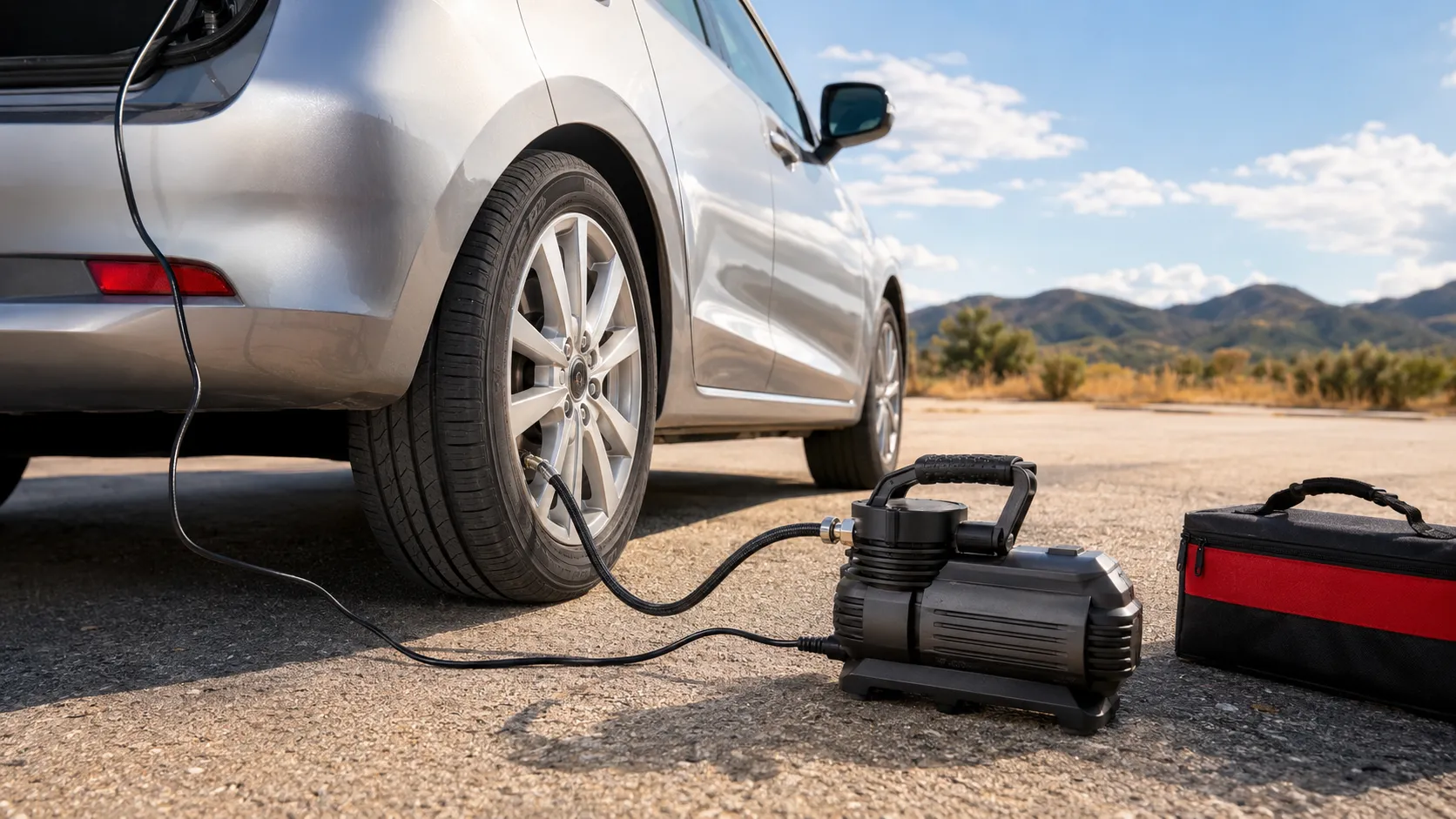
A low price is not a bargain if the cable cannot reach every tire or the pump overheats before finishing. The facts below reveal far more than a large maximum-pressure number.
| Factor | Why It Matters | What to Check |
|---|---|---|
| Supported tire size | Prevents asking a small pump to move too much air | The maker’s tire or car guide |
| Duty cycle | Sets the safe run and cooling pattern | Rated pressure, run time, and rest time |
| Power draw | Must match the outlet, wiring, fuse, or battery link | Both the pump and car guides |
| Airflow | Affects useful fill speed, especially on large tires | Airflow at useful pressure, not only at zero pressure |
| Hose and cable reach | The unit must reach every tire without strain | Your vehicle’s size and connection location |
| Gauge consistency | Helps prevent underinflation or overinflation | Compare with a trusted second gauge |
| Storage protection | Guards the pump from damp, dirt, heat, and crushing | Case quality and planned trunk location |
A good pump can still give the wrong result if you use the wrong target. NHTSA says to use the cold PSI on the driver-door placard or in the owner’s manual. Do not use the tire sidewall number as the normal target. See the NHTSA TireWise guide.
Outlet Plug or Battery Clamps: Which Works Best?
Both link types can work well. The right choice depends on the pump’s current draw and the car’s design. Do not choose by ease of use alone.
| 12V Connection | Common Advantage | Key Check | Possible Limitation |
|---|---|---|---|
| Accessory-outlet plug | Fast and simple to connect | Confirm outlet watts or amps and fuse rating | Some outlets cannot support stronger pumps |
| Battery clamps | Supports models designed for direct battery power | Follow clamp order and polarity instructions | Needs safe access to the right battery points |
Never convert a clamp-powered unit to a small outlet plug unless the manufacturer approves it. Do not install a larger vehicle fuse to stop repeated fuse failures. The fuse protects the wiring. A blown fuse can signal an overload or fault.
Check the car guide for its outlet rating. Check the pump label for its current or power needs. If the facts do not match, ask the pump maker or car dealer before use.
Stop if a plug, socket, clamp, wire, or fuse holder gets hot, loose, dark, or melted. Do not bypass a fuse or fix car wires by the road. Use a shop approved by the maker or a trained technician.
How to Confirm the Purchase Was Worth It
Do not let a roadside stop be the first use. A short home check can reveal missing parts, poor reach, gauge differences, or a bad power match. It also shows whether the speed and noise feel reasonable for your needs.
-
Read Both Manuals
Find the right power source, duty cycle, tire limits, engine steps, and cool-down rules. Check the car outlet guide too.
-
Inspect the Full Kit
Check the case, cord, plug, clamps, fuse, hose, chuck, gauge, and adapters. Do not test damaged equipment.
-
Confirm Tire Pressure
Check the tire when cold. Use the placard target for that tire position. Front and rear targets may be different.
-
Connect the Correct Power Source
Use the set link order. Keep the cable far from fans, belts, hot exhaust parts, sharp edges, water, and road traffic.
-
Add a Small Amount of Air
Raise one sound tire by a small amount. Watch the gauge and listen for steady operation. Stay beside the pump.
-
Verify the Result
Stop airflow and let the reading settle. Check again with a reliable hand gauge. Note any consistent difference.
-
Cool and Pack the Unit
Disconnect it as directed. Fittings may be hot. Let every part cool before placing it in a dry, protected case.
This test cannot prove how long a pump will last. It does show if your pump works with your car. Run a short check before a long trip or after months in its case.
Some makers say to run the car engine while the pump works. Follow both guides. Never run an engine in a closed garage or shed. Move to open air first.
Problems That Reduce Long-Term Value
One slow fill does not always mean the pump is failing. Cold weather, a large tire, low starting pressure, or a loose chuck can change performance. Repeated problems deserve attention.
A loose plug, weak connection, damaged cable, poor outlet, or internal fault may be involved. Stop and inspect safely.
The pump may exceed the circuit rating or have a fault. Use the specified fuse only. Do not keep replacing it.
Reseat the connector with the pump off. Replace damaged approved parts. A constant leak makes readings less useful.
Stop airflow and check again. Compare the result with a known gauge. Contact the maker if the difference continues.
The task may exceed the duty cycle. Air vents may also be blocked. Allow full cooling and review the manual.
Stop for rattling, grinding, hard shaking, or a clear sound change. Do not open the housing unless authorized.
Stop for smoke, sparks, a burnt smell, melted parts, bare wire, high heat, or more power faults. Unplug it only when safe. Ask the maker or a trained repair shop for help.
How to Help Your 12V Pump Last
Simple care protects the parts you depend on. It also helps you find damage before an emergency. Always follow the brand’s maintenance instructions.
- Let the pump cool before storage
- Keep vents clean and uncovered
- Protect the unit from water
- Coil cords without sharp bends
- Keep the hose free of kinks
- Protect the plug and clamps
- Store all adapters in the case
- Test the pump before long trips
Do not store the pump while it is still hot. Avoid a loose trunk location where tools or luggage can crush it. Keep dirt away from the valve chuck and air intake. Moisture can also harm electrical parts and metal fittings.
Check the full power cord. Look for cuts, flat spots, bare wire, or a loose plug. Check the hose for cracks and hard spots. Use only parts approved by the maker.
Run a short check every few months and before long trips. Make sure the pump starts and reaches all four tires. Compare its gauge with your hand gauge. Follow the manual for all other care.
When a 12V Air Compressor Is Not Worth It
A compact 12V pump is not the best answer for every driver. Skip or upgrade beyond a basic model if you need frequent high-volume inflation, run pneumatic tools, or service several large tires in one session. A garage compressor may provide faster airflow and a better duty cycle for that work.
It may also offer poor value when the model does not clearly support your tire size. The same applies when its power draw exceeds the vehicle outlet rating. Do not buy a pump that requires unsafe adapters or electrical changes.
A 12V compressor should not be your only plan for a serious flat. A tested unit may add air after a small loss or help with a slow leak. That does not make every tire safe to fill or drive on.
Inspect the tire before adding air. Do not inflate a tire with a bulge, split sidewall, exposed cord, severe cut, damaged wheel, or loose bead. Do not place your face or body close to a damaged tire while it is under pressure.
A tire that was driven while flat may have hidden internal damage. A compressor cannot detect that damage. It also cannot repair a puncture, valve leak, bead leak, or bent rim.
If pressure drops again, arrange a tire inspection. If the tire cannot hold air, use an approved spare or roadside service. Follow the vehicle and tire manuals.
Keep a hand gauge, light, gloves, warning marker, approved spare solution, and roadside-help plan with the pump. The complete kit provides more value than the compressor alone.
Frequently Asked Questions
Is a 12V air compressor worth keeping in the car?
Yes, for many drivers. It can make routine top-ups easier and provide a useful backup during a minor pressure loss. Store it safely, test it before trips, and keep a separate tire gauge and roadside plan.
Can a 12V compressor inflate a completely flat tire?
A suitable model may add air, but a flat tire can have serious damage or a large leak. Inspect it first. Seek tire service if it was driven flat, looks damaged, has left the bead, or cannot hold pressure.
Are 12V compressors better than cordless inflators?
Neither type is always better. A 12V model avoids battery charging and can suit trunk storage. A cordless inflator offers freedom from a power cable. Compare tire support, airflow, duty cycle, reach, and battery or power needs.
Is a battery-clamp compressor worth the extra setup?
It can be for larger tires or stronger pumps designed for direct battery power. A plug-in model is simpler for lighter tasks. Use only the connection required by the manufacturer and approved for the vehicle.
How much airflow does a useful 12V compressor need?
There is no single airflow figure for every driver. Larger tires need more air volume. Compare manufacturer fill guidance for your tire size and review airflow at useful pressure, not only at zero pressure.
Is a cheap 12V air compressor worth buying?
It may be if it matches your tire, power source, and expected workload. Price alone does not show value. Check airflow, duty cycle, cable reach, hose build, gauge clarity, support, and warranty terms.
Does a 12V compressor replace roadside assistance?
No. It cannot repair a puncture, damaged sidewall, failed valve, bent wheel, or tire that will not hold air. Keep an approved spare solution and a way to request roadside help.
Related Guides
Conclusion: Are 12V Air Compressors Worth It?
Are 12V air compressors worth it? For many everyday drivers, yes. They offer convenient tire top-ups, direct vehicle power, and a useful backup for minor pressure loss.
The right choice must match your largest normal tire, vehicle power connection, and expected workload. Look past maximum PSI. Check airflow, duty cycle, hose reach, gauge consistency, electrical needs, storage quality, and manufacturer support.
Test the compressor at home. Follow its run and cooling limits. Confirm final cold pressure with a trusted gauge. Stop when the pump or tire shows unsafe signs. These habits turn a simple 12V tool into a practical purchase.
A 12V compressor is worth owning when it fits your tires, power source, and real driving needs. Buy for usable airflow and duty cycle, not maximum PSI alone. Test it early, verify final pressure, and keep a complete roadside plan.