
What Does a Digital Gauge Tell You?
Learn what your car’s numbers, icons, and warnings mean—and which changes require immediate attention.
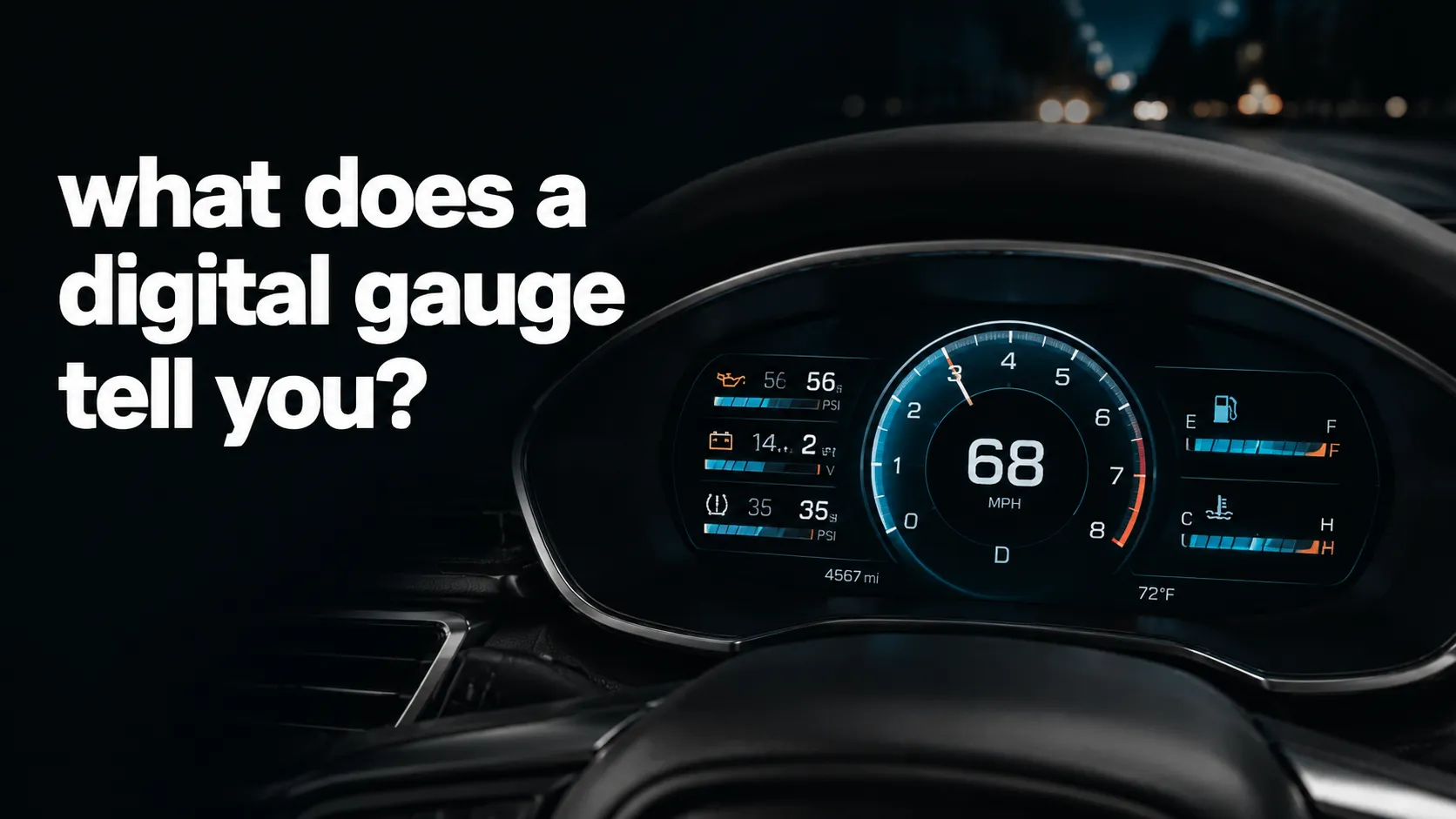
A digital gauge tells you a vehicle’s live operating data, like speed, RPM, fuel level, temperature, oil pressure, voltage, and tire pressure. It converts sensor signals into easy-to-read numbers or icons, so you can spot normal operation, early warning signs, or a possible fault much faster than with many analog gauges.
When I talk about digital gauges, I’m talking about the display that turns sensor data into real-time information you can actually use. That can help you drive smarter, catch problems early, and understand what your vehicle is doing under the hood.
In this article, I’ll break down what a digital gauge tells you, what it can’t tell you, and how to read it the right way. I’ll also compare digital and analog gauges so you know what matters most in daily driving and troubleshooting.
What a Digital Gauge Tells You in a Vehicle
At its core, a digital gauge tells you what a sensor is measuring right now. Instead of a needle moving across a dial, you get a number, icon, bar, or warning message. That makes it easier to read at a glance, especially when the vehicle is under load or conditions are changing fast.
How digital gauges turn sensor data into real-time readings
Modern vehicles rely on sensors throughout the engine, transmission, braking, electrical, and tire systems. Those sensors send signals to the vehicle’s computer, which then processes the data and sends it to the digital display.
That’s why a digital gauge can show coolant temperature, battery voltage, or fuel level almost instantly. The display is only as good as the sensor and wiring behind it, though, so the reading is useful, but not always the full story.
The main vehicle systems digital gauges monitor
Most drivers see digital gauges tied to the basics: speed, RPM, fuel, and temperature. But many vehicles also display oil pressure, tire pressure, battery charging status, transmission temperature, and even driver-assist alerts.
Some performance vehicles and trucks go further and show boost pressure, gear position, and load-related data. If you want a better picture of how the vehicle is working, these readings are often more useful than a single warning light.
Why digital readings are often more precise than analog ones
Digital gauges usually show exact values instead of an estimated needle position. That precision helps when you’re watching small changes, like a slow rise in engine temperature or a drop in charging voltage.
They also reduce guesswork. With an analog gauge, a needle between marks can be hard to judge. A digital display gives you a number, which makes it easier to compare against the normal range.
Many vehicles today use a mix of digital and analog displays. Even if the dashboard looks traditional, the information may still come from digital sensors and computer processing behind the scenes.
The Most Common Readings a Digital Gauge Can Show You
Digital gauges can cover a lot of ground, but the readings below are the ones most drivers use every day. Here’s a quick look at what they mean and why they matter.
| Reading | What it tells you | Why it matters |
|---|---|---|
| Speed | How fast the vehicle is moving | Helps with safe driving and legal speed control |
| RPM | How fast the engine is turning | Shows engine load and shift timing |
| Fuel level | How much fuel is left in the tank | Helps prevent running low unexpectedly |
| Range | Estimated miles remaining | Useful for trip planning |
| Engine temperature | How hot the coolant or engine is running | Helps catch overheating early |
| Oil pressure | How well oil is circulating under pressure | Low pressure can point to serious engine risk |
| Battery voltage | Electrical system charging status | Can reveal alternator or battery issues |
| Tire pressure | Air pressure in each tire | Supports safety, wear life, and fuel economy |
Speed and RPM
Speed tells you how fast the vehicle is moving. RPM, or revolutions per minute, tells you how fast the engine is spinning. Together, they help you understand how hard the engine is working.
High RPM at low speed can mean the engine is under load, like climbing a hill or towing. That’s not always a problem, but it does tell you more than speed alone.
Fuel level and estimated range
Fuel level is straightforward, but estimated range is only a prediction. It’s based on recent driving habits, tank level, and fuel economy trends.
That means range can change quickly if your driving changes. Heavy traffic, towing, or aggressive acceleration can shorten it faster than you expect.
Engine temperature
Engine temperature is one of the most important gauges in any vehicle. A healthy engine should operate within a normal range, and steady overheating is a red flag.
If the reading rises too fast or stays high, I treat that as a warning to back off and investigate before damage starts.
Oil pressure
Oil pressure tells you whether the lubrication system is doing its job. It does not measure oil quality directly, but it does show whether oil is moving through the engine at the expected pressure.
Low oil pressure can point to a low oil level, worn pump, clogged pickup, or internal engine wear. That’s one reading I never ignore.
Battery voltage and charging status
Voltage readings help you understand the health of the charging system. A healthy system should usually hold a stable voltage while the engine runs, with some variation depending on vehicle design and electrical load.
If voltage drops too low or spikes too high, you may be looking at a weak battery, alternator issue, poor connection, or wiring problem. The National Highway Traffic Safety Administration is a useful source for safety-related vehicle information and recalls.
Tire pressure and other warning data
Tire pressure monitoring systems, or TPMS, are often shown on digital displays. They can warn you about a slow leak, low pressure from cold weather, or a sudden drop after a puncture.
Some vehicles also display alerts for brake wear, door status, traction control, lane assist, and more. Those icons are part of what a digital gauge tells you, even if they are not traditional gauge readings.
What a Digital Gauge Tells You About Engine Health
One of the biggest benefits of a digital gauge is how it helps you track engine health in real time. It won’t diagnose every issue by itself, but it can show you when something is drifting out of range before a major failure happens.
How temperature readings help you spot overheating early
Temperature is often the first place I look when a driver says the vehicle “feels off.” A rising temperature gauge can point to low coolant, a stuck thermostat, a failing water pump, a blocked radiator, or a cooling fan issue.
If the gauge climbs during normal driving, that’s not something to wait on. Catching overheating early can save the engine from warped heads, blown gaskets, or worse.
What oil pressure numbers can warn you about
Oil pressure is a strong clue about engine lubrication. If the pressure is lower than normal, the engine may not be getting enough oil where it needs it most.
That can happen because of low oil level, wrong oil viscosity, a failing pressure sensor, or internal wear. The number alone won’t tell you which one it is, but it does tell you to pay attention fast.
How RPM and load data can reveal driving stress
RPM and load data help you see how hard the engine is working. High RPM for long periods, especially under heavy load, can increase heat and wear.
If you tow, climb steep grades, or drive in hot weather, these readings become even more valuable. They help you keep the engine in a safer operating zone.
When a digital gauge reading points to a possible sensor problem
Not every strange reading means the vehicle itself is failing. A digital gauge can also point to a bad sensor, damaged wiring, poor ground, or display issue.
If the reading jumps around, freezes, or makes no sense compared with how the vehicle feels, I start thinking about the sensor chain before I assume the engine has a major mechanical problem.
A digital gauge is a tool, not a diagnosis. It tells you what the system is reporting, but you still need context to know why the reading changed.
How to Read a Digital Gauge Correctly
Reading a digital gauge sounds easy, but it pays to be careful. Numbers only help if you know what they mean and how they behave in normal conditions.
Make sure you know whether the display is showing Fahrenheit, Celsius, PSI, volts, RPM, or miles per hour. A number without the right unit can lead you in the wrong direction.
Check the owner’s manual or service data so you know what is normal for your vehicle. Different makes and models can have different acceptable ranges.
A number on its own may not be urgent, but a number plus a warning icon often is. Color changes can also signal caution or danger.
A stable reading is usually less concerning than one that is climbing, dropping, or flickering. Fast changes often matter more than the exact number.
If something looks off, verify it with a scan tool, a second gauge, or a physical check when safe. That helps separate a real problem from a bad display or sensor.
What a Digital Gauge Cannot Tell You on Its Own
Digital gauges are useful, but they have limits. The display may give you the symptom, not the cause.
- It shows a live reading you can monitor in real time
- It can help you spot changes before a warning light appears
- It often gives more detail than a basic analog gauge
- It does not always identify the root cause
- It can be wrong if the sensor or wiring is faulty
- It may not show a problem until the issue is already developing
It shows a reading, not always the root cause
If the temperature is high, the gauge tells you the engine is hot. It does not tell you whether the coolant is low, the fan failed, or the thermostat is stuck.
That’s why the reading matters, but the diagnosis still takes more than the display.
It may depend on a faulty sensor or wiring issue
A bad sensor can send the wrong information to the gauge. So can corrosion, broken wiring, or a poor connection.
If a reading looks impossible, the gauge may not be the problem at all. The source of the data may be.
It may not reflect a problem until symptoms are already developing
Some issues build slowly. A gauge might look normal until the system is close to failure.
That’s why I pay attention to trends, not just single readings.
Benefits of digital gauges over mechanical gauges
Digital gauges have clear strengths. They can show exact numbers, issue alerts, and display multiple readings in one place. That makes them easier to use when you want more detail and faster feedback.
For many drivers, that extra information is the difference between guessing and knowing.
Digital Gauge Readings vs. Analog Gauge Readings
Both types can be useful. The better choice depends on how you drive, what you want to monitor, and how quickly you need to understand the information.
| Category | Digital Gauge | Analog Gauge |
|---|---|---|
| Precision | Shows exact numbers and clear alerts | Shows approximate position on a dial |
| Visibility | Easy to read in many lighting conditions | Can be quick to scan, but harder to judge exactly |
| Reaction speed | Often updates quickly and can display warnings | Usually simple and steady, but less detailed |
| Driver interpretation | Clear for exact values | Good for a fast “normal or not” glance |
| Troubleshooting | Better for tracking changes and verifying readings | Useful, but less specific |
Precision and visibility
Digital gauges win when you want exact data. That matters for temperature, voltage, and pressure readings where small changes can matter.
Analog gauges still have value because they can be easy to scan quickly. Some drivers like the instant visual sense of a needle in the normal zone.
Reaction speed and alert features
Digital gauges often pair live data with warning icons, color changes, and messages. That can make them more useful when something changes suddenly.
Analog gauges can show movement, but they usually don’t give as much context.
Driver preference and ease of interpretation
Some people trust numbers. Others trust a simple needle. Both are valid, as long as the driver understands what the gauge is showing.
If you’re not comfortable reading data quickly, the easiest gauge is the one you can interpret without hesitation.
Which type is better for daily driving and troubleshooting
For daily driving, either can work well. For troubleshooting, I usually prefer digital because it gives more detail and helps me track patterns.
If you want a deeper look at how tire pressure systems and vehicle safety tech work, the Tire Rack Tire Tech resources are a solid reference for practical explanations.
Tips for Using Digital Gauge Information to Prevent Problems
Digital gauges are most useful when you use them before a problem becomes obvious. A little attention now can save a lot of trouble later.
- Check baseline readings when the vehicle is healthy so you know what normal looks like.
- Pay attention to sudden changes, even if no warning light is on yet.
- Use digital readings alongside maintenance records to spot patterns over time.
- Know your vehicle’s safe limits for temperature, oil pressure, and voltage.
- Verify repeated abnormal readings with a scan tool or professional inspection.
Check baseline readings when the vehicle is healthy
When your vehicle is running well, take note of the normal readings. That gives you a reference point later if something changes.
Pay attention to sudden changes, not just warning lights
Warning lights are important, but they are not the first sign of every issue. A sudden shift in temperature, pressure, or voltage can be the earliest clue.
Use digital readings alongside maintenance records
If you track oil changes, coolant service, battery age, and tire maintenance, gauge readings become more meaningful. You can connect the numbers to real service history.
Know when to pull over and shut the engine off
If temperature spikes, oil pressure drops sharply, or you see a severe warning, don’t keep driving and hope it clears up. Pull over safely and shut the engine off if needed.
Verify persistent abnormal readings with diagnostics
If a reading keeps coming back, have it checked with proper diagnostics. A scan tool can help confirm whether the issue is real or whether a sensor is lying.
the digital gauge shows overheating, low oil pressure, charging problems, or repeated warning messages. Those are the kinds of readings that can turn into expensive damage if they’re ignored.
Compare the dashboard value with your owner’s manual, then use a compatible scan tool or ask a qualified technician to verify the sensor data before replacing parts.
Read the Quick FAQsCommon Digital Gauge Problems That Can Mislead Drivers
Sometimes the gauge is honest. Sometimes it is not. Knowing the common failure patterns can keep you from chasing the wrong problem.
Flickering, freezing, or delayed readings
Flickering or frozen numbers can point to display trouble, poor power supply, or a communication issue between modules. Delayed updates can also make the reading less trustworthy.
Calibration issues and display errors
Some digital systems need calibration after repairs, battery disconnects, or module replacement. If calibration is off, the reading may be valid-looking but still inaccurate.
Sensor failures that imitate real vehicle problems
A failed sensor can make it look like the engine is overheating or the battery is weak when the real issue is the sensor itself. That’s why verification matters.
Electrical issues that affect multiple gauge readings
If several readings go bad at once, I start looking at power, ground, fuses, connectors, or a communication fault. Electrical issues can create a chain reaction on the dashboard.
Do not assume a digital gauge is wrong just because the vehicle still seems to drive normally. Some serious problems develop before obvious symptoms show up.
What Does a Digital Gauge Tell You? Frequently Asked Questions
Not always. It usually shows a very close live reading, but the number depends on the sensor, the wiring, and how the vehicle’s computer interprets the data. Some displays also round values or update in small intervals.
It can point to a bad sensor if the reading is clearly wrong, unstable, or inconsistent with how the vehicle behaves. But the gauge itself does not prove the sensor is bad. You still need diagnostics to confirm it.
For most drivers, engine temperature is one of the most important because overheating can cause major damage fast. Oil pressure and battery voltage are also critical because they can warn you about serious mechanical or electrical trouble.
No. Digital gauges are great for live monitoring, but a scan tool can pull fault codes, freeze-frame data, and deeper system information. For diagnosis, the scan tool is still a big part of the process.
Fast changes can be normal if driving conditions are changing, like climbing hills, idling in traffic, or turning on electrical loads. If the changes seem random or extreme, the sensor or wiring may need attention.
A digital gauge tells you live vehicle data in a clear, exact format, which makes it easier to monitor performance and catch problems early. I trust it most when I use it to track trends, confirm warnings, and compare readings against known normal values.
- Digital gauges show live sensor data like speed, RPM, temperature, pressure, voltage, and tire pressure.
- They are often more precise than analog gauges and can be easier to read quickly.
- A gauge reading shows what the system reports, not always the root cause of a problem.
- Sudden changes in temperature, oil pressure, or voltage deserve immediate attention.
- Use digital readings with diagnostics, maintenance records, and common sense for the best results.