
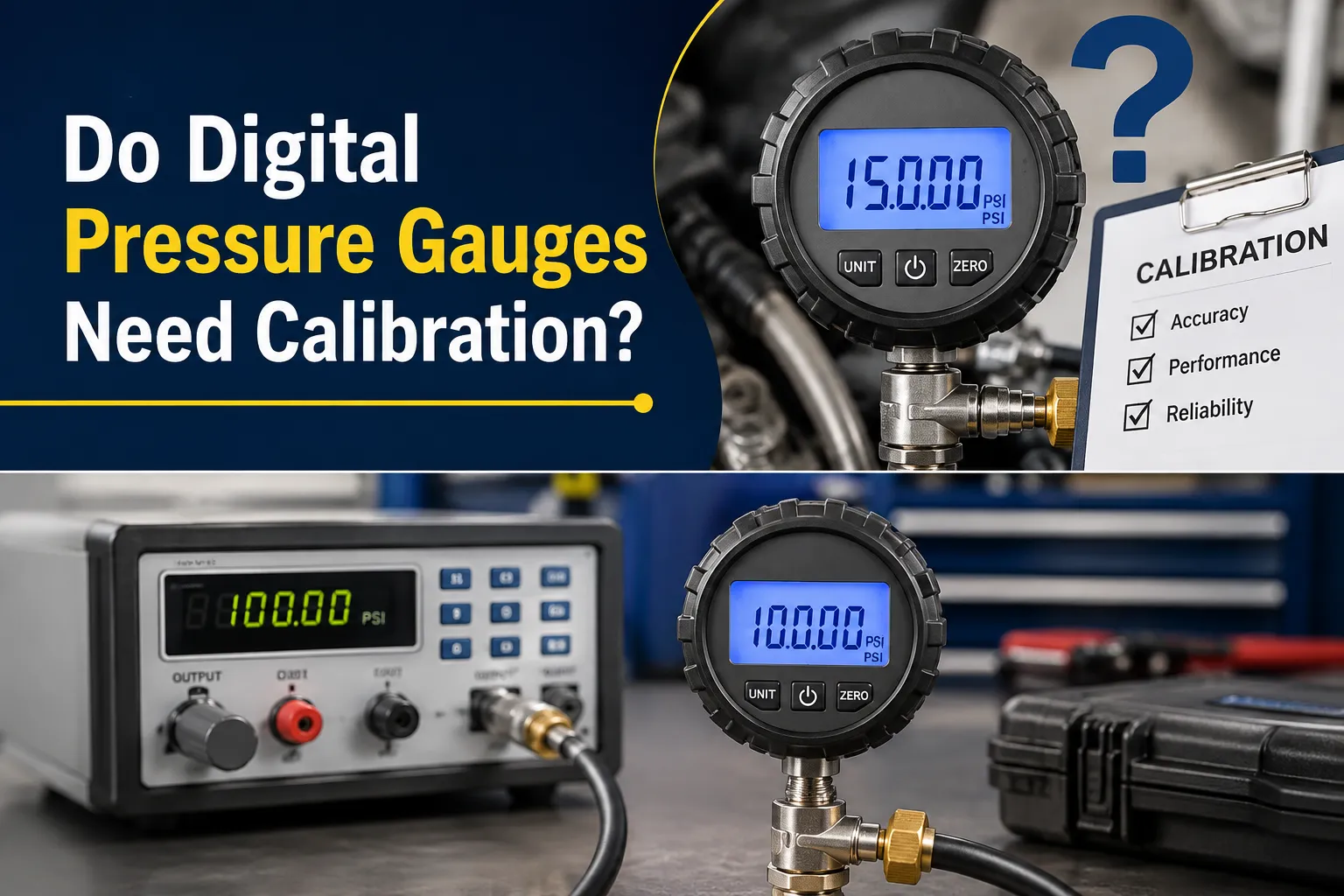
Yes, digital pressure gauges do need calibration if you want trustworthy readings. Some hold accuracy for a long time, but shock, temperature swings, battery/” title=”8 Best Cordless Inflators Battery Operated for Fast, Convenient Inflation”>battery issues, and normal sensor drift can throw them off. If the gauge is used for safety, compliance, or critical measurements, regular calibration is the right move.
I’m Jake Morrison, and I get this question a lot: do digital pressure gauges need to be calibrated? The short answer is yes, because even good digital gauges can drift over time. In this article, I’ll show you when calibration matters, how accuracy changes, and how to keep your gauge reliable.
Not every digital gauge needs the same schedule, and not every job demands the same level of precision. A tire gauge and a medical pressure instrument do not live in the same world. That’s why the right calibration plan depends on how the gauge is used and how much error you can tolerate.
Do Digital Pressure Gauges Need to Be Calibrated? The Short Answer and Why It Matters
Digital pressure gauges should be calibrated when accuracy matters. They can be very stable, but they are not immune to drift. If the reading is off, you may overinflate a tire, misdiagnose an HVAC problem, or make a bad process decision in a shop or plant.
Calibration is the process of comparing the gauge to a known reference and confirming whether it still reads correctly. For many users, that means checking it on a schedule. For regulated industries, it may also mean documented calibration tied to traceable standards. The National Institute of Standards and Technology is the main U.S. authority for measurement traceability and standards.
Why digital gauges can drift over time
Digital gauges usually rely on an internal pressure sensor, electronics, and a display. Each part can change slightly with age or use. The sensor may shift, the electronics may age, and the reading can slowly move away from the true pressure.
That drift may be small at first, but small errors add up. A gauge that is only a few psi off can still cause real problems in tires, refrigeration systems, or test equipment.
Many digital gauges look “perfect” on the display even when the sensor is no longer accurate. A clean screen does not guarantee a correct measurement.
When calibration is recommended versus required
Calibration is recommended whenever you depend on the reading to make a decision. It becomes required when a company, manufacturer, or industry standard says so. That is common in medical, lab, HVAC service, industrial process work, and quality control programs.
If you use a gauge for casual personal checks, calibration may not be legally required. Still, it is smart to verify it against a known reference now and then.
How Digital Pressure Gauges Lose Accuracy Over Time
Digital pressure gauges can lose accuracy for several reasons. Some are obvious, like a drop or impact. Others are slower and harder to notice, like sensor aging or contamination inside the pressure port.
| Cause | What Happens | Common Result |
|---|---|---|
| Battery issues | Voltage drops or unstable power affects electronics | Erratic readings or display problems |
| Shock and vibration | Internal parts shift or get damaged | Offset error or intermittent failure |
| Temperature exposure | Sensor output changes with heat or cold | Readings drift outside normal range |
| Wear and contamination | Debris, moisture, or aging sensor elements interfere | Slow response or inconsistent accuracy |
Battery issues and unstable power supply
A weak battery can cause more than a dim display. In some gauges, low voltage can affect the internal electronics and create unstable readings. If the battery is failing, the gauge may seem unreliable even if the sensor itself is still fine.
Shock, drops, and vibration damage
Digital gauges used in trucks, shops, and field work often get bumped around. A hard drop can shift the sensing element or damage the circuit board. Even repeated vibration can wear on internal parts over time.
Temperature changes and environmental exposure
Pressure sensors respond differently in extreme heat or cold. If a gauge is used outside, in a hot engine bay, or in a cold storage area, its accuracy can move around. Moisture, dust, and corrosive vapors can also affect the sensor and connectors.
Sensor wear, contamination, and internal drift
Inside the gauge, the sensor can age. That aging is normal. Dirt, oil, water, or process residue can make it worse. If the pressure port is contaminated, the gauge may respond slowly or show readings that do not match reality.
Signs Your Digital Pressure Gauge May Need Calibration
If you are wondering whether your gauge is still trustworthy, look for patterns. One bad reading does not always mean the gauge is wrong, but repeated problems are a strong clue.
- Compare the gauge to a known reference and watch for a mismatch.
- Check whether repeated readings at the same pressure stay consistent.
- Notice slow response, frozen numbers, or display glitches.
- Look for impossible values, negative readings, or sudden jumps.
Readings that differ from a known reference
The easiest test is comparison. If your gauge reads 35 psi and a trusted reference reads 40 psi at the same point, that is a red flag. The larger the gap, the more likely calibration is needed.
Inconsistent readings at the same pressure
A healthy gauge should be repeatable. If the same pressure gives you slightly different numbers every time, the gauge may be drifting or the sensor may be unstable.
Slow response or frozen display behavior
When a gauge lags behind pressure changes, the sensor or electronics may be struggling. A display that freezes or updates slowly can also point to a battery problem or internal fault.
Out-of-range or impossible readings
If the gauge shows negative pressure where it should not, or jumps well past the expected range, stop trusting it until it is checked. That kind of behavior often means the gauge needs service, not just a fresh battery.
Which Digital Pressure Gauges Need Calibration Most Often?
All digital pressure gauges can drift, but some applications demand tighter control than others. The more critical the measurement, the more often calibration matters.
- Used for casual, non-critical checks
- Compared regularly to a known standard
- Stored carefully and handled gently
- Used within a stable temperature range
- Used in critical or regulated work
- Exposed to frequent drops or vibration
- Used in harsh heat, cold, or moisture
- Never checked against a reference
Tire pressure gauges
Tire gauges are among the most common digital pressure tools in the U.S. They may not need lab-level calibration, but they should still be checked if you want dependable tire pressure readings. A small error can affect ride quality, wear, fuel economy, and safety.
For tire pressure guidance, vehicle makers often specify exact inflation values on the door placard. The NHTSA tire safety guidance explains why proper pressure matters and why accurate measurement is important.
HVAC and refrigeration gauges
Digital gauges used in HVAC and refrigeration work often need more frequent verification. Techs depend on these readings to diagnose systems, charge refrigerant correctly, and avoid expensive mistakes. If the gauge is off, the service call can go the wrong way fast.
Industrial process pressure gauges
In industrial settings, pressure readings can affect product quality, equipment life, and safety. These gauges often need documented calibration on a scheduled basis, especially if they are tied to quality systems or compliance rules.
Medical and laboratory pressure instruments
Medical and lab instruments usually need the strictest calibration control. In those environments, accuracy is not optional. The calibration record, traceability, and interval are often part of the operating procedure.
How Often Should Digital Pressure Gauges Be Calibrated?
There is no single interval that fits every gauge. A practical schedule depends on use, environment, and required accuracy. Some gauges are checked annually, while others need more frequent verification.
| Use Case | Typical Interval | Why |
|---|---|---|
| Casual personal use | Every 12 months or as needed | Basic confidence in readings |
| Shop or service use | Every 6 to 12 months | Regular use and handling can cause drift |
| Heavy-duty field use | Every 3 to 6 months | Impact, vibration, and environment increase risk |
| Critical or regulated use | Per procedure or standard | Compliance and safety requirements |
General time-based calibration intervals
For many users, annual calibration is a reasonable starting point. If the gauge is stored well and used lightly, that may be enough. If you rely on it often, shorter intervals make more sense.
Usage-based intervals for heavy-duty applications
Frequency matters as much as time. A gauge used every day in a rough environment should be checked more often than one that stays in a toolbox. Heavy use usually justifies more frequent calibration.
Manufacturer guidelines and industry standards
Always check the manufacturer’s manual first. Some brands publish calibration guidance, zeroing instructions, or service intervals. If you use a professional tool from a major maker, their documentation is the best place to start. For example, manufacturers like Fluke provide calibration and test equipment resources that help users manage accuracy in the field.
When to calibrate after impact, repair, or battery replacement
Do not wait for the next scheduled interval if the gauge has been dropped, repaired, or exposed to unusual conditions. Check it right away. Battery replacement usually does not require calibration by itself, but if the gauge behaved oddly before or after the swap, verify it before using it for important work.
How to Calibrate a Digital Pressure Gauge Correctly
Calibration is more than just seeing whether the gauge looks close. You need a reliable reference and a repeatable process. If the gauge is critical, a professional calibration service is often the safest choice.
Use a master gauge, calibrator, or test system with known accuracy. The reference should be more accurate than the gauge you are checking.
Test low, mid, and high points in the gauge’s range. Do not rely on a single reading, because error can change across the scale.
Some digital gauges have a zero function or calibration mode. Follow the manual exactly. If the gauge has no user adjustment, send it for service.
Write down the date, reference used, and any error found. If your workflow needs it, label the gauge with calibration status and due date.
If the gauge is used in regulated work, shows large errors, or has no user-adjustable controls, professional service is usually the right call.
Gather a traceable reference standard
The reference must be trusted. If your standard is questionable, the calibration check does not mean much. Use equipment with known traceability and better accuracy than the gauge being checked.
Compare readings across multiple pressure points
Testing only one point can hide problems. A gauge may be accurate at one pressure and off at another. Checking several points gives a better picture of real performance.
Adjust or zero the gauge if the model allows it
Some gauges can be zeroed or adjusted to match the reference. Others cannot. If your gauge supports user calibration, follow the manufacturer’s steps carefully and do not guess.
Record results and label the calibration status
Good records matter. They help you spot drift trends and prove the gauge was checked. In business settings, that record can also protect you during audits or disputes.
Know when professional calibration is the safer option
If the gauge is expensive, mission-critical, or sealed against user adjustment, professional calibration is often the better choice. A qualified service can test it properly and return documentation with the result.
Your digital pressure gauge gives unstable readings after a drop, shows impossible values, or is used for safety-critical work and you cannot verify it against a known standard. In those cases, trust the instrument less and have it checked by a qualified technician or calibration lab.
Benefits and Drawbacks of Calibrating Digital Pressure Gauges
Calibration is worth doing, but it comes with tradeoffs. The goal is not perfection for its own sake. The goal is reliable measurement at a reasonable cost.
- Calibrate on a schedule that matches the gauge’s use.
- Use traceable standards and keep records.
- Check the gauge after impact or repair.
- Follow the manufacturer’s instructions.
- Assume a digital display means perfect accuracy.
- Ignore drift just because the gauge still powers on.
- Use a damaged gauge for critical measurements.
- Force adjustments on a model that is not user-serviceable.
Pros: better accuracy, compliance, and repeatability
Calibration improves confidence in the reading. It also helps with compliance when your work must meet internal or external standards. Repeatable measurements make troubleshooting easier and reduce guesswork.
Pros: fewer costly mistakes and equipment failures
An inaccurate gauge can lead to overpressure, underpressure, wasted time, or damaged equipment. Calibration helps catch those problems before they become expensive.
Cons: downtime, calibration costs, and service intervals
Calibration takes time and may cost money, especially if the gauge must be sent out. That downtime can be inconvenient if the gauge is part of your daily work.
Cons: not all gauges are user-adjustable
Some digital gauges are designed to be checked, not adjusted. If the model is sealed or factory-only, you may need outside service rather than a quick DIY fix.
- Keep one known-good reference gauge in your shop for quick spot checks.
- Test digital gauges before critical jobs, not after a problem shows up.
- Match the gauge range to the pressure you actually measure most often.
- Store gauges in a protective case to reduce shock and contamination.
- Replace weak batteries before they create confusing readings.
Calibration Tips to Keep Digital Pressure Gauges Accurate Longer
Good habits can slow drift and extend the time between calibration checks. That does not eliminate calibration, but it can make the gauge more stable and more dependable.
Store the gauge properly between uses
Keep the gauge in a clean, dry case when you are not using it. Avoid tossing it loose in a toolbox where it can get crushed, bent, or contaminated.
Avoid overpressure and rough handling
Do not push the gauge beyond its rated range. Overpressure can damage the sensor fast. Rough handling, impacts, and vibration also shorten the life of the instrument.
Replace batteries on schedule
Do not wait for the display to fail. A fresh battery helps the electronics stay stable and reduces the chance of weird behavior during a reading.
Clean fittings and protect sensors from contamination
Dirt, oil, and moisture can affect the pressure port and internal parts. Keep fittings clean and use protective caps when the gauge design allows it.
Use the right gauge range for the application
If the gauge is oversized for the job, you may lose useful resolution. If it is too small, you risk damage. The right range helps accuracy and protects the instrument.
Calibration does not fix every problem. If a gauge is physically damaged, has a failing display, or cannot hold a stable zero, replacement may be smarter than repeated adjustment.
Digital pressure gauges do need calibration when accuracy matters, and the need becomes stronger in professional, safety-related, or regulated work. A gauge can look fine and still drift, so the safest habit is to verify it on a schedule and after any impact, repair, or unusual reading.
FAQs About Whether Digital Pressure Gauges Need to Be Calibrated
Yes, it can be accurate for a while, especially if it is new and used gently. But accuracy can still drift over time, so verification is still important.
Check the calibration label, certificate, or service record if the gauge has one. You can also compare it to a known reference standard to see whether it is reading correctly.
Sometimes. If the gauge has a user zero or calibration function and you have a trusted reference, you may be able to do it yourself. For critical or sealed instruments, professional calibration is the safer choice.
You risk making decisions from bad data. That can mean underinflated tires, poor HVAC service results, process errors, or safety issues in more serious applications.
No. Some models allow zeroing or adjustment, while others are factory-set and must be serviced by a technician or calibration lab.
No. Resetting usually just clears the display or returns the gauge to a default state. Calibration is a measurement check against a known standard, and adjustment only happens if the gauge supports it.
- Digital pressure gauges can drift, so calibration matters.
- Critical, regulated, and heavy-use gauges need checks more often.
- Compare the gauge to a traceable reference across multiple pressure points.
- Impact, temperature swings, and contamination can reduce accuracy.
- Professional calibration is the safest choice for sealed or mission-critical gauges.