
Affiliate disclosure: As an Amazon Associate I earn from qualifying purchases. We may also earn a commission from other retailer links.
QUICK CHOICE
EcoFlow for more AC output and sockets; Jackery for lower listed carrying weight. Match your appliances and charging plan before comparing retailer offers.
Updated October 22, 2026 · U.S. models · Manufacturer specifications checked; editorial comparison without hands-on testing.
EcoFlow DELTA 3 Plus vs Jackery Explorer 1000 v2: quick verdict
Choose the EcoFlow when your road-trip equipment benefits from more continuous AC output and more AC sockets. Choose the Jackery when carrying weight matters more and its output already covers your appliances. This is an editorial recommendation based on published specifications, not a claim that we tested both units in a vehicle.
Start with your actual itinerary. A family charging phones at overnight stops has different needs from someone running a portable refrigerator at a remote campsite. Buying the more powerful unit is useful only when that capability solves a real problem in your packing list.
Both are substantial pieces of equipment compared with a small USB power bank. Before paying for either, decide where it will ride, how you will lift it and where you can recharge it. The best purchase is the one that supports your trip without taking over the cargo area.
Verified specifications at a glance
EcoFlow’s U.S. specification table lists the DELTA 3 Plus at 1,024Wh, with 1,800W total continuous AC output, six AC sockets and an approximate weight of 27.6 pounds. Jackery’s U.S. specifications list the Explorer 1000 v2 at 1,070Wh, with 1,500W rated AC output, three AC sockets and approximately 23.8 pounds.
These figures describe different things. Watt-hours describe nominal stored energy, while watts describe the rate at which equipment uses or supplies power. More sockets do not increase the total shared output rating. Compare continuous ratings when planning appliance compatibility rather than treating a surge figure as an all-day allowance.
The comparison concerns the named U.S. versions. Similar names can refer to other capacities, generations or regional outlets. Check the model on the destination listing, especially when a retailer search shows several products from the same family.
| U.S. specification | EcoFlow DELTA 3 Plus | Jackery Explorer 1000 v2 |
|---|---|---|
| Nominal capacity | 1,024Wh | 1,070Wh |
| Rated AC output, shared total | 1,800W | 1,500W |
| AC sockets | 6 | 3 |
| Approximate weight | 27.6 lb | 23.8 lb |
| Editorial buying emphasis | AC capability | Carrying weight |
| Retail price | Check current matched offer | Check current matched offer |
Sources: EcoFlow U.S. specifications and Jackery U.S. specifications. Regional versions and bundles may differ.
Why the output difference can matter
The practical question is whether all equipment you intend to use together stays within the station’s limits. Read the appliance labels and include any startup requirement. A refrigerator compressor or motor may behave differently from a phone charger, even when both seem modest during normal operation.
Make two lists: equipment that must operate simultaneously and equipment you can run one item at a time. This often changes the buying decision. Charging a laptop before using another appliance may remove the need to pay for additional output capacity.
Do not assume a boost mode makes every high-power appliance compatible. Use the standard continuous rating for initial planning, then check both manufacturers’ instructions for any special operating mode. Avoid designing a travel setup around an unverified compatibility claim.
Capacity: will the larger number change your trip?
The nominal capacity gap is 46Wh, about 4.5 percent relative to the EcoFlow’s stated capacity. That is a small difference compared with changes in your appliance use, ambient conditions or time spent running an inverter without a useful load.
Do not convert nominal capacity directly into a guaranteed refrigerator runtime. Actual delivered energy depends on the output path and operating conditions. A portable refrigerator also cycles on and off, so the maximum wattage on its label is not necessarily its average consumption over a full day.
Use a measured daily energy requirement where possible. Test your actual equipment in conditions reasonably similar to the trip, then leave reserve capacity. A plan that works only when the battery reaches exactly zero before the next charging stop is difficult to rely on.
A simple runtime planning example
For illustration, suppose a travel setup averages 50W and you allocate 800Wh of usable energy after allowing for losses and reserve. Dividing 800Wh by 50W gives 16 hours. This is a hypothetical planning calculation, not a measured runtime for either station.
If the average demand doubles to 100W, the same allocation lasts about eight hours. That is why the equipment list matters so much. Adding several small loads or leaving an unnecessary output active can make a larger difference than the small capacity gap between these models.
Build the estimate in watt-hours rather than counting devices. A phone, a laptop and a refrigerator are not three equivalent loads. Record the approximate energy required for each task and identify which loads can be reduced if charging opportunities disappear.
Which is easier to carry and pack?
The Jackery is about 3.8 pounds lighter according to the published weights. That can matter when lifting a unit out of a deep trunk or carrying it from parking to a campsite. Try to judge the lifting task as it will actually happen, including the height and reach.
Measure your intended storage location and allow room for connectors, cable bends and ventilation. A station that fits an empty box on paper may be inconvenient once plugs are attached. Keep the controls accessible so you can check status without unloading the vehicle.
Secure equipment appropriately during transport and follow the manufacturer’s transport and temperature guidance. Avoid leaving a portable power station in a closed vehicle where temperatures exceed its limits. Plan a stable operating location instead of balancing it on loose luggage.
EcoFlow DELTA 3 Plus: compare the exact U.S. unit
A candidate when your load list benefits from its AC capability. Verify station-only versus bundle contents, seller and total delivered cost.
Jackery Explorer 1000 v2: compare the exact U.S. unit
A candidate when frequent lifting makes weight important. Do not confuse it with Explorer 1000 Plus or HomePower models.
Road-trip charging: plan around stops
Your charging schedule should begin with the places where power is actually available. List overnight accommodation, permitted campsite connections and expected driving days. A fast wall-charge specification has limited value if your itinerary provides no usable outlet.
Vehicle accessory sockets are a separate charging route with their own limits. Check the station’s approved cable and the vehicle’s socket rating. Do not assume a dashboard socket provides the same input as a dedicated charging accessory or a household outlet.
Before departure, test the complete charging arrangement you intend to carry. Confirm that the cable reaches, the vehicle supports the intended use and the station shows charging as expected. Keep the instructions accessible offline so a poor mobile signal does not become a setup problem.
When solar panels are worth packing
Portable solar panels can be useful for longer stationary stops with suitable sunlight. They are less convenient when you move frequently, park in shade or have limited time to set up equipment. A panel adds storage needs and another item to handle at every stop.
Match the panel’s electrical specifications, connector and required adapters to the exact power station. Do not select panels by nominal wattage alone. A connector that physically fits does not establish that the electrical limits or manufacturer requirements are satisfied.
Treat published ideal charging times as conditional rather than guaranteed trip results. Weather, shading, orientation and temperature change solar production. Keep a charging alternative or a conservative reserve when your itinerary depends on power being available after several cloudy days.
Powering a portable refrigerator
Start with the refrigerator maker’s approved power options and actual consumption information. If a compatible direct DC connection is available, compare that route with using the refrigerator’s AC adapter. Confirm cable suitability and output limits rather than improvising adapters.
A refrigerator’s energy use changes with temperature settings, ambient heat, ventilation and how often the lid is opened. Pre-cooling supplies before departure and organizing the contents can help you manage the workload, but neither replaces a realistic energy budget.
Run a trial before relying on the setup for a long stop. Record starting charge, elapsed time and remaining charge while using the refrigerator normally. Repeat if the travel conditions will be substantially hotter or the load changes. Use the trial to decide whether the station and recharge schedule are sufficient.
Laptops, cameras and small electronics
Travel electronics can make a portable power station convenient, especially when several people share equipment. Identify each device’s charging requirement and use compatible cables. The number of connectors is less important than whether the ports support the charging behavior you need.
A direct compatible USB connection can simplify the cable setup compared with using several wall adapters. Check the specifications for the exact port rather than assuming every USB-C socket has the same output. Bring the cables that work with your devices and label specialized ones.
If phones and cameras are your only loads, consider whether a smaller power bank already solves the problem. A large station makes more sense when you also need compatible AC appliances or enough stored energy for a longer itinerary. Buy around the combined use case.
Campsite cooking and high-power appliances
Cooking equipment can use a substantial amount of energy quickly. Read the appliance input rating, then consider how long each cooking task lasts. A short task and an appliance left on for an hour have very different effects on the battery budget.
Operate compatible appliances on a stable surface with the required clearances and follow their instructions. Keep water, food spills and heat away from electrical equipment. Do not put the station into a sealed bag while it is running simply to protect it from campsite dust.
Consider whether an existing campsite cooking arrangement makes more sense for your trip. Buying a large electrical appliance solely because the station has AC sockets may add cost and complexity without improving the routine. Reserve battery energy for the tasks that matter most.
Power station vs jump starter
A portable power station and a vehicle jump starter serve different purposes. AC sockets and a vehicle-style DC outlet do not make a power station a substitute for a jump starter. Do not connect improvised leads to a vehicle battery.
If starting-battery emergencies are your concern, choose equipment specifically designed and approved for jump starting the vehicle. Check its engine and battery compatibility and follow its instructions. Keep that decision separate from buying campsite power.
For a wider emergency kit, consider lighting, communication, tire equipment and recovery assistance alongside your power needs. One expensive battery product does not automatically replace all the other tools. See our jump-starter versus battery-charger guide for that separate purchase decision.
Amazon vs Walmart: compare the complete package
Use the retailer buttons to search for the exact model, then verify the title, model information and package contents. A station-only offer is different from a bundle with a solar panel, carrying bag or other accessories. Search results may mix new, refurbished and unrelated products.
Compare the delivered checkout total and seller terms. Check shipping charges, return arrangements and warranty eligibility for that particular seller and condition. For an expensive item, reliable support and clearly documented eligibility deserve attention alongside the headline price.
No live Amazon or Walmart price is displayed here, and neither store is named as the guaranteed cheapest option. The buttons open retailer searches. They do not certify stock, authenticity or a lowest-price offer, so confirm the listing details before ordering.
How to compare station-only and solar bundles
Write down the equipment included in each offer. Separate the station, panel, cables and optional accessories, then ask which items you would actually buy independently. A large stated bundle discount is less useful if much of the package will remain unused.
Check panel compatibility and whether the package includes every required cable. Look at storage space and lifting requirements for the full kit rather than only the station. Panels can make an otherwise compact travel setup much bulkier.
Compare total system cost for your expected itinerary. A station-only purchase with reliable overnight charging may be the more practical choice. A solar bundle may make sense for longer stationary stays where compatible panel input can be used consistently.
Who should choose each model?
Choose the EcoFlow DELTA 3 Plus if its additional AC output and sockets solve a specific equipment requirement and you can accommodate its weight. This recommendation follows the specification comparison; it is not based on measured efficiency, noise or durability results.
Choose the Jackery Explorer 1000 v2 if the lighter listed weight suits your lifting routine and the output covers your equipment. The modest capacity advantage should not be the sole deciding factor. Evaluate the entire setup, including how you will recharge it between stops.
Choose neither yet if your load list is incomplete. Spend a few minutes recording appliance requirements and charging opportunities before ordering. That preparation can prevent buying a unit that is either too cumbersome for your trip or poorly matched to the equipment you want to run.
Frequently asked questions
Will either run my refrigerator all weekend? That depends on the refrigerator’s actual energy use, conditions, available charging and usable stored energy. Test the complete setup before relying on a weekend runtime estimate.
Can I charge while driving? Check the approved vehicle-charging method, cable and vehicle socket limits for the exact unit. Do not assume that a wall-charging performance claim also applies to the car.
Does more output mean longer runtime? No. Output capability and stored energy are different specifications. A high-power appliance can deplete a battery quickly even when it is within the station’s operating limit.
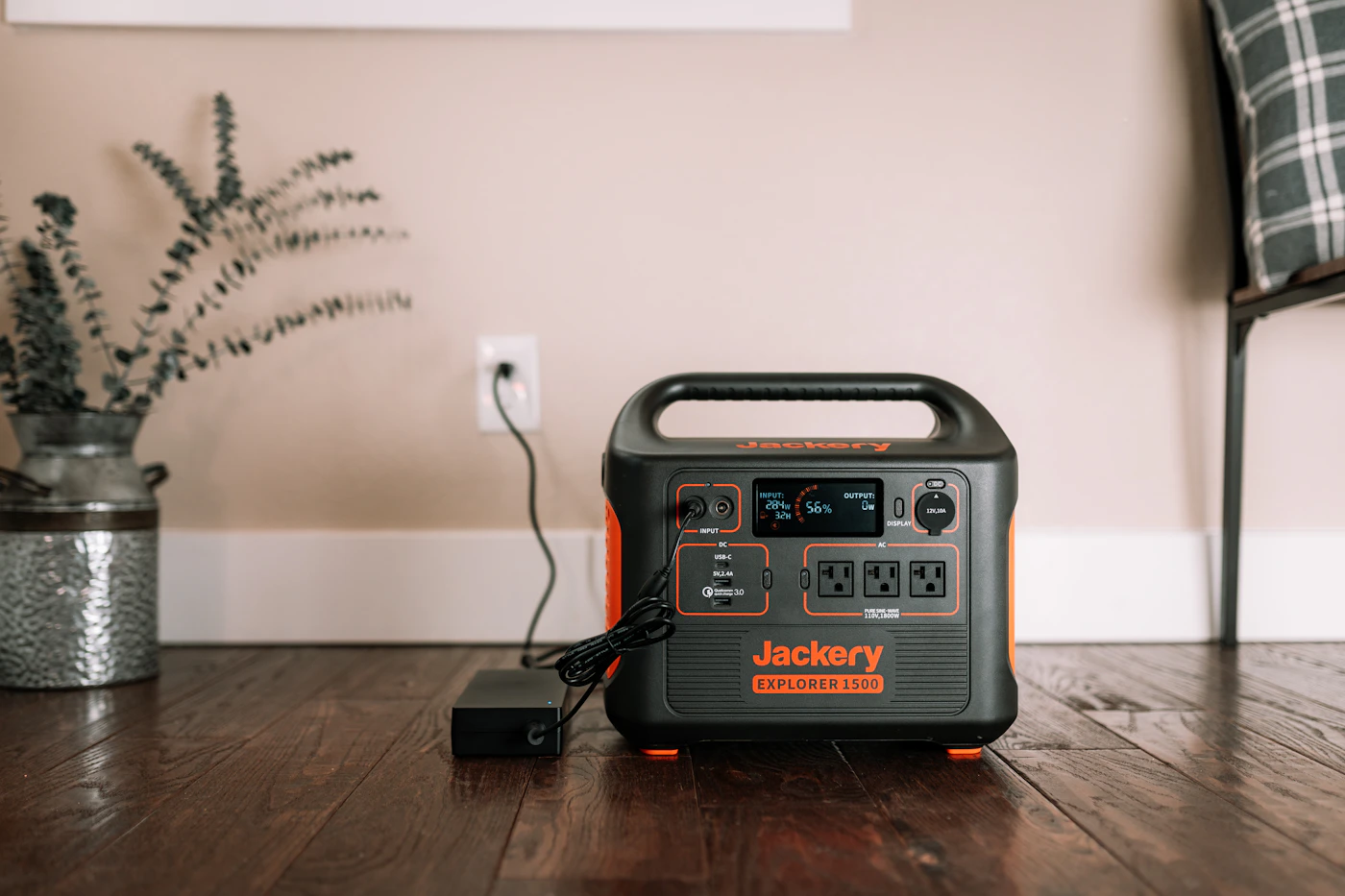
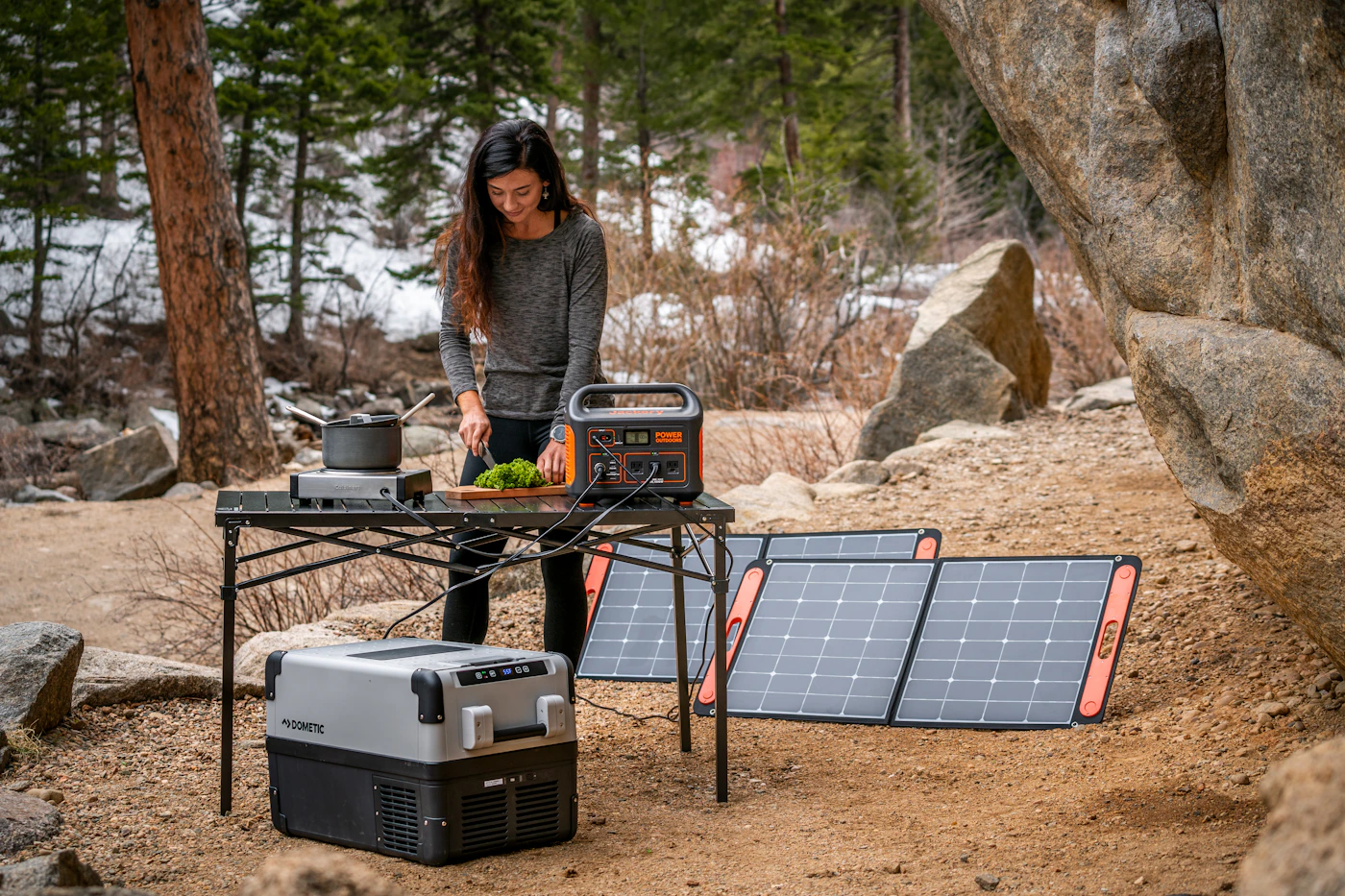
Are the photos the exact comparison models? No. The photos illustrate portable power use and are credited to their source. They should not be used to identify the controls or included accessories of either named station.
Which retailer should I buy from? Compare matched model numbers, package contents, delivered cost, seller identity and support terms. Choose the offer that meets those conditions rather than assuming one store always has the best deal.
Before you order
Confirm the U.S. model, appliance compatibility and complete package. Measure the cargo location, consider the lifting task and prepare a realistic charging plan. Set aside space for clean, organized cables and any accessories you will actually carry.
Run a practice session at home with the intended equipment before the first trip. Check charging, normal use and packing while you still have time to correct a missing cable or unsuitable arrangement. Keep a reserve in your energy plan rather than assuming perfect conditions.
After that preparation, compare the exact retailer offers below. Choose the EcoFlow for a demonstrated need for its greater AC capability, or the Jackery when its lighter form better fits an adequate setup. The useful premium purchase is the one that earns its place in your vehicle.
Related road-trip guides
Soft cooler vs hard cooler for road trips · Jump starter vs battery charger · Jump starter vs jumper cables
About the Best Auto Products editorial team
We compare documented features and practical buying factors for drivers. Recommendations in this guide are editorial judgments based on the stated specifications. Runtime examples are hypothetical; no independent efficiency, noise or durability test is claimed.