
Affiliate disclosure: As an Amazon Associate I earn from qualifying purchases. We may also earn a commission through other retailer links.
Our starting pick: a clean automotive microfiber wash mitt. Choose a dedicated sponge when your cleaning system recommends it. Compare the exact product and checkout total before buying.
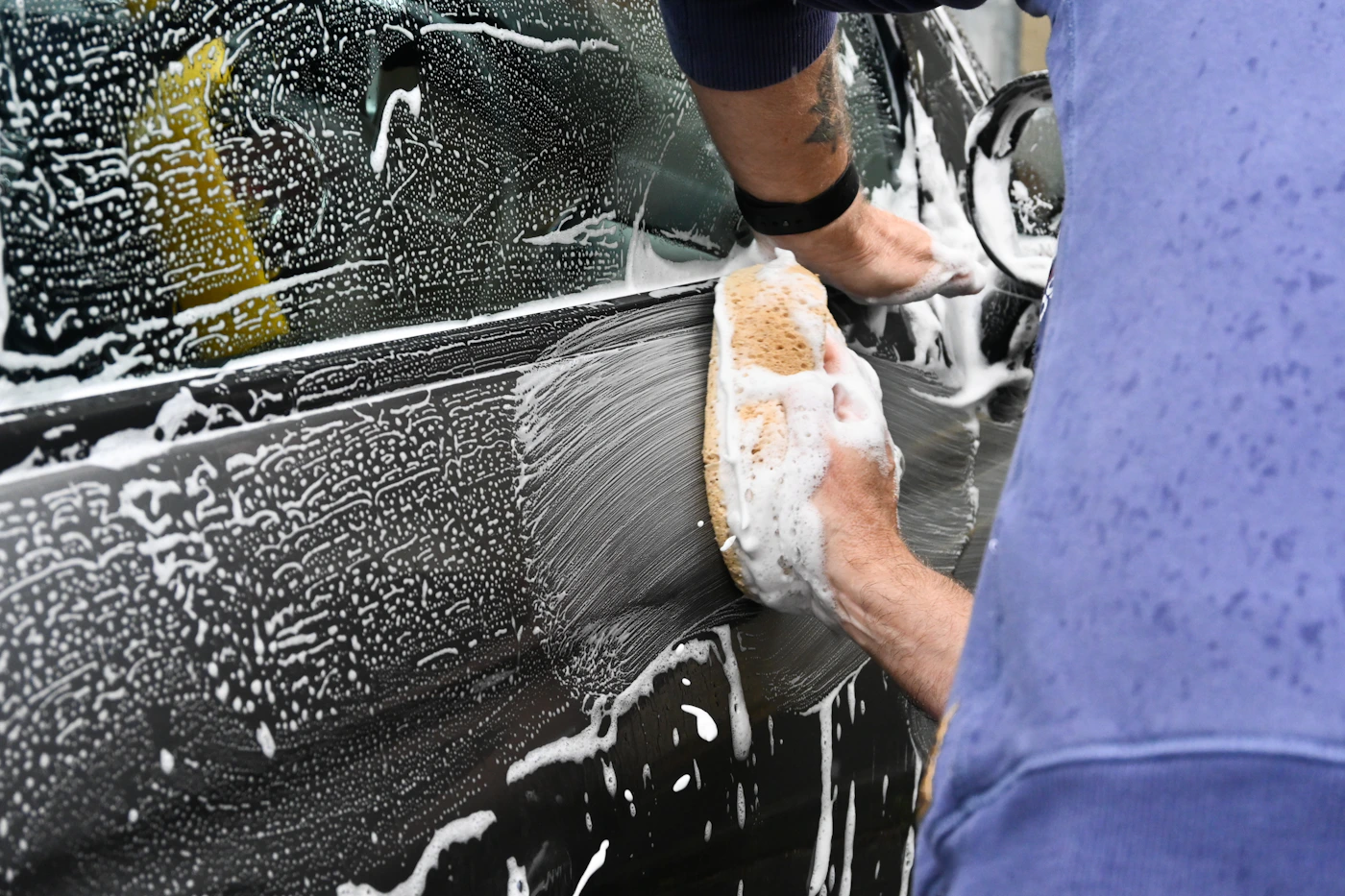
Updated October 22, 2026 · Editorial buying guide; no hands-on comparison test is claimed.
Car wash mitt vs sponge: the quick answer
A clean automotive microfiber wash mitt is a sensible starting choice for routine hand washing. Its wearable shape helps you control the tool across curved panels, and its fibers provide space to collect wash solution and loosened dirt. A purpose-made automotive sponge can also be appropriate when its manufacturer recommends it for your wash method.
The important distinction is the actual product and process. A household kitchen sponge, especially one with an abrasive scrubbing side, is not equivalent to a dedicated car-wash sponge. Likewise, a dirty microfiber mitt is not made safe just because the packaging describes soft fibers. Inspect the tool and the vehicle before every wash.
This guide compares buying factors and practical routines rather than measured scratch-test results. Our recommendation is to buy a suitable, easy-to-maintain wash tool and keep it clean. If you already own a compatible automotive sponge that rinses well and remains in good condition, there is no need to replace it solely because another tool is marketed as premium.
What a microfiber wash mitt offers
A wash mitt slips over your hand, usually with a cuff at the wrist. Some use long chenille strands, while others use a shorter plush surface. The design changes how the tool feels around mirrors, door handles and body contours. Choose something you can control comfortably when it is fully wet, rather than judging softness only while it is dry.
Microfiber construction does not make every mitt interchangeable. Check stitching, cuff fit and the intended surface. A tool sold for washing painted bodywork may differ from a wheel mitt or a product designed for another cleaning task. Avoid treating the word microfiber as a complete specification.
Meguiar’s lists its X3002 as an automotive microfiber wash mitt. That makes it a concrete product to compare by model number rather than a generic search term. Manufacturer descriptions explain intended use, but they do not establish independent proof that one mitt prevents all swirls or outperforms every automotive sponge.
When an automotive sponge can make sense
A dedicated automotive sponge is simple to hold and may suit owners who prefer a block-shaped tool to something worn on the hand. Different products have different structures and care requirements. A plain foam sponge, a microfiber-covered sponge and a purpose-made rinseless sponge should not be treated as the same product.
Choose the sponge around your cleaning system. If you use a rinseless solution, follow that solution maker’s guidance on compatible wash media. If you use conventional shampoo, select a paint-compatible tool and rinse it as directed. Instructions written for one specialist sponge should not be copied onto an unrelated foam block.
A sponge is only a good value if you can inspect and maintain it properly. If embedded debris remains after cleaning, or the material tears or deteriorates, retire it from paint work. Low purchase price is not a reason to keep a contaminated tool in service.
Compare the buying factors
Start with control, cleaning and storage. A mitt may feel secure because of its cuff, but an oversized mitt can become awkward when saturated. A sponge can be easy to squeeze, but its shape may not suit every recess. The useful choice is the one you can operate gently and rinse consistently.
Next, inspect the working surface and the product instructions. Look for clear automotive use guidance, care directions and surface compatibility. A large accessory bundle is less helpful than one suitable tool you can keep clean. If the listing does not explain what the product is for, choose a clearer listing.
Finally, consider the whole wash kit. You still need appropriate shampoo or rinseless solution, clean water where required, suitable drying towels and a place to store everything. Spending the entire budget on a fashionable mitt while reusing dirty towels is an unbalanced setup.
| Buying factor | Automotive microfiber mitt | Automotive sponge |
|---|---|---|
| Handling | Worn over the hand; check wet fit | Held directly; check grip and size |
| Construction | Plush or chenille surfaces vary | Foam, covered and specialist designs vary |
| Best starting use | Routine conventional hand washing | A compatible preferred or specified wash system |
| Care | Follow the exact care label | Follow the exact product instructions |
| Scratch guarantee | None established here | None established here |
A practical starter kit
For a conventional maintenance wash, begin with a dedicated paint wash mitt or automotive sponge, car shampoo used at its labeled dilution, suitable buckets and a clean drying towel. Keep separate equipment for wheels and tires. Add specialty tools when your vehicle and routine actually need them.
Buying two clearly differentiated wash tools can help organize the work, but separation must be real. Mark or color-code the wheel tool and store it separately. Simply owning two identical mitts does not help if you cannot remember which one touched the wheels during the previous wash.
Before ordering a bundle, check whether each included item has a useful role. A pack with several applicators may still lack a drying towel or a suitable wash tool. Compare the cost of the equipment you need rather than the total number of pieces printed on the package.
Product to compare: Meguiar’s Microfiber Wash Mitt X3002
Confirm the X3002 model, single-piece quantity and seller details. This is an identifiable example, not a tested category winner. The store buttons open searches and may show multiple offers.
Amazon vs Walmart: make a matched comparison
Match the exact model, quantity and included accessories before comparing retailer offers. A single Meguiar’s X3002 mitt is not the same purchase as a kit containing shampoo and towels. Search results can include related products, multipacks and marketplace listings with similar photographs.
Compare the delivered checkout total, seller identity, delivery estimate and return terms. Shipping conditions and membership benefits can change which offer is more attractive for your order. A lower displayed item price does not always mean a lower total purchase cost.
The buttons in this article open retailer searches. Confirm the model and current availability on the destination page before buying. We have not verified a live price, and neither retailer is presented as the guaranteed cheapest option. Choose the matched offer with the total cost and seller terms that suit you.
How to wash with either tool
Read the shampoo instructions and prepare the equipment before wetting the vehicle. Work on a cool surface where practical and keep the product from drying prematurely. Inspect the paint for loose grit, dried mud or other contamination that calls for a suitable preliminary rinse or a different treatment.
Wash manageable areas using a well-lubricated tool and light, controlled movements. Start with cleaner upper areas and leave dirtier lower sections until later. Rinse or replace the wash media frequently instead of continuing with a tool that visibly holds debris. Follow the product maker’s process throughout.
Do not scrub a stubborn deposit harder just because it has not released. Identify whether it needs a compatible dedicated treatment. After washing, rinse as the shampoo directs and dry with clean equipment. Check the finish in good light and clean the wash tools before putting them away.
The two-bucket routine and its limits
One common conventional setup uses a shampoo bucket and a separate rinse bucket. After washing a section, rinse the tool in the rinse water before returning to the shampoo. Autoglym describes this approach in its warm-weather washing guidance. The purpose is to reduce reintroducing dirty wash water into the working solution.
A bucket insert can be another useful part of the setup, but it does not replace inspection or fresh water. If the rinse water becomes heavily contaminated, change it. If grit stays in the wash tool, remove the tool from paint work until it has been properly cleaned.
Equipment does not make a procedure automatic. Keep the buckets organized, avoid dipping wheel tools into paint-wash supplies and do not rush the lower panels. A simple routine performed attentively is more useful than buying several accessories and then ignoring contamination.

What to do if the mitt or sponge falls
If a wash tool falls onto the ground, stop using it on the paint. A quick dunk is not a reliable inspection for debris picked up from a driveway. Set it aside for proper cleaning and use a clean replacement if you have one available.
Inspect seams, folds and the working surface after cleaning. Small particles can be difficult to spot, especially when a tool is wet or covered in suds. If you cannot confidently remove contamination, retire it from delicate painted surfaces rather than trying to finish the car with it.
Keeping a spare tool is practical for this reason. It does not need to be expensive, but it should be appropriate for the same cleaning task. Store the spare in a clean container so it is ready when needed, instead of loose on the garage floor.
Care, drying and storage
Follow the care label for the exact mitt or sponge you buy. Some microfiber products are machine washable; other constructions need a different cleaning method. Do not assume that a laundry routine suitable for one fabric automatically suits every wash accessory.
After cleaning, let the tool dry as directed before enclosing it for storage. Keep it away from workshop debris, metal filings and products used for unrelated cleaning. An open shelf beside sanding or cutting equipment is a poor place to store exposed paint-wash media.
Inspect the tool again at the next wash rather than assuming it stayed clean. Check for hardened material, damage and foreign particles. Replace it based on condition and the maker’s instructions instead of an invented universal replacement interval.
Which works for black paint, coatings and wraps?
Dark paint can make wash marks easier to notice, but neither tool guarantees a mark-free result. Choose suitable wash media and focus on contamination removal, lubrication and gentle handling. A premium-looking mitt cannot compensate for wiping over grit.
For coated vehicles, follow the coating manufacturer’s maintenance instructions. Compatibility involves the wash chemical and the process as well as the tool. Avoid adding abrasive cleaning steps or aggressive pressure because a vehicle is described as protected.
For matte finishes, wraps and paint-protection film, consult the finish maker’s guidance before using a new product. Advice for glossy clear coat should not be assumed to apply to every surface. Test compatibility as directed and keep tools away from exposed damaged edges.
Mitt, sponge or towel for rinseless washing?
Rinseless washing is a distinct process using a dedicated solution without the conventional final hose rinse. Some systems use specialist sponges, others use mitts or multiple towels. The solution manufacturer’s instructions should decide the compatible method and dilution.
Do not turn ordinary shampoo into a rinseless wash by simply omitting the rinse. Likewise, a conventional mitt-versus-sponge comparison does not prove which tool is best for every low-water system. Evaluate the complete process you intend to use.
If you are still choosing a method, read our rinseless versus waterless comparison before buying accessories. Bucket access, property rules, dirt level and available clean towels may matter more to your decision than the shape of the wash tool.
Avoid these common buying mistakes
The first mistake is buying by softness alone. A tool can feel plush while still being unsuitable for the task or difficult for you to maintain. Read the intended use and care instructions, then consider whether the product fits your normal wash routine.
The second mistake is assuming expensive means scratch-proof. We have not conducted a controlled comparison establishing scratch resistance for the products discussed here. Treat protective marketing language as manufacturer claims, and keep inspecting your equipment regardless of its price.
The third mistake is sharing one tool across paint, tires, wheels and household cleaning. Separate tools by task and keep them identifiable. Spending a little time organizing the kit makes it easier to repeat a careful routine without reaching for a contaminated item.
Frequently asked questions
Is a microfiber mitt always better than a sponge? No universal result applies to every design and wash method. A clean automotive mitt is our practical starting recommendation for routine hand washing, while a purpose-made sponge may suit a specified cleaning system.
Can I use a kitchen sponge on car paint? Choose equipment designed for automotive paint instead. Household sponges may include abrasive surfaces or residues from other tasks. Keep household and vehicle-cleaning supplies separate.
How often should I replace a wash mitt? Follow its care instructions and inspect its condition. Retire it from paint work if it is damaged or remains contaminated after cleaning. There is no single replacement schedule established here.
Do I need separate equipment for wheels? Keep wheel and tire cleaning tools separate from paint-wash tools to avoid transferring contamination. Clear labeling and separate storage help maintain that distinction between washes.
Which store has the better price? Compare the same model and quantity at checkout on Amazon and Walmart. The retailer searches linked here do not certify the lowest price, stock status or seller suitability.
Which should you buy?
For a beginner building a conventional wash kit, start with a well-documented automotive microfiber mitt, compatible shampoo and clean drying towels. The Meguiar’s X3002 is one identifiable option to compare. Check fit, current care instructions and the seller’s exact package contents before ordering.
Choose a dedicated automotive sponge when you prefer its handling or your wash system specifically recommends that design. Keep household scrubbing pads out of the paint-care kit and replace any tool that cannot be restored to a clean working condition.
Spend for a routine you can maintain: suitable equipment, enough clean supplies and deliberate washing technique. After choosing the tool, compare matched retailer offers and buy the quantity you need. Consistent care of the kit matters more than accumulating accessories.
Manufacturer references and related guides
Meguiar’s X3002 product information · Autoglym Microfibre Wash Mitt · Autoglym washing guidance
Rinseless vs waterless car wash · Meguiar’s Gold Class vs Ultimate Wash & Wax · Microfiber vs cotton towels for cars
About the editorial team
Best Auto Products helps drivers compare car-care tools, accessories and buying options using manufacturer documentation and practical purchase criteria. This guide contains editorial recommendations rather than laboratory results or a personal product-test claim.