
Affiliate disclosure: As an Amazon Associate I earn from qualifying purchases. We may also earn from Walmart affiliate links at no extra cost to you. Store buttons open search results; confirm the exact model, seller and package before ordering.
Quick verdict
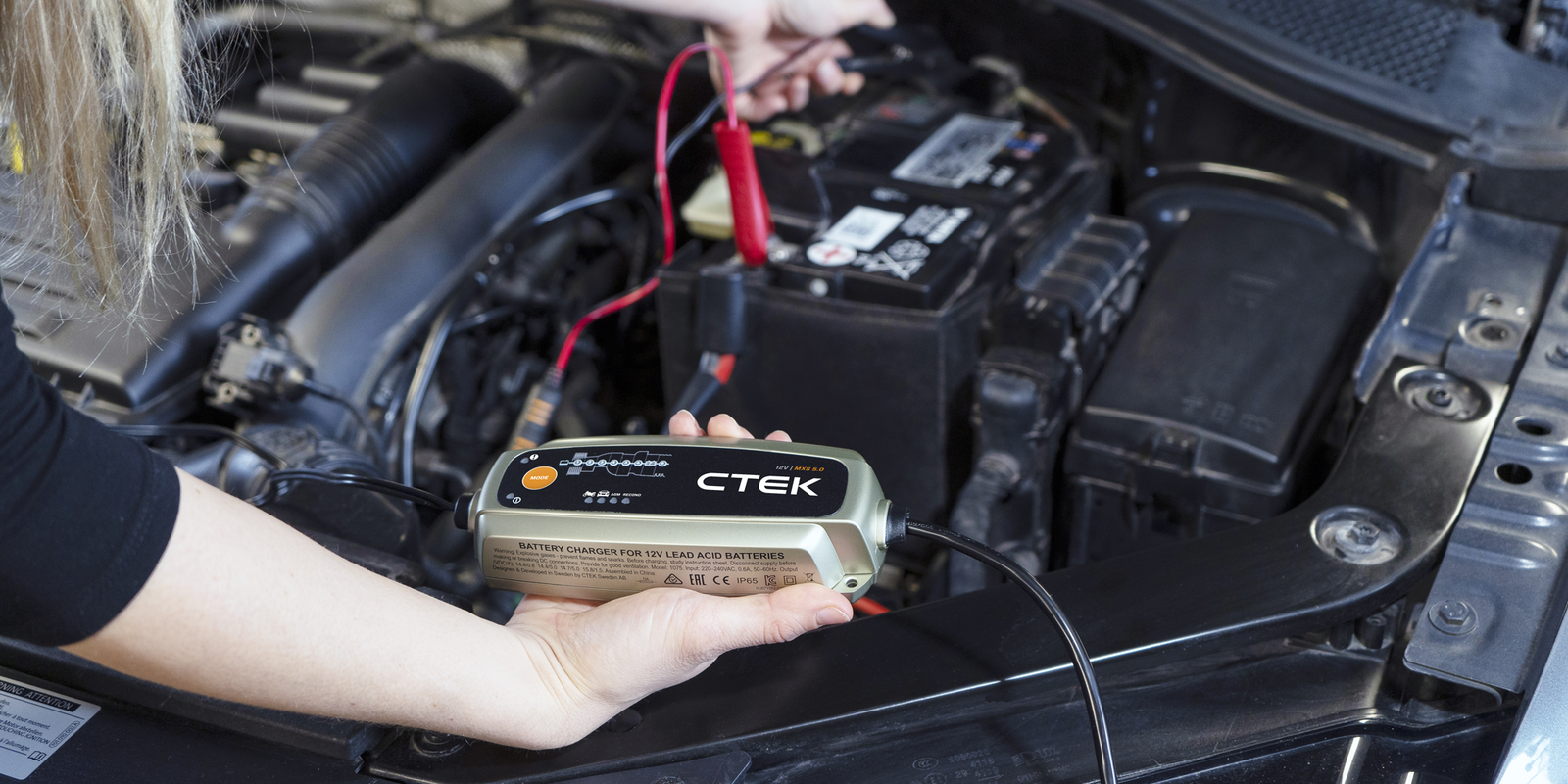
The CTEK MXS 5.0 NA is worth considering for routine charging and storage care of a compatible 12V lead-acid battery. Its strongest buying case is a garage-kept vehicle with access to AC power. Choose a different charger if your battery requires lithium charging, a different voltage, or a higher charging rate.
This CTEK MXS 5.0 review is a research-based buying assessment of the North American model, item 40-206. We have not performed hands-on charge-time, battery-recovery or durability tests. Specifications come from CTEK; recommendations reflect compatibility and ownership needs.
CTEK MXS 5.0 review: check the U.S. version first
The name can be misleading when shopping across regions. CTEK specifies a maximum 4.3A output and 110–120V AC input for the North American model. Do not copy the 5A rating from an overseas version into a U.S. buying decision. Match the model number, mains rating and plug before comparing offers.
| Specification | MXS 5.0 NA | Why it matters |
|---|---|---|
| Intended battery system | 12V lead-acid | Battery chemistry comes before vehicle brand |
| Supported types | WET, MF, Ca/Ca, AGM, EFB, GEL | Choose the program permitted for your battery |
| Maximum output | 4.3A | Plan for charging time rather than instant starting |
| Charging capacity | 1.2–110Ah | Check the battery label |
| Maintenance capacity | Up to 160Ah | Maintenance and charging limits differ |
| Temperature compensation | Built in | Still follow the operating limits |
| Manufacturer warranty | 5-year limited | Keep the receipt and confirm seller eligibility |
Source: CTEK MXS 5.0 NA product specifications. These are manufacturer specifications, not independent test results.
Who should put it on a shortlist?
Consider your routine before buying equipment. A weekend car that spends long periods in a garage creates a different need from a commuter stranded in a parking lot. If you can plug the charger into a suitable outlet and allow time for charging, a charger and maintainer may fit your routine well.
Our strongest use case is an owner who knows the battery type, has a suitable charging location and wants one dedicated unit for planned battery care. Check physical access, cable routing and the vehicle handbook before purchase. A charger that is awkward to connect may spend most of its life on a shelf.
For storage-care decisions, read our battery maintainer vs trickle charger guide. For roadside backup, our jump starter vs battery charger comparison explains the different job each tool serves.
What we like—and what would make us skip it
| Buying advantage | Tradeoff to weigh |
|---|---|
| A focused option for compatible lead-acid battery care | It does not cover lithium batteries |
| Can suit planned garage maintenance | Requires an appropriate AC supply and time |
| Multiple programs and visible stage indicators | The owner still needs to choose a suitable mode |
| Separate charging and maintenance capacity ratings | The larger maintenance figure is not the normal charging limit |
These are our buying judgments. We would not pay extra solely for an advertised recovery feature or assume that a premium charger will solve a recurring no-start problem. First identify whether the problem is a discharged battery, an aging battery or another vehicle fault.
AGM and RECOND are different settings
The current North American manual distinguishes the AGM program from RECOND and explicitly excludes AGM and GEL batteries from RECOND. Treat that distinction as a buying and setup requirement. A battery being deeply discharged is not, by itself, permission to select any recovery program.
CTEK’s manual also says to confirm that the charger has reached step 7 before leaving it connected unattended for an extended period. If it has not reached that stage within 50 hours, the manual calls for disconnection. Its rain and snow warning still applies; an ingress rating does not replace the operating instructions.
Read the current North American user manual alongside the battery and vehicle instructions. Use the vehicle’s designated charging points, provide ventilation and never attempt to charge a frozen battery.
How fast will it charge your battery?
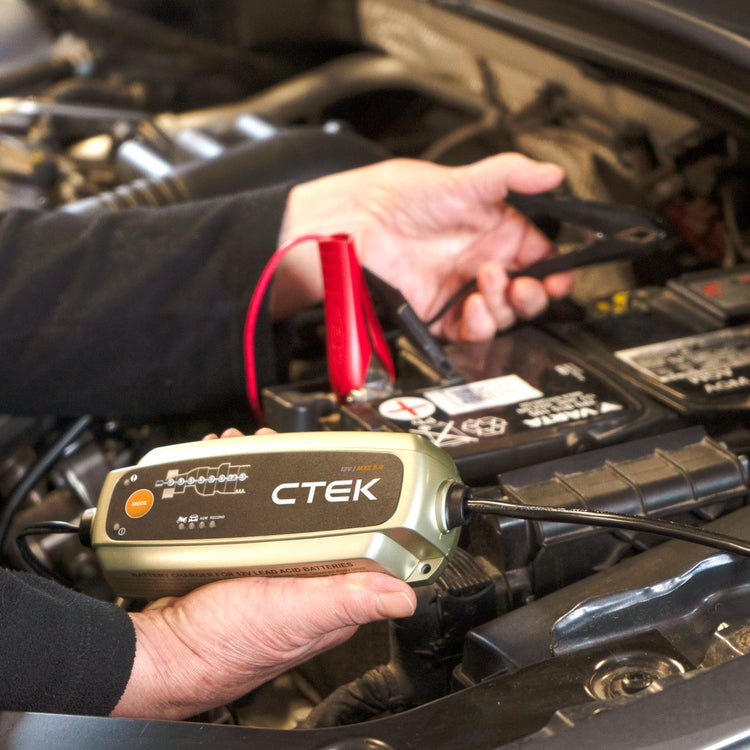
We have not measured charging speed. For planning only, replacing 30Ah at a constant 4.3A would take about seven hours before accounting for losses and the slower final charging stages. That arithmetic is an illustration, not a promised full-charge time.
Battery size, discharge level and the charging program change the result. If you need to get moving immediately, do not buy this expecting jump-start performance. If you routinely recharge a large battery from a low state of charge, compare a compatible higher-output charger and the battery manufacturer’s permitted charge rate.
CTEK MXS 5.0 vs NOCO GENIUS5
NOCO lists the GENIUS5 as a 5A charger with support for 6V and 12V lead-acid batteries and a 12V lithium mode. That wider compatibility is a reason to compare it if your household uses several battery types. Confirm the exact lithium chemistry and battery requirements in its own manual.
The practical question is whether the extra supported modes solve a need you actually have. For one compatible lead-acid car battery, either unit deserves a closer look. We have not tested the two side by side, so we do not claim that one charges faster, lasts longer or restores more batteries.
Source: NOCO GENIUS5 product overview. You can also read our NOCO GENIUS5 vs GENIUS10 comparison if charging output is part of your decision.
Amazon vs Walmart: compare matching packages
We have not verified live marketplace prices or stock. Use both store links to check equivalent listings at checkout. Search results can include different regional models, accessories and bundles, so the lowest number on a results page is not necessarily the best offer for this charger.
| Compare | What to check at both stores |
|---|---|
| Model | MXS 5.0 NA, item 40-206, with the appropriate mains rating |
| Contents | Read the itemized list for clamps, connectors and any extra accessories |
| Condition | New, used, open-box or refurbished |
| Seller | Who sells and ships it, plus warranty eligibility |
| Total cost | Shipping, tax and accessories you actually need |
| Returns | Return window, exclusions and possible return charges |
Check CTEK MXS 5.0 on Amazon Compare on Walmart
Our suggestion is to compare the standard charger first, then add only accessories required by your setup. A bundle is useful when its extra items solve a real access or storage problem. It offers little value if the accessories remain unused.
A short checklist before ordering
- Read the battery’s voltage, chemistry and capacity label.
- Check the vehicle handbook for charging restrictions and connection points.
- Choose the North American model for the intended AC supply.
- Plan a protected charging location and safe cable route.
- Compare the delivered total for identical package contents.
- Keep the receipt and manual with the charger.
If you are also building an emergency kit, our NOCO GBX155 review covers a separate starting-assistance product. Check its own vehicle limits; owning a charger does not answer every roadside need.
Frequently asked questions
Is the U.S. MXS 5.0 a 5A charger?
No. The North American version covered here is rated at a maximum 4.3A. Check regional specifications before purchase.
Can it charge lithium batteries?
No. This model is specified for compatible 12V lead-acid batteries. Select a charger explicitly approved for your lithium battery instead.
Can I use RECOND on an AGM battery?
The current North American manual says not to apply RECOND to AGM or GEL batteries. Follow the appropriate battery-specific charging instructions.
Can it stay connected during vehicle storage?
It is designed for maintenance use within its stated limits. Follow the manual’s stage-7 check and long-term connection guidance rather than assuming every charging situation can be left unattended.
Does a charging error mean the charger is broken?
Not necessarily. Check the manual’s troubleshooting guidance and have the battery assessed when errors persist. Repeatedly trying recovery programs is not a substitute for diagnosis.
Final verdict: buy for the battery and routine you have
The CTEK MXS 5.0 NA belongs on a shortlist for compatible lead-acid battery care in a planned garage setup. Its value depends on correct battery fit, convenient access and a sensible delivered price.
Compare alternatives when you need lithium support, another battery voltage or a higher permitted charge rate. Before buying, verify the model and package at both stores. A suitable charger you can use correctly is a better purchase than a feature list that does not match your needs.