
As an Amazon Associate, Best Auto Products earns from qualifying purchases. Buttons open Amazon searches; verify the exact model, hardware, package and seller.
NOCO GB70 vs GBX75: quick answer. Choose by vehicle compatibility first. If both fit, favor the GBX75 when its 60W USB-C PD charging arrangement matters to you; favor the GB70 when its XGC connections and complete delivered cost suit your setup. Neither peak-amp figure proves superior winter starting performance.
Compare GB70 offersCompare GBX75 offersThese two jump starters can look like a simple step up from 2000A to 2500A. The more useful difference for many owners is how the equipment fits into their charging routine. A pack that is convenient to recharge and easy to keep ready may be the better purchase even when both models cover the same vehicle.
This comparison separates the documented differences from assumptions that the numbers cannot support. It covers current USB-C information, XGC power connections, battery capacity, buying costs and winter limits. We have not tested the units side by side, so we do not publish a measured winner for cranking performance or a guaranteed temperature at which either will start your engine.
By Jake Morrison · Checked November 29, 2026. Research-based comparison using NOCO specifications, product pages and user documentation. No hands-on cold-weather test or invented performance score.
NOCO GB70 vs GBX75: verified differences
| Specification | GB70 | GBX75 |
|---|---|---|
| Peak current | 2000A | 2500A |
| Battery type supported | 12V lead-acid | 12V lead-acid |
| Published gasoline limit | Up to 8.0L | Up to 8.5L |
| Published diesel limit | Up to 6.0L | Up to 6.5L |
| Internal energy | 56Wh | 74Wh |
| Current USB input | USB-C, 5V/2.1A maximum | USB-C PD, up to 60W |
| Additional connection to compare | 12V XGC input/output | USB-C PD input/output |
Sources: GB70 specifications and GBX75 specifications. Limits are manufacturer ratings, not the results of our own vehicle tests.
Start with the rows that can eliminate a model. If the actual engine falls outside its published limit, a lower price does not make it the appropriate choice. Once both candidates fit, charging and ownership details become the more useful way to separate them.
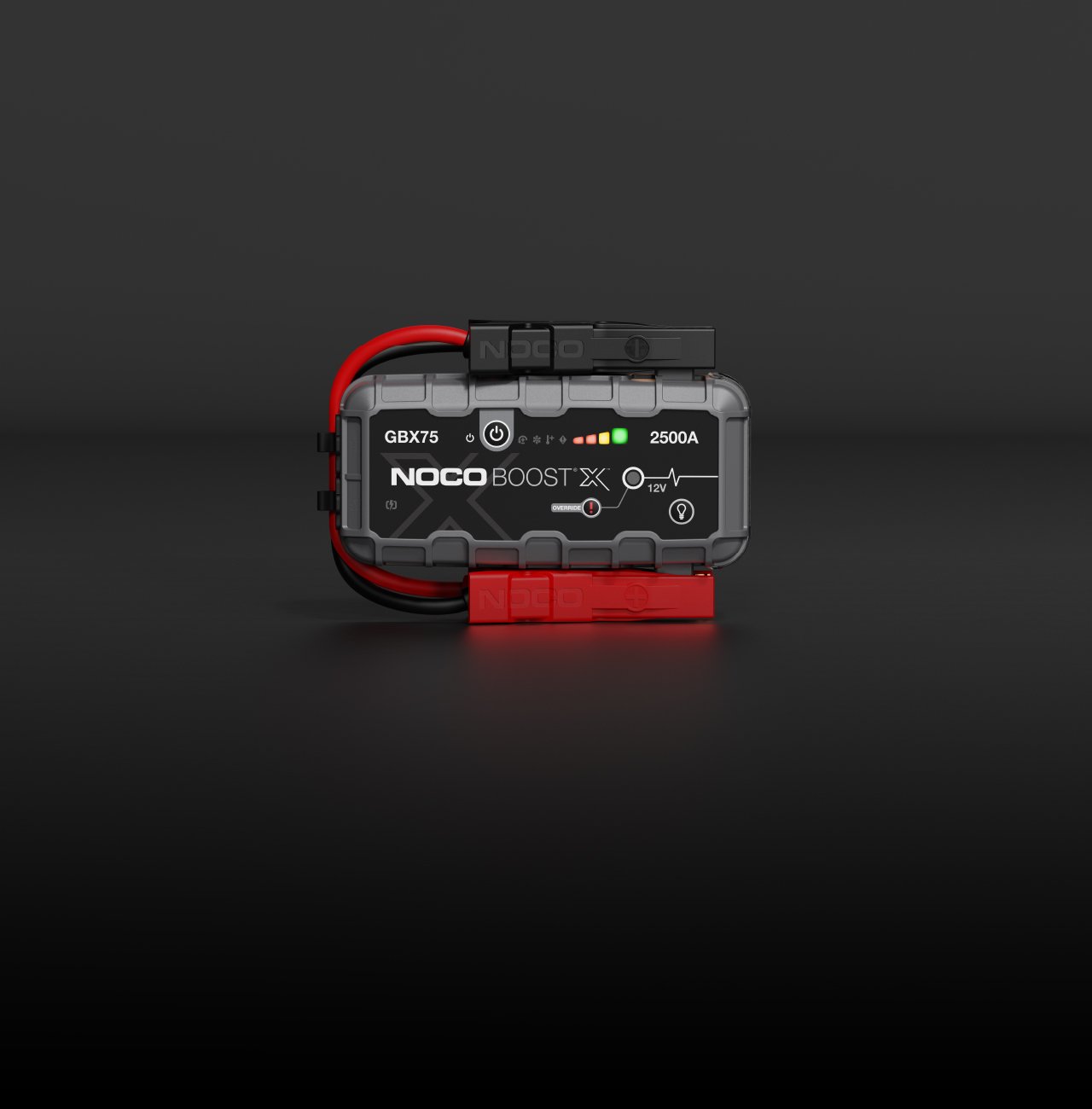
Engine size can settle the comparison before price does
Confirm fuel type, engine displacement, system voltage and the vehicle’s jump-start instructions. A general description such as pickup or SUV is not enough. Two vehicles with similar body shapes can have different powertrains and starting arrangements, and those differences should control the shortlist.
For example, a 6.2L diesel lies above the GB70’s published diesel limit but within the GBX75’s. That is a specification-based reason to remove the GB70 from this particular comparison, not an estimate that a near miss will probably work. The vehicle instructions and manufacturer compatibility guidance still apply.
If you are buying for several family vehicles, list each one instead of choosing around the smallest. Then decide whether one appropriately rated pack or separate equipment better fits where the vehicles are actually parked. A shared unit is less helpful if it leaves with the other driver when needed.
The main charging difference is power, not just the connector
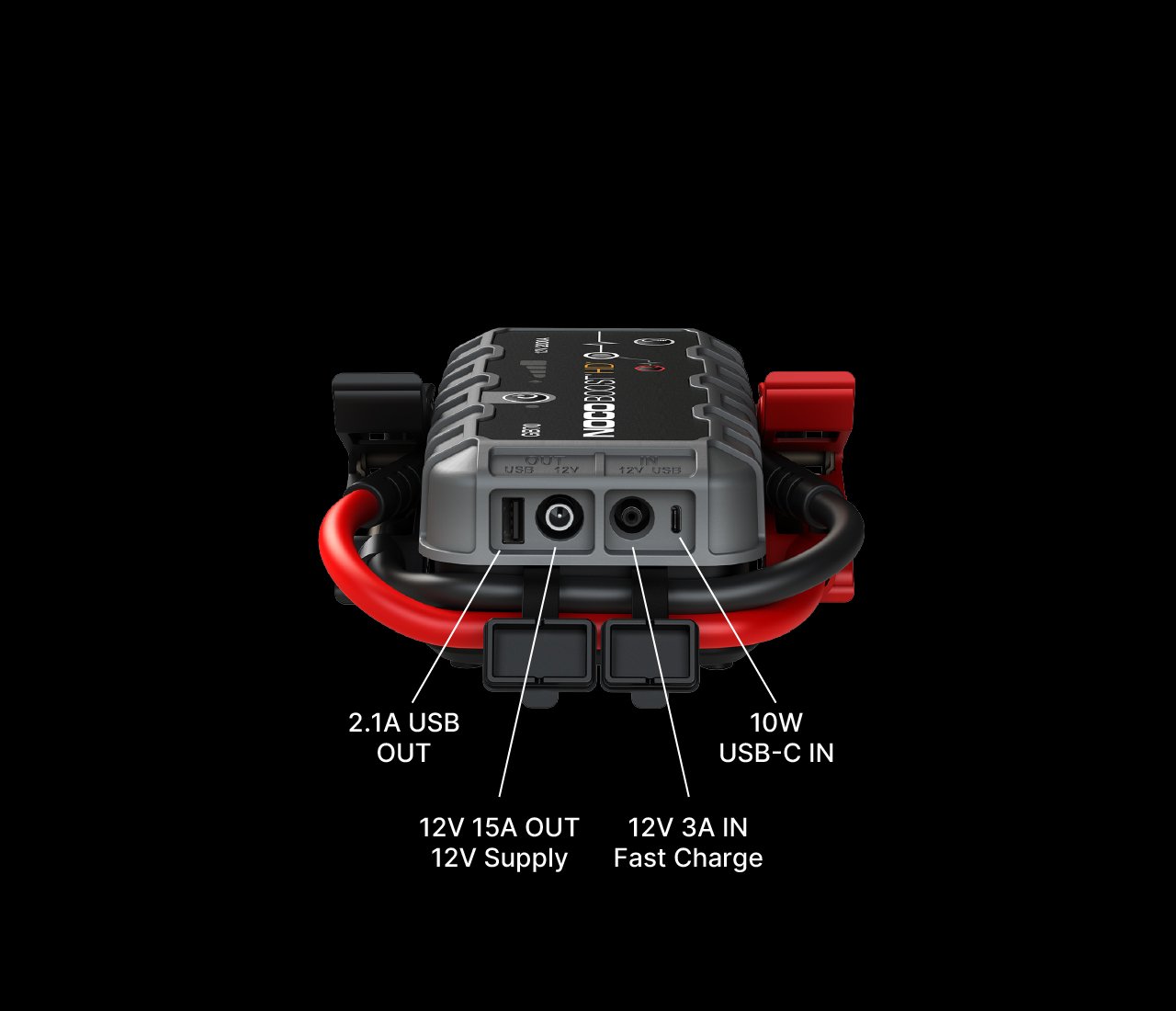
The current GB70 specification lists a USB-C input at 5V and up to 2.1A. The GBX75 specification supports USB-C Power Delivery up to 60W. Calling one micro-USB and the other USB-C without checking current hardware can therefore produce an outdated comparison.
Ask the seller which actual GB70 hardware revision will be supplied. Photos, older descriptions and warehouse stock may not all agree. The important distinction remains that a USB-C socket does not automatically provide the same power profiles or charging speed as a PD-capable platform.
For the GBX75, identify a compatible power source and cable before assigning value to fast charging. A high wattage printed on an unrelated adapter does not prove it supports the required profile. Use manufacturer guidance to confirm the combination, and add any missing equipment to the delivered cost.
NOCO advertises a 1.7-hour full recharge for the GBX75 with suitable fast charging. Treat that as a manufacturer claim under the specified setup, not a result we measured. It does not mean every USB source, cable or temperature will produce the same time.
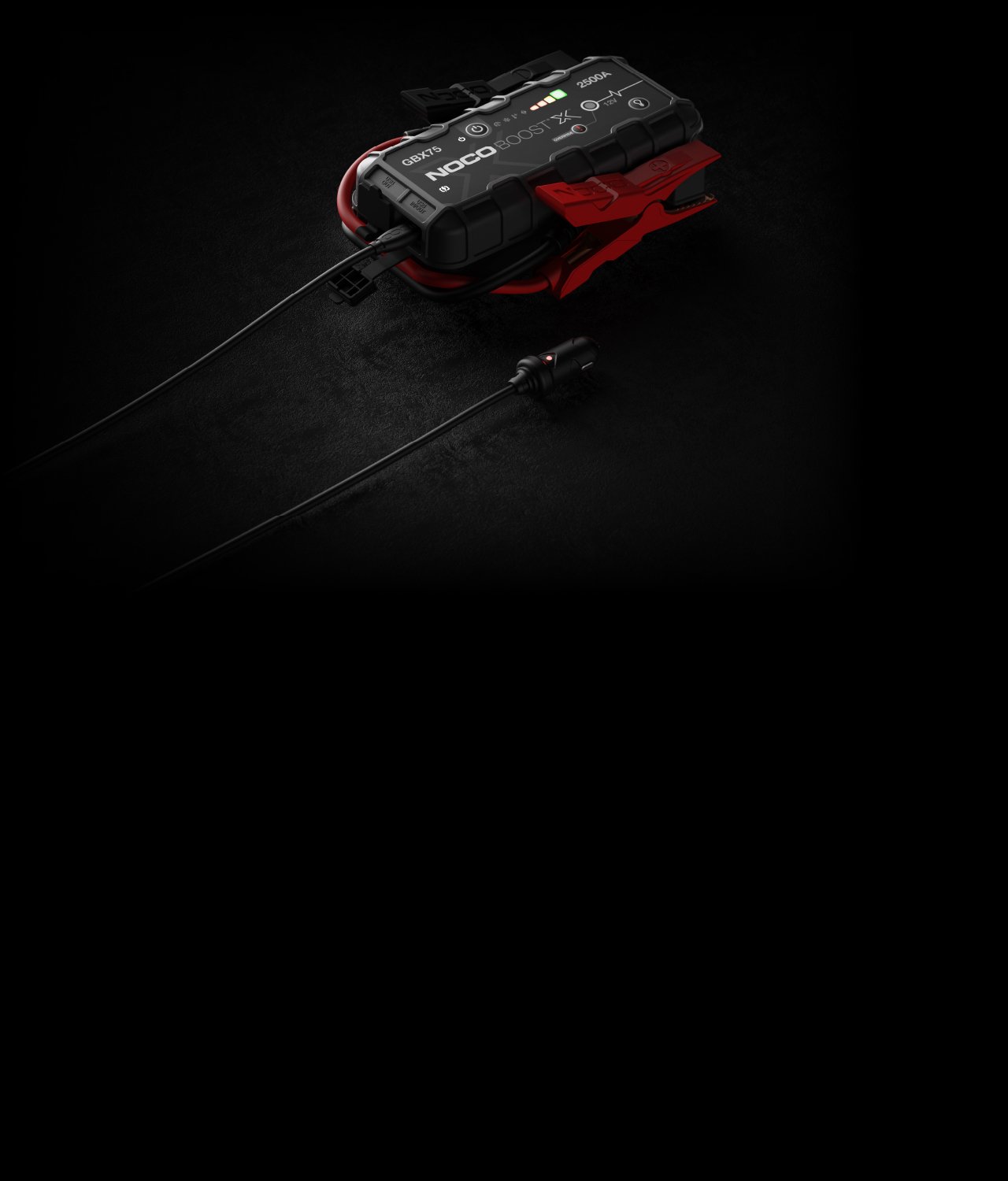
When the GB70’s XGC connections matter
The GB70 offers dedicated 12V XGC input and output, which is a separate reason to consider it. If your intended setup uses that connection, check the exact compatible adapters and the electrical requirements of the device involved. The presence of an output does not authorize connecting any 12V accessory you happen to own.
Describe the benefit before you pay for it. Do you need a particular approved accessory connection, or are you simply comparing the main jump-start function? If XGC will remain unused, it should not outweigh a charging platform you would use regularly. If it solves a defined requirement, include that in the comparison.
Avoid treating either pack as unlimited general-purpose power. Using it for other devices changes the energy available afterward. Decide which equipment is for routine use and which is being kept as emergency reserve, then organize your charging routine around that choice.
What 56Wh versus 74Wh does—and does not—tell you
The GBX75 has the larger listed internal energy capacity. That is a documented specification. It does not directly convert to a guaranteed number of successful starts, and it does not mean every vehicle will crank better by the same percentage.
The condition of the vehicle battery, the intended application and the operating environment all belong in a performance assessment. We have not controlled those variables for a side-by-side test. Our recommendation therefore uses the capacity difference as one ownership detail rather than turning it into an invented cold-weather advantage.
The same caution applies to peak amps. They are useful identifying specifications, but they are not a standardized cold-cranking result for your vehicle. Do not choose a product solely by dividing one headline number by another or assuming the larger number cancels out a temperature restriction.
Winter: both models still have limits
NOCO’s documentation lists operating limits and separate charging limits. For these models, the published charging range begins at 32°F (0°C); the operating range extends down to -4°F (-20°C). Check the current guide for the actual unit, including storage guidance and temperature-warning indicators.
Those figures should change how you plan the purchase. If the vehicle regularly sits in conditions outside the permitted range, choose a storage and availability plan before relying on the pack. Do not use direct heat, improvised warming methods or an override to defeat protection.
For the broader winter selection process, use our winter jump starter guide. It covers preparation and vehicle fit rather than naming a winner from peak amps alone. The GB70 review gives more detail on that model’s ownership checks.
Compare complete delivered costs
Put both usable setups in separate baskets. Include required charging equipment, appropriate storage, delivery and tax. Then remove items you already own only after confirming they are compatible and suitable. This makes the comparison about equipment you can actually use.
| Expense | GB70 question | GBX75 question |
|---|---|---|
| Charging equipment | Do you have the correct USB or XGC arrangement? | Do your charger and cable support the intended PD charging? |
| Package contents | Which revision, cables and adapters are supplied? | Which cables and charging source are supplied? |
| Storage | Do you need a suitable protective case? | Do you need a suitable protective case? |
| Delivered price | What is the usable total? | What is the usable total? |
Suppose the cheaper hypothetical basket costs $170 plus $35 of necessary extras, while the other costs $205 with everything you need. Both total $205 before further charges. Those numbers are examples only; they are not current offers. The exercise prevents a headline discount from deciding the purchase too early.
Warranty handling and seller support belong beside that total. Check who supplies the unit, how a problem would be handled and what return conditions apply. Saving a small amount may be less attractive when the hardware revision or package contents remain uncertain.
Three buyer scenarios
You already own a working GB70
Do not replace it solely because the GBX75 has a larger number. First establish whether the GB70 fits your vehicle and whether keeping it charged is actually inconvenient. If it already performs the intended ownership role, a battery-system inspection or missing emergency supplies may be a better use of the budget.
You are entering the category without charging equipment
Compare the whole setup from the start. The GBX75 is worth investigating when its PD charging arrangement fits the devices and power sources you already plan to carry. The GB70 remains a candidate when its complete basket is favorable and its charging routine is practical for you.
You need more published engine coverage
Choose from models that explicitly cover the engine. If even the GBX75 does not fit, our GBX155 review is one next investigation. Do not assume that an out-of-range engine is covered because a seller calls a pack professional or heavy duty.
Avoid four comparison mistakes
First, mixing current and older GB70 port information can make a buying table misleading. Confirm the hardware sold. Second, comparing a bare accessory listing with a complete pack can create an unrealistically low price. Third, counting a compatible wall charger as included without checking can understate ownership cost.
Fourth, confusing emergency boosting with battery maintenance can lead to buying the wrong type of equipment. A recurring battery problem needs diagnosis. Our jump starter versus battery charger guide and battery maintenance comparison address those different needs.
Frequently asked questions
Is the GBX75 better than the GB70 for winter?
It has different specifications and a higher-power USB-C charging platform, but we have not established a cold-start winner. Check vehicle coverage, temperature limits and your charging plan.
Does the current GB70 use USB-C?
NOCO’s current specification page lists USB-C. Verify the hardware supplied by the seller rather than relying on older photos or descriptions.
Can I use any USB-C charger for GBX75 fast charging?
Do not assume that. Confirm the required PD profile, suitable cable and charging conditions from NOCO’s instructions. A USB-C connector alone is insufficient.
Should I upgrade a GB70 I already own?
Upgrade for a specific unmet requirement, such as the desired charging arrangement or published engine coverage. A larger headline number alone does not establish value.
Is either a long-term car-battery maintainer?
The purchase here is an emergency jump pack. Investigate a compatible charger or maintainer separately for battery charging and storage care.
Final verdict: fit first, charging second, price third
Remove any model that does not fit the vehicle. If both remain, choose the charging and accessory arrangement that you can maintain reliably, then compare complete delivered costs. The GBX75’s PD platform is a meaningful ownership distinction; the GB70’s XGC connections can also matter in the right setup.
A well-chosen jump starter should have a clear job in your winter preparation. Confirm the model, hardware revision and supplied equipment before ordering. Keep the instructions available, and address recurring starting problems rather than treating either pack as a permanent repair.
Search GB70 on AmazonSearch GBX75 on AmazonSources: GB70 specifications; GBX75 specifications; GBX75 charging claims; GB70 support; GBX75 user guide. Follow current instructions for the unit supplied.