

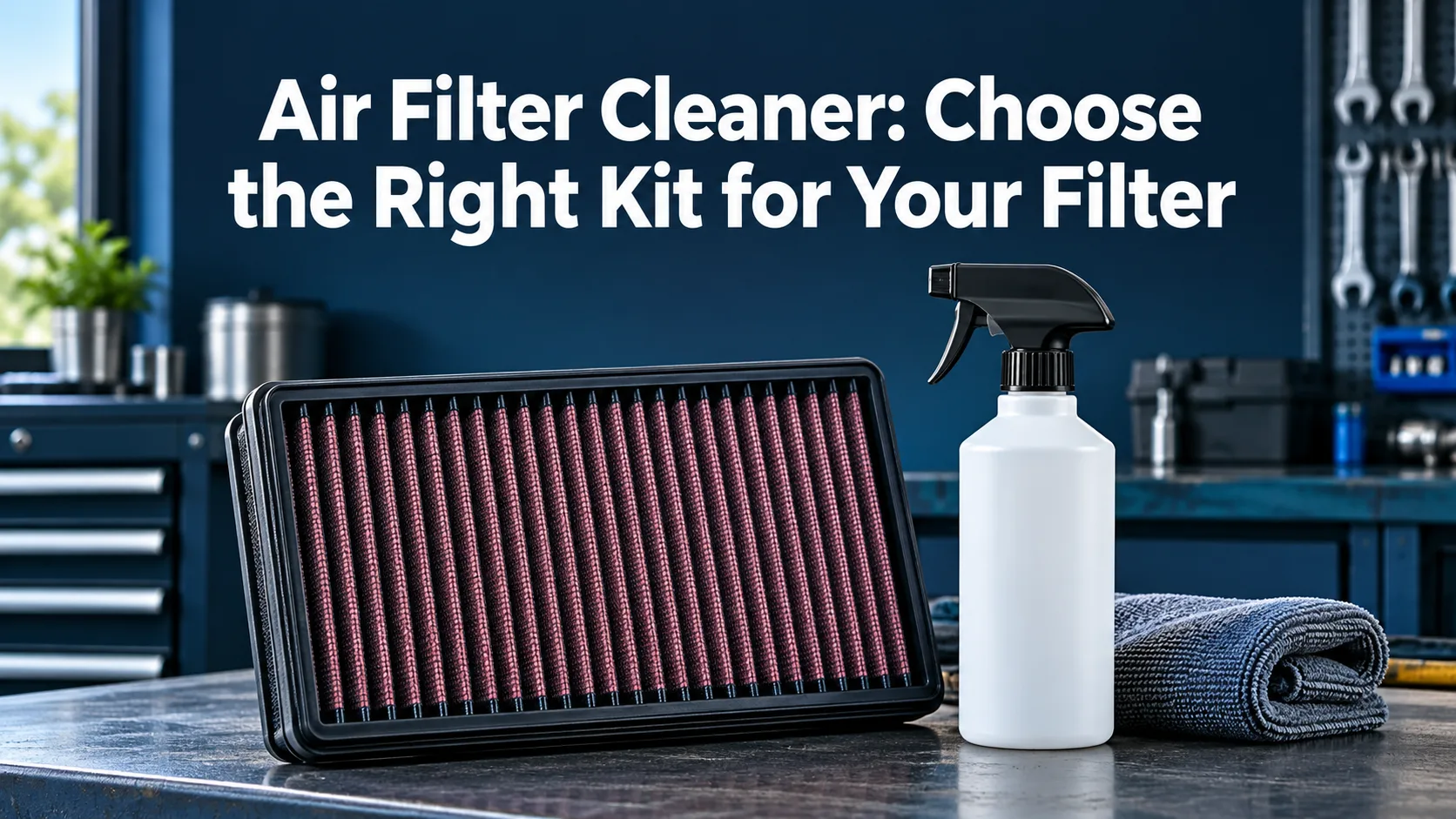
An air filter cleaner is useful only when it matches the filter you own. A reusable oiled-cotton engine filter, a washable dry filter, and a disposable replacement element do not share one universal maintenance procedure. Start with the filter’s exact part number and instructions before putting a chemical in the shopping cart.
This guide helps you choose a maintenance route and compare two K&N service kits for compatible oiled-cotton filters. It is a buying and planning guide, not a claim of hands-on testing, extra horsepower, improved fuel economy, or universal compatibility.
Quick answer: identify the filter before the cleaner
Confirm whether the filter is washable. For a compatible oiled filter, use the specified cleaner and oil. For a washable dry filter, follow its separate instructions. Replace a non-washable element rather than treating a cleaning kit as an alternative.
Affiliate disclosure: As an Amazon Associate I earn from qualifying purchases. We may earn a commission through the links below, at no additional cost to you.
Check the K&N 99-5000 kit on AmazonWhich maintenance route matches your filter?
| Filter type | Buying route | Check before purchase |
|---|---|---|
| Compatible K&N oiled cotton | Specified cleaner and filter oil | Exact part and service instructions |
| Washable dry media | Its approved cleaning product | Do not assume oil is required |
| Disposable replacement element | Correct replacement filter | Vehicle application and interval |
| Unknown brand or media | Identify it first | Part number and manufacturer guidance |
Two K&N kits for compatible oiled-cotton filters
These kits represent different oil applicators, not a tested performance ranking. Verify your filter’s service requirements and the selected package at checkout. Neither is a universal cleaner for every engine or cabin filter.

K&N 99-5000 aerosol service kit
K&N lists a 12-ounce Power Kleen cleaner and 6.5-ounce aerosol filter oil for its compatible oiled-cotton filters. It is a practical option when this is the specified maintenance system and you prefer the documented spray application.
Limitation: Confirm filter compatibility; an aerosol oil kit does not make a disposable or dry filter suitable for oiling.
View K&N 99-5000 kit details on Amazon
K&N 99-5050 squeeze-red service kit
This kit combines Power Kleen cleaner with red filter oil in a squeeze bottle. Compare it if your compatible K&N filter calls for this service system and the squeeze application suits your routine.
Limitation: We have not measured an airflow, protection, or durability advantage over the aerosol kit. Follow the instructions for the chosen applicator.
View K&N 99-5050 kit details on Amazon
Find the exact filter you own
Record the brand and part number from the filter or purchase paperwork. A vehicle model alone is not enough when a previous owner may have fitted an aftermarket intake. The installed component determines which maintenance instructions you need.
Check whether you are looking at the engine intake filter or the cabin filter. They serve different locations and may require different products. A bottle advertised for one application is not automatically suitable for the other.
If the part number is unclear, pause the purchase and contact the filter manufacturer or a qualified shop. A photograph can help identify a part, but color or shape alone should not decide which chemical to apply.
Keep the vehicle manual available alongside the filter instructions. The vehicle guidance covers access and reassembly, while the filter maker explains maintenance of its media. Resolve any uncertainty before removing parts or opening a cleaning bottle.
Separate cleaning from oiling
For a filter that requires both operations, cleaning and oiling have different purposes and separate instructions. Buying a cleaner alone may leave your service kit incomplete. Buying oil alone does not replace the cleaning stage when cleaning is due.
Do not assume every reusable filter is oiled. Some washable filters use dry media and have another approved maintenance method. Read the instructions for the specific element rather than borrowing a procedure from a similar-looking filter.
Likewise, do not decide that an element is washable because it looks sturdy. Check whether the manufacturer specifies cleaning or replacement. A replacement element may be the correct purchase even when a reusable-filter kit looks economical.
Our recommendation is to choose the documented maintenance system before comparing bottle size or applicator convenience. That sequence keeps the shopping decision tied to the part you need to maintain.
Read the label as carefully as the listing
Look for the exact cleaner name and intended filter application. The broad phrase degreaser is not enough to establish compatibility with filter media, seals, or surrounding parts. Use the product specified by the filter manufacturer.
Review the handling, storage, and protective-equipment information on the current label. Plan a suitable work area and keep the product away from items the label says to avoid. This guide does not replace the chemical’s safety instructions.
Check whether the package contains cleaner only, oil only, or both. Retailers may group variants on one page. Match the selected item number to the package contents instead of relying on the main photograph or the first review.
Keep chemicals in their original labeled containers. Do not decant a cleaner into a drink bottle or an unidentified spray bottle. Clear labeling also helps another person avoid using a filter product on an unrelated surface.
What K&N’s instructions establish
K&N’s current cleaning instructions describe applying cleaner, rinsing with low-pressure cool water from the clean side outward, and allowing the filter to dry naturally before oiling. Read the full procedure for the relevant filter and applicator.
Use the specified oiling method and quantity guidance rather than adding oil until the filter looks heavily saturated. Do not shorten the drying stage by guessing that the surface looks ready. Follow the manufacturer’s checks before reinstallation.
Those instructions apply to the relevant K&N product family. They are not permission to wash every filter with the same product. For another brand or a dry-media element, find that manufacturer’s instructions instead.
Plan enough time before opening the housing
Choose a maintenance window that leaves room for the complete procedure, including drying and reassembly. Do not interpret a short waiting step on a label as the total service time. Conditions and the documented procedure affect the schedule.
If you need the car for an imminent trip, arrange the job earlier or discuss service with a shop. A rushed purchase followed by rushed installation is a poor reason to select one kit over another.
Prepare a clean work surface and organize the fasteners as the vehicle instructions require. Keep loose objects away from the open intake. Do not operate the vehicle with parts removed simply to save time during the maintenance window.
If access requires steps beyond your experience, have a qualified technician do the job. The right cleaner does not resolve uncertainty about electrical connections, housing clips, or installation requirements.
Inspect the element before deciding to clean it
Check the media, frame, and sealing surfaces using the filter maker’s inspection guidance. A cleaning product is not a repair for torn media, a damaged frame, or a seal that no longer seats correctly.
For a used vehicle with uncertain service history, identify what is installed before assuming it needs another coat of oil. Find the maintenance record if available and avoid treating appearance as a complete service history.
Use the service interval and condition guidance for your exact filter and operating conditions. We do not provide one universal mileage interval for every intake or recommend frequent washing simply to use a newly purchased kit.
Record the date, mileage, filter part number, and products used after service. A short maintenance note is more useful at the next inspection than trying to remember which bottle was on the garage shelf.
Avoid improvised cleaning methods
Do not substitute household detergent, brake cleaner, gasoline, or a general garage chemical unless the filter maker explicitly approves the product and method. Familiarity with a cleaner on metal parts does not establish suitability for filter media.
Check the instructions before using a pressure washer, compressed air, heat, or a brush. A faster-looking method can depart from the approved procedure. If the instructions specify natural drying, allow that stage to finish.
Do not keep scrubbing a stain just to make the element look new. Use the maker’s inspection criteria to decide whether the filter is serviceable. Cosmetic appearance is not a substitute for checking physical condition.
Handle used solution and cleaning materials according to the product label and applicable disposal requirements. Plan where the work will happen before beginning so you are not improvising cleanup with an open intake nearby.
Reassembly deserves its own check
Follow the vehicle and filter instructions for orientation, seating, fasteners, and any required reconnections. Make sure the housing closes as intended. Do not force a cover to compensate for an element that is the wrong application or seated incorrectly.
Check the work area for tools, cloths, loose hardware, and packaging before finishing. Keep these out of the intake. Use the documented inspection process instead of assuming that a closed hood means the service is complete.
If a warning or running problem appears after maintenance, seek the proper diagnostic procedure or professional help. Do not assume that adding more cleaner or oil is the answer. Repeated chemical application is not a diagnosis.
Keep the installation instructions for the next service. If a housing clip or seal was already damaged, address it with the correct part and guidance rather than treating the cleaning kit as the whole repair.
Compare the full ownership cost
Compare the correct kit, any separately required oil, the maintenance time, and the price of the appropriate replacement element. Do not compare a cleaner-only bottle with a complete kit as though the packages perform identical jobs.
For an existing compatible reusable filter, buying its approved service products may be a reasonable maintenance choice. That does not establish that every driver should replace a working factory filter with a reusable one.
We do not promise fuel savings, horsepower gains, or a fixed number of services per kit. Filter size, the documented application, and the actual package affect how far the contents go. Check the current product information.
Choose an applicator you can use according to its instructions. A squeeze bottle and an aerosol can change the handling routine; neither earns a performance advantage in this guide merely because of its format.
Keep filter service separate from detailing
Store intake-service products clearly apart from exterior detailing supplies. Read the label each time rather than grabbing a familiar bottle by color. Use separate, suitable cleanup materials as the relevant instructions require.
Our microfiber versus cotton towel guide helps compare general car-care cloth uses. It is not an instruction to rub filter media with a detailing towel. Use a cloth on the element only when its manufacturer allows it.
Before a road trip, include filter maintenance in the wider service plan rather than buying a kit at the last minute. Confirm what actually needs attention and leave sufficient time for any required inspection or replacement.
A simple purchase checklist
Before ordering, write down four items: the installed filter part number, whether it is washable, whether it requires oil, and the approved service-product numbers. If one answer is missing, resolve it before choosing between the two kits.
When the package arrives, compare the labels and item numbers with your order. Check that the instructions are readable and that the required components are included. Keep the purchase record so the exact variant is easy to identify later.
For a shared vehicle, tell the person who normally handles maintenance which system is installed and where the instructions are kept. That helps prevent someone treating an oiled element as a disposable filter or adding oil to a dry one.
If a shop services the vehicle, discuss the installed filter before the appointment. Ask whether they can follow its maintenance procedure and whether cleaning or replacement is appropriate for its present condition. Agreement on the actual component is more useful than asking for a generic air-filter service.
Frequently asked questions
Can every engine air filter be washed?
No. Confirm that the exact element is washable. Replace a non-washable filter with the correct application.
Should I oil a dry air filter?
Follow that filter’s instructions. Do not add oil simply because a kit includes it.
Is a cabin filter serviced the same way?
Do not assume so. Identify the cabin element and its own maintenance requirements.
Can I use a household degreaser?
Use only the product and method approved for your specific filter.
How long does the whole job take?
Allow time for the full documented process, including drying, inspection, and reassembly. We do not promise a universal completion time.
Will cleaner repair damaged media?
No. Inspect the filter and replace damaged parts as the manufacturer directs.
Sources and limitations
Product identification and application were checked against K&N’s 99-5000 product page, 99-5050 product page, and linked cleaning instructions. The buying scenarios are editorial guidance. We have not performed laboratory airflow testing or hands-on comparisons of these kits.

1 thought on “Air Filter Cleaner: Choose the Right Kit for Your Filter”