
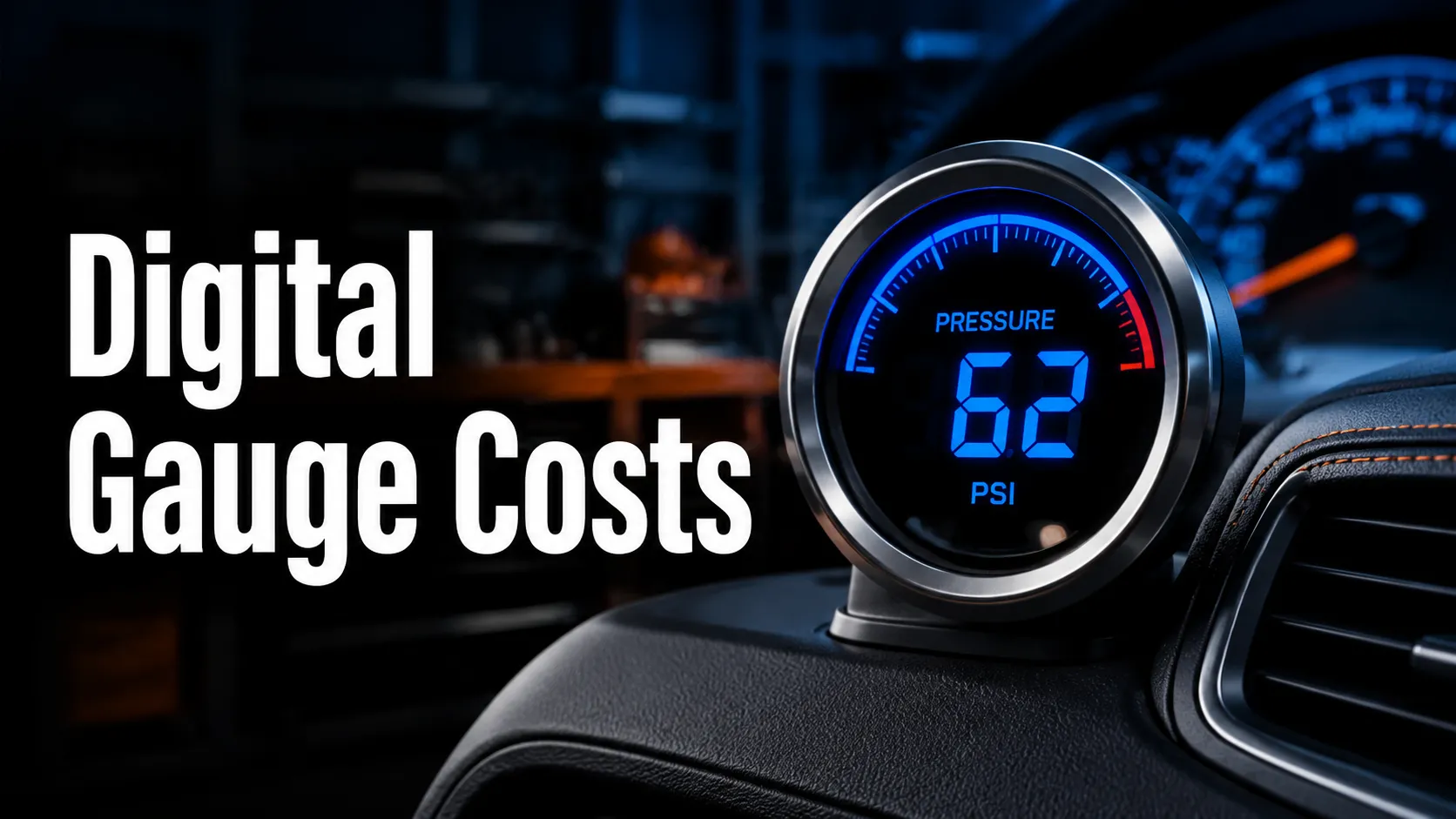
Digital gauge costs typically range from $150 to $600 for basic and mid-range setups in the U.S. Premium systems can cost $700 to $2,500 or more before installation. A model-specific cluster or full custom setup may cost more once wiring, sensors, adapters, programming, and calibration are included.
Best when you need a few essential readings and can handle a universal installation.
The strongest balance of screen quality, useful sensors, support, and manageable installation.
Best for restomods, performance builds, OEM-style fitment, and advanced vehicle data.
I’m Jake Morrison, and I’ve found that digital gauges can be a smart upgrade when you want cleaner info, better visibility, or a modern look. The real cost depends on the vehicle, the features you want, and whether you’re replacing a factory cluster or adding a universal display.
In this guide, I’ll break down typical price ranges, what drives the cost up, and how to budget for installation so you know what to expect before you buy.
How Much Are Digital Gauges? Typical Price Ranges Explained
| Price range | What you usually get | Best for |
|---|---|---|
| $100–$300 | Basic digital displays, single-function gauges, simple universal kits | Budget builds, simple monitoring needs |
| $300–$800 | Multi-gauge displays, better screens, more sensors, stronger app support | Daily drivers, project cars, light performance use |
| $800–$2,500+ | Premium clusters, high-resolution displays, model-specific fitment, advanced data logging | Restomods, performance builds, luxury-style upgrades |
Budget digital gauge clusters and displays
Budget digital gauges usually cost between $100 and $300. At this level, I expect basic functionality, decent accuracy, and simpler screens. These are often universal units or entry-level displays that cover core readings like speed, RPM, coolant temp, oil pressure, and voltage.
They can work well if you want a cleaner look without spending a lot. The tradeoff is usually smaller screens, fewer customization options, and less polished software.
Mid-range digital gauges for daily drivers and project cars
Mid-range digital gauges typically land in the $300 to $800 range. This is the sweet spot for many drivers because you get better display quality, more sensors, and stronger integration with modern vehicles or custom builds.
These systems often make sense for project cars where you want reliable information and a more factory-like experience. Some also offer smartphone setup, customizable layouts, and warning alerts.
Premium digital gauge systems for performance and luxury builds
Premium digital gauge systems often start around $800 and can go past $2,500. These are the systems I’d expect to see in high-end restomods, serious track cars, or vehicles where the cluster needs to look and function like a full OEM-style upgrade.
They usually offer sharper screens, faster processing, more vehicle data, and better fitment. Some are built specifically for certain makes and models, which helps justify the higher price.
Many digital gauge systems cost more because they are not just “gauges.” They can include a screen, control module, wiring harness, sensors, and software that all need to work together.
What Affects How Much Digital Gauges Cost?
| Cost factor | Lower-cost setup | Higher-cost setup |
|---|---|---|
| Screen and size | Small display, basic resolution | Large HD display, brighter panel, faster refresh |
| Fitment | Universal mount | Vehicle-specific or OEM-style cluster |
| Features | Core readings only | GPS, CAN bus, alerts, data logging, custom themes |
| Brand and support | Limited warranty or basic support | Known brand, stronger warranty, better documentation |
Gauge size, screen quality, and display technology
Screen size and quality make a big difference in price. A small monochrome display will cost less than a large color touchscreen with high brightness and crisp graphics.
Display technology matters too. Some systems use simple LED segments, while others use full-color LCD or TFT panels. Better screens are easier to read in sunlight and usually feel more modern, but they also cost more.
Vehicle compatibility and model-specific fitment
Universal digital gauges are usually cheaper than vehicle-specific systems. That’s because a universal kit is designed to fit a wide range of cars or trucks with more generic wiring and mounting.
Model-specific clusters cost more because they are engineered to match the dash shape, connectors, and vehicle data. If you want a clean, factory-style result, that extra cost is often worth it.
Features like GPS, CAN bus, warning lights, and customization
Features add cost fast. GPS-based speed readouts, CAN bus integration, shift lights, programmable warning lights, and custom startup screens all push the price up.
If you need deep data access or want the gauge cluster to talk to modern electronics correctly, expect to pay more for the hardware and software support.
Brand reputation, warranty, and support
Well-known brands usually charge more, but they often give you better instructions, stronger warranty coverage, and more dependable customer support. That matters when you’re dealing with wiring and calibration.
I’d rather pay a little more for a system with solid documentation than save money on a gauge setup that becomes a headache during installation.
For a good technical reference on vehicle electronics and diagnostics, I also like checking manufacturer resources such as Holley’s digital dash and gauge product information, since they explain features, fitment, and system requirements clearly.
How Much Are Digital Gauges for Different Vehicle Types?
| Vehicle type | Typical gauge cost | Common notes |
|---|---|---|
| Universal kits | $100–$700 | Flexible, but may need more wiring and custom mounting |
| OEM-style replacement clusters | $500–$2,500+ | Best fitment, often more expensive |
| Classic cars and restomods | $400–$2,000+ | May require adapters, sensors, and custom dash work |
| Motorcycles, trucks, and off-road vehicles | $150–$1,500+ | Size, vibration resistance, and weather protection matter |
Universal digital gauge kits
Universal kits are usually the most affordable option. They are popular because they can fit a wide range of vehicles, but they may require more setup work.
If your build is simple and you’re comfortable with wiring, a universal kit can be a cost-effective choice. If you want a plug-and-play experience, the price may be lower but the labor can be higher.
OEM-style replacement digital clusters
OEM-style replacement clusters usually cost more because they are built to match a specific vehicle. That means cleaner fitment, better integration, and less guesswork.
These are the systems I’d point to for drivers who want the dash to look factory while adding modern digital features. The price reflects that engineering.
Digital gauges for classic cars and restomods
Classic cars and restomods often need extra parts to make digital gauges work correctly. You may need senders, adapters, custom brackets, or interface modules to connect older engines and electrical systems.
That means the gauge kit itself is only part of the budget. The final total depends on how much modification the car needs.
Digital gauges for motorcycles, trucks, and off-road vehicles
Motorcycles, trucks, and off-road vehicles can use digital gauges too, but the setup needs to match the environment. Vibration resistance, water resistance, and sunlight readability are important.
For trucks and off-road rigs, I’d watch for rugged construction and sealed connectors. Those features can raise the price, but they help the system hold up in real use.
If you’re comparing digital gauges for a newer vehicle, check whether the system uses CAN bus data or needs separate sensors. That can change both the price and the installation complexity.
What Installation Adds to the Total Cost of Digital Gauges
DIY installation costs and hidden expenses
DIY installation can save money, but it is not always cheap once you count everything. You may need wiring supplies, connectors, mounting hardware, crimp tools, and possibly software or calibration accessories.
The hidden cost is time. If you are tracing wires or troubleshooting a signal issue, the job can take much longer than expected.
Professional installation labor rates
Professional installation often runs from about $100 to $600 or more, depending on the complexity of the job and local labor rates. A simple gauge swap is cheaper than a full custom cluster install.
Shops that work on performance cars, classics, or custom electronics may charge more, but they also reduce the risk of wiring mistakes.
Wiring, sensors, adapters, and calibration fees
These extras can make or break your budget. A gauge set may look affordable until you add pressure sensors, temperature senders, CAN adapters, or vehicle-specific harnesses.
Calibration is another factor. Some systems need setup for speed, fuel level, or engine data. If the cluster must be programmed to your vehicle, that can add labor or software costs.
Do not assume every digital gauge kit is plug-and-play. If the system needs the wrong sensor type or an unsupported signal, you may end up with inaccurate readings or a gauge that does not work at all.
Are Expensive Digital Gauges Worth It? Pros and Cons by Price Point
- Better screen clarity and brightness
- Stronger vehicle integration
- More data and customization
- Usually better support and warranty
- Higher upfront cost
- More complex installation
- Extra parts may be required
- Some features may be unnecessary for basic use
Benefits of cheaper digital gauges
Cheaper digital gauges are attractive because they lower the entry cost. If you only need basic readings, they can do the job without a large investment.
They also make sense for test builds, temporary setups, or vehicles that do not need advanced data.
Drawbacks of cheaper digital gauges
The downside is usually lower screen quality, fewer features, and less refined software. Some budget systems also have weaker instructions or less reliable support.
If fitment and accuracy matter a lot, the cheapest option can become expensive once you start replacing parts or redoing the install.
Benefits of mid-range and premium digital gauges
Mid-range and premium gauges usually give you a better overall experience. I like them for drivers who want a cleaner dash, more readable data, and a system that feels finished.
They also tend to offer better long-term value if you plan to keep the vehicle and want the dash to match the rest of the build.
Drawbacks of premium digital gauges
The main drawback is price. Once you move into premium territory, the gauge system may cost as much as other major upgrades on the car.
There is also a point where extra features stop adding real value. If you will never use data logging or custom alerts, you may not need the top-tier package.
- Price the full system, not just the display head.
- Confirm whether your car needs CAN bus integration or standalone sensors.
- Read the install manual before buying so you know what tools and parts are required.
- Choose a display that stays readable in bright sunlight.
- Buy from a brand with clear support and replacement parts availability.
You are dealing with a late-model vehicle, a custom engine swap, or a gauge cluster that controls warning lights, security features, or other factory systems. In those cases, one wiring mistake can create bigger problems than the gauge upgrade itself.
How to Choose Digital Gauges Based on Your Budget and Needs
- Set a total budget that includes installation and parts
- Match the gauge system to your vehicle type
- Prioritize the readings you actually need
- Check fitment, warranty, and return policy
- Buy based on screen size alone
- Ignore wiring or sensor requirements
- Assume every kit works with every car
- Forget to budget for mounting and calibration
Match the gauge system to your vehicle and driving goals
Start with the vehicle. A modern truck, a classic muscle car, and a track-day build all have different needs. The right digital gauge setup for one may be a poor fit for another.
Then think about how you drive. If you want simple monitoring, you do not need the most advanced system on the market.
Decide which features you actually need
It is easy to get pulled in by flashy features. I recommend focusing on the readings that matter most: speed, RPM, temperature, oil pressure, fuel level, and warning alerts.
If you will not use GPS tracking, data logging, or custom themes, skip them and save the money.
Compare total installed cost, not just the sticker price
The sticker price can be misleading. A $250 kit that needs $300 in extra parts is not really a budget option.
Always compare the full installed cost, including sensors, adapters, labor, and any programming you might need.
When comparing digital gauge costs, ask each seller or installer for an itemized total covering the display, sensors, harnesses, mounting parts, programming, calibration, and labor. This prevents a low advertised price from turning into an expensive unfinished project.
Check compatibility, return policy, and warranty before buying
Compatibility is one of the biggest reasons digital gauge purchases go wrong. Before I buy, I want to know the system works with my vehicle’s year, make, model, and engine setup.
I also check the return policy and warranty. If the kit does not fit or does not read correctly, those policies matter a lot.
If you want to understand the broader electronics behind modern gauge systems, the National Highway Traffic Safety Administration is a useful place to review safety information related to vehicle equipment and modifications.
How Much Are Digital Gauges Compared With Analog Gauges?
| Category | Digital gauges | Analog gauges |
|---|---|---|
| Upfront cost | Usually higher for comparable features | Often cheaper for basic individual gauges |
| Installation | Can be simple or complex depending on integration | Often straightforward for basic setups |
| Maintenance | May involve electronics, software, or sensors | Usually simpler, but mechanical wear can still happen |
| Upgrade potential | Strong, especially with programmable systems | More limited unless you replace the whole setup |
Upfront cost comparison
Analog gauges are often cheaper at the entry level, especially if you only need one or two basic instruments. Digital gauges usually cost more because they combine display technology and electronics into one system.
That said, a full set of separate analog gauges can still add up quickly once you buy multiple units and matching pods or bezels.
Installation and maintenance comparison
Analog gauges can be easier to understand and sometimes easier to service. Digital gauges may need more setup, but they can also simplify the dash by putting several readings into one display.
Maintenance depends on the system quality. Good digital gauges can be reliable, but they do depend on electronics and sensors working properly.
Long-term value and upgrade potential
Digital gauges often offer better upgrade potential. You may be able to add sensors, change layouts, or expand the data set later.
That flexibility can make digital systems a better long-term value for enthusiasts who plan to keep improving the vehicle.
Common Questions About How Much Digital Gauges Cost
Sometimes, but not always. A basic digital gauge kit may cost less than a full factory replacement cluster, but premium model-specific clusters can cost more than many OEM parts.
Yes, if you are comfortable with wiring and your vehicle uses a straightforward setup. If the cluster needs programming, CAN bus integration, or custom sensors, professional help may be worth the cost.
Often, yes. Some kits use factory signals, while others need dedicated senders, adapters, or harnesses. Always verify what is included before you buy.
That depends on build quality, environment, and installation. A well-made system installed correctly can last for years, but heat, vibration, moisture, and poor wiring can shorten its life.
They can be, if the seller is reputable and the unit is fully tested. I would be careful with used digital gauges that do not include wiring, sensors, or a return option, because missing parts can erase the savings.
How much digital gauges cost depends on more than the display itself. For most buyers, the real budget is somewhere between $300 and $1,000 once you factor in the gauge unit, sensors, wiring, and installation. If you plan carefully and match the system to your vehicle, you can get a setup that looks good, works well, and stays within budget.
Final Take on How Much Digital Gauges Are and What to Budget
If you want a simple answer, I’d budget at least $300 to $600 for a solid digital gauge setup, and more if you need a custom or model-specific cluster. The cheapest kits can work, but the total cost rises fast once you add the parts needed for a clean install.
My advice is to shop for the whole package, not just the screen. The best value usually comes from a system that fits your vehicle, gives you the readings you need, and comes with enough support to make installation manageable.
- Basic digital gauges often cost $100 to $300.
- Mid-range systems usually run $300 to $800.
- Premium setups can reach $800 to $2,500+.
- Installation, sensors, and adapters can add a lot to the total.
- Compatibility and support matter as much as the sticker price.