
Common cordless inflators mistakes include using the tire sidewall number as the target. Other errors include checking hot tires, running the pump too long, and trusting auto-stop without checking the result.
Most errors are easy to avoid. Start with the driver-door tire label. Check the tire and tool. Fit the hose well and watch the pump as it runs. Check the final pressure. These habits protect the tire, save power, and help the tool last longer.
The biggest mistake is choosing the wrong target pressure. Use the cold pressure on the driver-door tire label or in the car guide. Do not use the top pressure shown on the tire sidewall. Follow the pump’s run and rest cycle. Keep its vents open, stay beside it, and check the result after airflow stops.
The driver-door label or car guide lists the right cold tire pressure.
Driving warms tires and changes pressure. A warm reading does not match a cold check.
Each pump has its own run and cool limits. There is no safe run time for every tool.
The tool adds air. It cannot fix a hole, valve leak, bent wheel, damaged bead, or unsafe sidewall.
Why Common Cordless Inflators Mistakes Matter
A cordless tire pump is simple for most drivers to use. Yet a small setup error can cause a bad reading. It can also waste power, overheat the pump, or hide a tire fault.
The right air level supports good handling and normal tire wear. The National Highway Traffic Safety Administration’s TireWise guidance tells drivers to use the car maker’s cold tire pressure. This value is on the car’s tire label.
You do not need to learn one pressure or one run time. Tire needs vary by car model and wheel spot. Pump limits also vary by tool. Use the guide for your car, tire, power pack, and pump.
The top PSI shown on a tire sidewall is not the normal target for your car. Start with the driver-door label or car guide. Front, rear, spare, and loaded-car pressures may differ.
12 Common Cordless Inflator Mistakes to Avoid
Using the Tire Sidewall PSI as the Target
The sidewall shows tire facts. These include the top safe pressure for that tire. This is not the normal target for your car. Use the cold value on the driver-door label or in the car guide. Check the value for that wheel spot before you set the pump.
Comparing a Hot Tire with the Cold Target
Tire pressure rises as the tire warms on a drive. A warm tire can show more pressure than it had at the start. Check it before a drive when you can. If you add air on a trip, follow the car maker’s guide. Check all tires again when they are cold.
Skipping the Tire and Wheel Inspection
Adding air to a damaged tire can make things worse. Look for a bulge, deep cut, split, bare cord, bent wheel, or bad valve. A tire driven while flat may have harm inside. Stop and call a tire shop when you are not sure it is safe.
Selecting the Wrong Pressure Unit
Some pumps show PSI, kPa, or bar. A number set under the wrong unit creates a bad target. Match the screen unit with the car label first. Car labels in the United States often show PSI. Still, read your own label.
Attaching the Hose Poorly
A hose end that is bent, loose, or only partly set may leak air. It can also make the reading jump. Turn the pump off. Fit the hose end straight and lock its lever or threads as shown in the guide. A steady hiss means the fit needs a check.
Trusting Automatic Shutoff Without Watching
Auto-stop is useful, but you should not walk away. A wrong target, wrong unit, loose hose, or bad sensor can change the result. Stay close. Stop the tool by hand if the reading goes too high. Also stop if the tire, hose, sound, or heat changes.
Running the Pump Beyond Its Duty Cycle
Small pumps make heat as they press air. Each model has its own run time and cool-down need. One tool may have a very different cycle from the next. Read your tool guide. Do not copy a time limit from a video, review, or other pump.
Blocking the Cooling Vents
Soft carpet, loose dirt, a blanket, or a case can block airflow. Put the pump on firm ground with the vents clear. Keep its air intake away from dust and water. Loose bits must not enter the tool.
Using a Weak or Damaged Battery
A low power pack may slow the pump or make it stop early. Do not use or charge one that is swollen, cracked, leaking, very hot, or damaged. Use only the pack and charger made for the tool. Follow their heat and storage rules.
Using the Wrong Inflator for a Large Tire
Top pressure alone does not show how fast a pump can move air. A small tool may work well for a car top-up. It may work much harder on a large SUV or pickup tire. Check its tire uses, run time, hose reach, and power needs.
Failing to Verify the Final Pressure
The screen may change while air flows. Stop the pump and let the reading settle. Then check it again. A good tire gauge gives you a second check. Fit the valve cap. Check the tire later if it was far lower than the rest.
Treating Repeated Inflation as a Repair
A tire that gets low again may have a tread hole, valve leak, bead leak, bent wheel, or harm inside. More air does not fix the cause. If air loss is fast or comes back, limit your drive. Ask a tire shop to check it.
Practice one full tire check at home before a road trip. Find the tire label. Set the screen to the right unit. Fit the hose, set the target, and check the result. This short test makes road use much less hard.
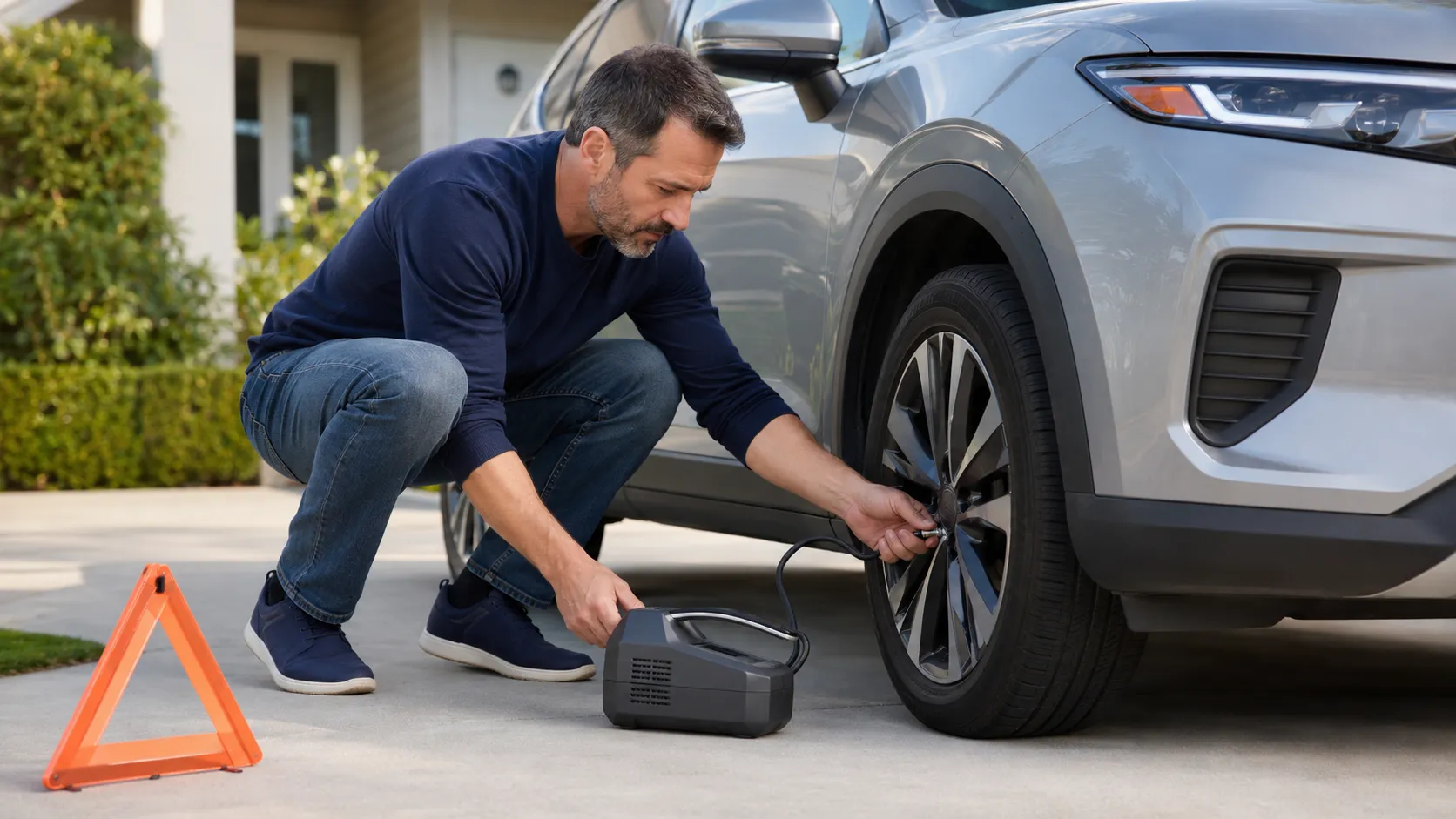
Mistakes, Warning Signs, and Better Actions
This table gives a quick fix for the most common errors. Stop all checks if the power pack, tire, valve, wheel, hose, or pump has clear damage.
| Common Mistake | What You May Notice | Better Action | When to Stop |
|---|---|---|---|
| Wrong pressure target | Reading passes the vehicle value | Use the placard and correct unit | Pressure cannot be controlled |
| Loose valve connection | Hissing or jumping display | Switch off and reseat the connector | Valve appears cracked or bent |
| Long continuous run | Hot housing or thermal shutdown | Follow the model’s cooling cycle | Smoke, melting, or burning odor |
| Low battery charge | Slow pumping or early stop | Recharge with the approved charger | Battery is swollen, leaking, or hot |
| Inflating a damaged tire | Bulge, crack, or rapid air loss | Move away and request tire service | Any structural damage is visible |
| Skipping final verification | TPMS light or uneven pressure later | Check after airflow stops | Pressure drops again quickly |
Let the pump cool before it goes back in a case. Turn the power off and wipe away loose dirt. Check the hose and hose end. Charge it as shown in the guide. Store it where cargo cannot crush it. From time to time, compare its gauge with a good tire gauge.
A Better Cordless Inflator Routine
A set routine stops most user errors. Keep it short so you use it each time.
- Park on firm, level ground away from moving traffic.
- Apply the parking brake and use hazard lights when appropriate.
- Read the cold pressure for the right wheel spot.
- Check the tire, wheel, valve, hose, hose end, and power pack.
- Check the pressure unit and the pump’s run and rest cycle.
Set the tool on firm ground. Keep vents open and stay beside it. Watch the screen, tire, hose, sound, and heat.
Stop the airflow and let the reading settle. Check it, fit the valve cap, and let warm tool parts cool.
If the tire was very low, look for a cause. Do not assume the job is done. Check it again soon. A tire that cannot hold air needs a tire-shop check.
Turn the pump off for smoke, sparks, a burnt smell, melting, hard shaking, high heat, or a swollen power pack. Stop and move away if the tire changes shape. Do the same if a bulge grows, the tire cracks, or cord shows. Do not open the tool or bypass a safety part. Do not drive on a tire that cannot hold the car safely.
Common Problems Caused by Inflator Mistakes
Check the charge and tool heat. Let it cool for the time shown in the guide. If it keeps stopping, ask the maker or its approved repair shop.
Switch off and fit the hose again. Check for a blocked tip, bad hose end, valve fault, or air leak.
Stop the airflow and let the reading settle. Fit the hose straight. Then compare the result with a good tire gauge.
This may be a tire, valve, bead, or wheel fault. Ask a tire shop to check it. Do not keep adding air.
A tire-pressure warning system does not replace a gauge. After you add air, follow the car guide. Some cars need a short drive or a reset step before the screen updates.
Frequently Asked Questions
What is the most common cordless inflator mistake?
Using the tire sidewall’s maximum PSI as the normal target is a common error. Use the recommended cold pressure on the vehicle placard or in the owner’s manual.
Should I check tire pressure before or after driving?
Check it before driving when practical because the vehicle target is a cold inflation pressure. Driving warms the tire and can raise the reading.
Can I leave a cordless inflator running by itself?
No. Stay beside the inflator so you can watch the pressure, tire, hose, sound, and temperature and stop the tool if anything changes.
Why does my cordless inflator get very hot?
The motor and pump create heat while compressing air. Follow the model-specific duty cycle, keep the vents open, and stop for extreme heat, smoke, melting, or a burning smell.
Is automatic shutoff enough to prevent overinflation?
It helps, but you still need to enter the correct unit and target, stay with the tool, and verify the final pressure after airflow stops.
Why does the tire keep losing air after I inflate it?
The tire may have a puncture, valve leak, bead-seal problem, wheel damage, or internal damage. Repeated air loss needs inspection by a qualified tire technician.
Can I use a small cordless inflator on an SUV or pickup?
Only if the manufacturer supports that tire size, pressure, and use. Larger tires require more air, so check the tool’s capacity, run time, battery needs, and cooling period.
Related Guides
Conclusion: Avoid Common Cordless Inflators Mistakes
Avoiding common cordless inflators mistakes starts with one simple rule: use the instructions for your own vehicle and inflator. Find the cold pressure on the placard, inspect the tire, choose the correct display unit, and attach the hose securely.
Stay with the inflator while it runs. Follow its operating and cooling limits, keep the vents clear, and verify the final pressure. If the tire is damaged or becomes low again, stop treating inflation as the solution and arrange professional tire service.
A cordless inflator works best as a supervised pressure-adjustment tool. Use the vehicle placard rather than the tire sidewall for the target, respect the tool’s duty cycle, inspect every connection, and confirm the final pressure. Safe habits matter more than speed.