

As an Amazon Associate, Best Auto Products earns from qualifying purchases. Retailer buttons open Amazon searches; verify model, seller, package and current price.
The best jump starter for winter is the one that fits your vehicle, stays within its temperature limits and is charged when needed. Our premium NOCO shortlist starts with the GB70 for its dedicated jump-pack role, the GBX75 for its USB-C PD platform, and the GBX155 for larger published engine coverage. These are research-based picks, not cold-test winners.
Check GB70 optionsCheck GBX75 optionsWinter changes the buying question. You are not simply choosing an impressive number printed on a box; you are planning what will be available when a vehicle will not start away from convenient help. Compatibility, charging habits, storage and access to instructions all belong in that decision.
This guide compares three premium NOCO options rather than pretending to rank every jump starter on the market. It is designed for U.S. buyers with compatible 12V lead-acid vehicle systems. We have not tested these products in a cold chamber or measured their starting performance. The recommendations below explain which documented differences are worth investigating for your own use.
By Jake Morrison · Checked November 29, 2026. Research uses NOCO specifications and U.S. winter-driving guidance. No hands-on tests, invented ratings, guaranteed start counts or unsupported “number one” sales claims.
Best jump starter for winter: our premium NOCO shortlist
| Model | Our reason to shortlist it | Published gas / diesel limit | Main buying check |
|---|---|---|---|
| GB70 | Dedicated jump-pack route with XGC connections | 8.0L / 6.0L | Current hardware and charging arrangement |
| GBX75 | USB-C PD charging platform | 8.5L / 6.5L | Compatible power source and cable |
| GBX155 | Larger published engine coverage | 10.0L / 8.0L | Actual engine need and usable total cost |
Sources: GB70, GBX75 and GBX155 specifications. Engine limits are manufacturer ratings, not guarantees for every battery condition or winter temperature.
Choose the smallest appropriate shortlist, not the largest number by reflex. If your engine sits outside a model’s rating, eliminate it. If multiple products fit, compare how you will keep each one charged and where you will store it. That sequence prevents a sale price from deciding compatibility.
How we selected these three options
We selected models that offer distinct shopping decisions within a premium brand already covered on this site. The GB70 is the new detailed review in this group, GBX75 creates a useful charging-platform comparison, and GBX155 connects to our existing larger-pack coverage. This is an editorial shortlist with a defined scope.
We did not assign points for untested cold cranking, copy a seller’s star rating into a performance score or infer reliability from peak amps. A complete laboratory ranking would require consistent vehicles, battery conditions, state of charge and temperatures. Without that evidence, conditional recommendations are more useful than a universal winner.
If a less expensive approved product fits your vehicle and ownership routine, it may be the better purchase. Premium pricing should buy a feature, coverage or setup benefit you can explain. It should not be treated as proof that the pack ignores winter temperature restrictions.
1. NOCO GB70: investigate it for a practical dedicated setup
Our starting point for the GB70 is a driver whose vehicle fits its published coverage and who wants a dedicated emergency jump pack. Compare its complete setup cost with the other candidates. Its XGC connections are a specific feature to investigate when they suit an approved charging or accessory plan.
The important shopping detail is hardware revision. NOCO’s current specification lists USB-C, while older information and seller photographs may differ. Confirm what will actually ship before choosing a cable or assigning value to a port shown in a product image.
The GB70 is easier to shortlist when charging ahead of time fits your routine. If your reason for upgrading is rapid top-ups from a compatible USB-C PD source, compare the GBX75 rather than assuming the connector alone makes the two charging arrangements equivalent.
Read our NOCO GB70 review for the charging caveats, package checks and winter ownership decision. It is a research-based review; it does not claim that this model has won a controlled cold-start test.
Search GB70 listings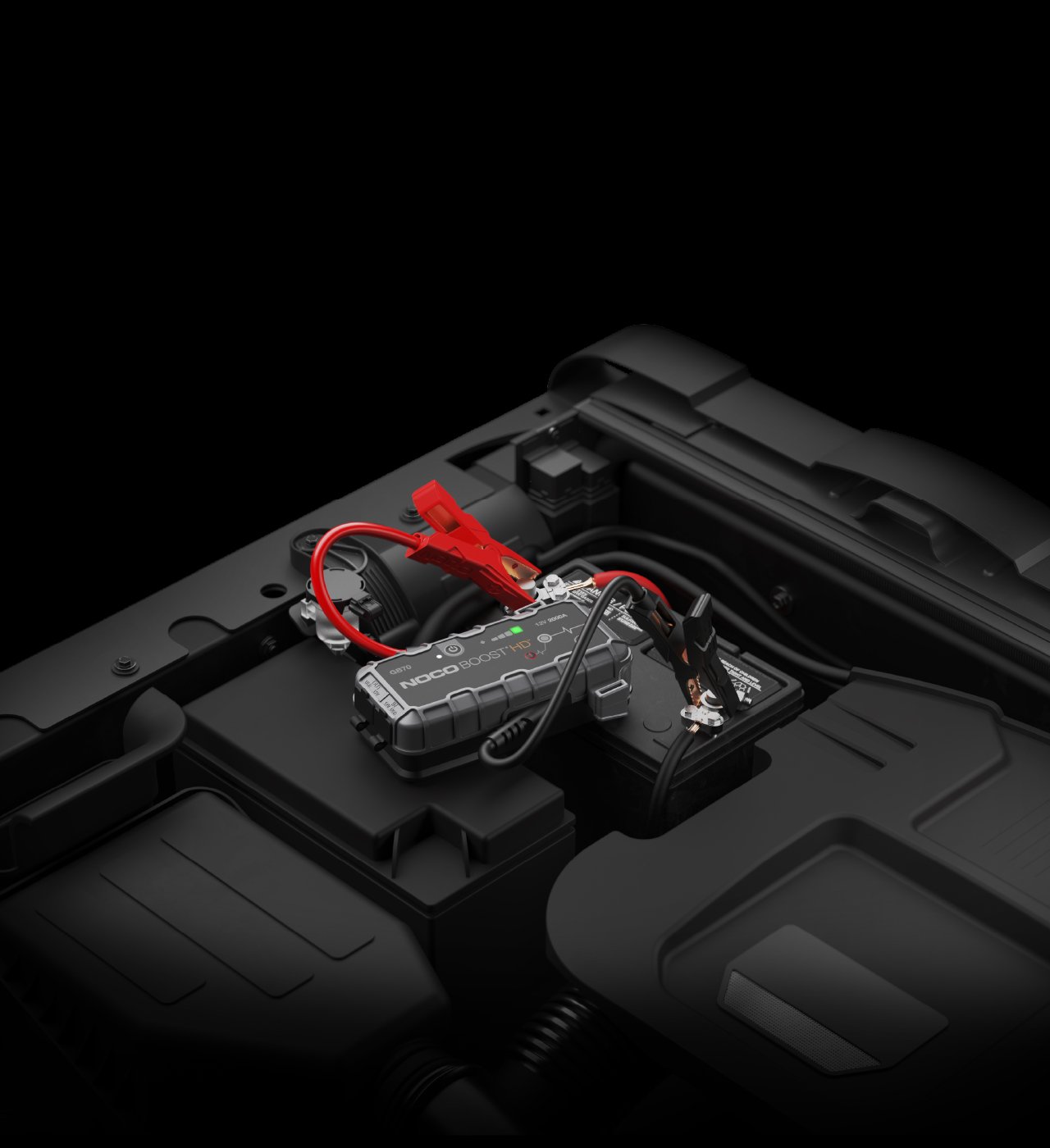
2. NOCO GBX75: investigate it for USB-C PD charging
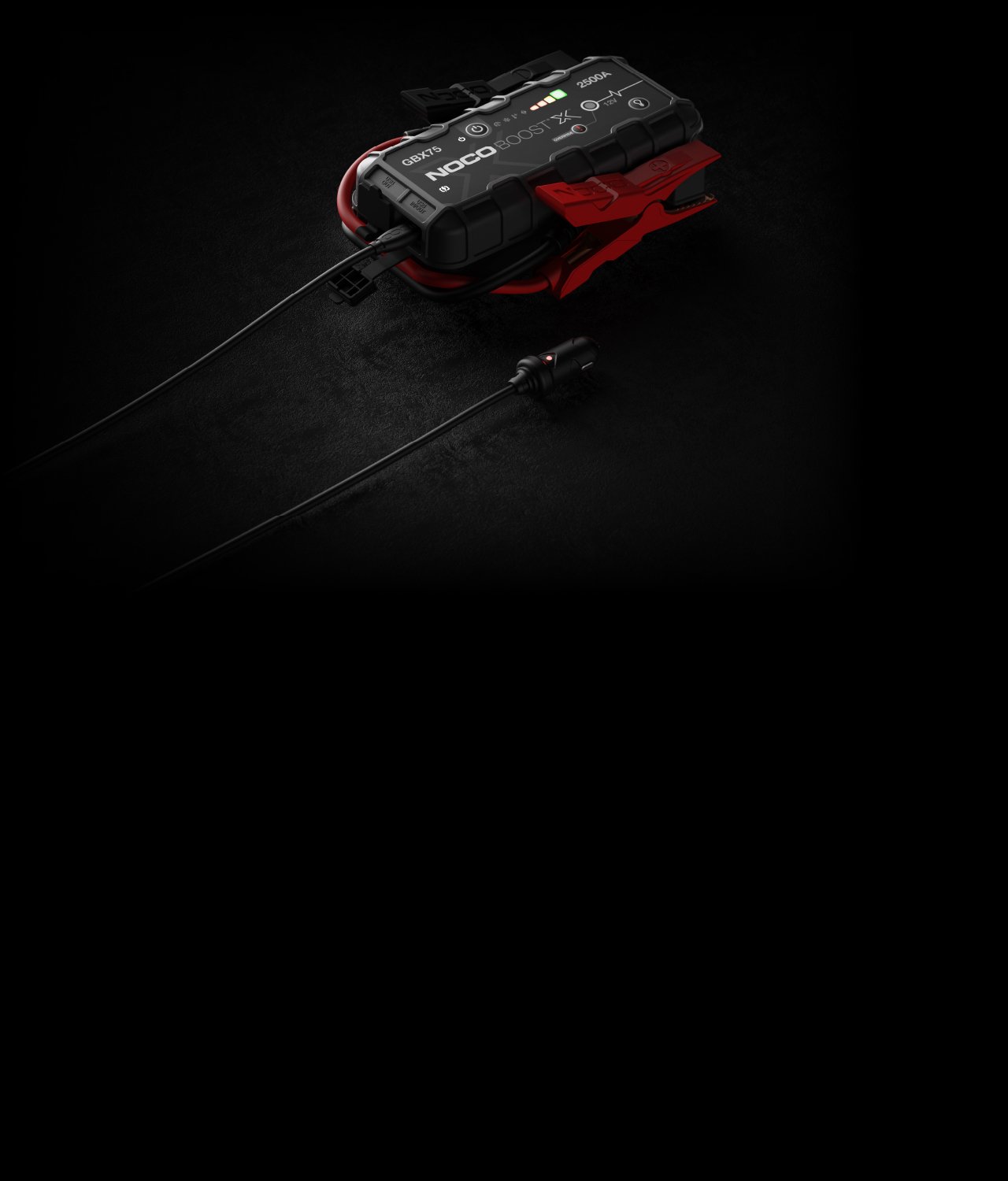
The GBX75 is worth comparing when its USB-C Power Delivery platform fits the power sources and cables you plan to use. Check the required charging profile and what equipment is included. Fast charging is a system benefit, not something a product name delivers regardless of the adapter connected.
Think about how you prepare for a journey. If you already carry a suitable charger and cable, that arrangement may be convenient. If you need to purchase everything separately, add those items before comparing the GBX75 with another pack. A useful feature can still be poor value when you would rarely use it.
Its higher published engine limit is another legitimate reason to investigate it when the GB70 does not cover the actual engine. That is different from claiming it will always start the same vehicle better in severe cold. We have not measured that result.
Our NOCO GB70 vs GBX75 comparison isolates these differences. Use it when both products remain on your shortlist and the question is which complete setup better fits your budget and charging routine.
Search GBX75 listings3. NOCO GBX155: investigate it when smaller ratings do not fit
The GBX155 belongs on a premium shortlist when its larger published engine coverage addresses an actual vehicle requirement. Before considering it, identify the engine and system accurately. Buying for a fleet or several household vehicles means checking every intended application rather than relying on the word truck.
A larger pack can also change storage and carrying convenience. Find a practical place for the unit and its accessories, then consider whether the person who may need it can retrieve and handle it comfortably. Equipment that is awkward to access can be a poor match even if the specification looks reassuring.
If smaller approved models already fit every intended vehicle, explain what the extra spend buys before selecting this one. Do not assume the largest listed pack is automatically the best winter purchase. The storage, charging and vehicle-instruction checks still apply.
Use our NOCO GBX155 review for a closer look at that buying decision. We keep the role separate from this overview so a larger-model purchase can be assessed on its own merits.
Search GBX155 listings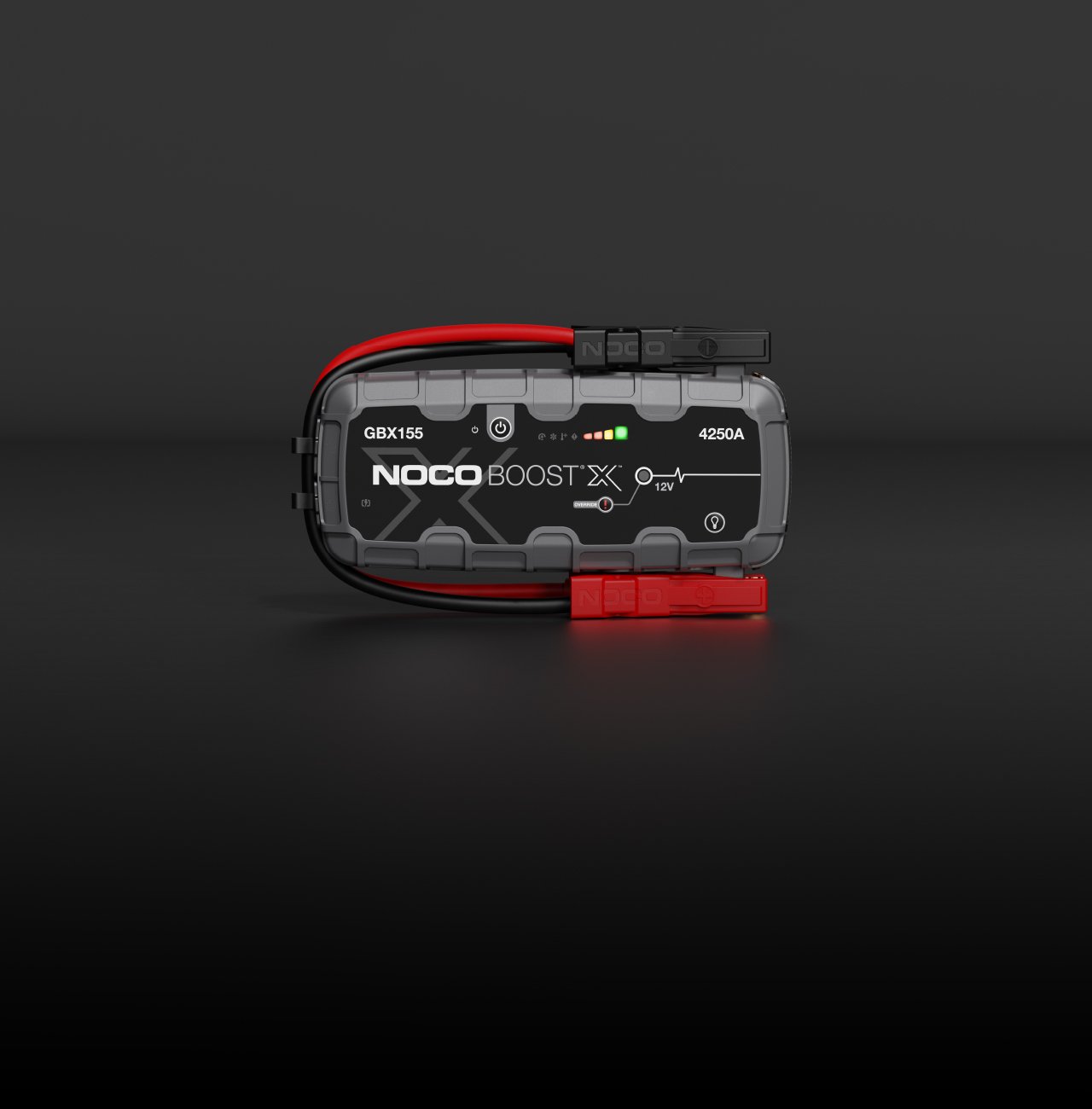
Winter limits: operation and charging are different
Do not confuse a jump pack’s operating range with permission to charge it at every temperature in that range. NOCO documentation specifies separate charging limits. For the GB70 and GBX75, the published charging range begins at 32°F (0°C), even though their operating range extends lower.
Check the current manual for the exact model you buy, including storage guidance and thermal-warning behavior. Plan where the unit will be kept and how it will be available for a trip. Do not use direct heat, improvised warming or an override to defeat temperature protection.
A lower published operating boundary is not a guarantee of success at that temperature. Vehicle condition and pack readiness still matter. If your usual environment can exceed the instructions, resolve the preparation plan rather than treating the advertised amp rating as an exemption.
Before winter: battery health comes first
NHTSA notes that colder weather reduces battery power while gasoline and diesel engines require more starting power. It recommends checking the battery and charging system before winter. An emergency jump pack and a pre-season inspection therefore address different parts of readiness.
Recurring no-start events deserve diagnosis. Keep notes about when they occur and any warnings or unusual behavior, then have the vehicle checked. A successful jump does not establish that the battery, charging system or other electrical components are healthy.
For vehicles parked for long periods, read our battery maintainer versus trickle charger guide. If you are unsure which type of equipment you need, start with jump starter versus battery charger. Do not buy an emergency pack expecting it to provide the same ongoing maintenance role.
Why peak amps cannot select a winter winner
The peak-amp number helps identify the product tier, but it is not a universal cold-cranking result. Do not compare it directly with the cold-cranking-amps rating on a vehicle battery and assume a simple ratio predicts success.
A meaningful performance comparison would define battery condition, temperature, vehicle and state of charge. Those conditions are rarely established by a shopping headline. Ask what evidence supports a winter claim, and give greater weight to explicit compatibility and documented limits than to an unsupported superlative.
This is also why we do not repeat a fixed number of starts as your expected winter experience. Manufacturer maxima are not a personal trip plan. Check the pack according to its instructions, recharge appropriately after use and keep a realistic alternative for situations the equipment cannot address.
A six-step winter buying checklist
| Step | What to confirm |
|---|---|
| 1. Vehicle | Voltage, battery type, engine and approved jump procedure |
| 2. Environment | Operating, storage and charging limits for the exact model |
| 3. Charging | Compatible source, cable, revision and supplied accessories |
| 4. Handling | Access to the unit and vehicle jump points |
| 5. Ownership | Charge checks, local support and return terms |
| 6. Budget | Complete delivered cost alongside other winter supplies |
Use the checklist before opening retailer search results. That order makes it easier to dismiss an unsuitable bargain. It also reduces confusion when the same search contains jump packs, cables, replacement clamps and older versions under similar titles.
Check the seller, warranty route and selected package in the final cart. Our buttons open model searches rather than verified in-stock offers. We have omitted fixed retail prices and discount promises so a temporary promotion does not become the basis of an evergreen recommendation.
A jump pack is one part of a winter kit
Leave budget and storage room for other winter needs. NHTSA’s guidance includes visibility, communication, snow-removal tools and supplies for waiting safely. A jump starter cannot solve poor traction, a mechanical breakdown or every electrical fault.
Our jump starter versus jumper cables comparison covers the assistance-equipment decision. Keep the vehicle’s instructions available and ensure whoever drives the car knows where the equipment is stored. Buying a tool that only one household member knows about can leave a preparation gap.
Before a longer trip, review weather, route and available assistance alongside the equipment. If a breakdown location makes getting out or working around the vehicle unsafe, prioritize obtaining help. Owning a jump starter does not mean attempting a connection is always the sensible next action.
Frequently asked questions
Which is the best jump starter for winter?
There is no universal winner from specifications alone. Choose a model that explicitly fits the vehicle and intended environment, then compare charging, storage and complete ownership cost.
Are these the best-selling jump starters everywhere?
No such claim is made. This is a defined premium NOCO shortlist, not a verified ranking of all retailer sales or all competing brands.
Is the GBX75 automatically better in freezing weather?
Its charging platform and ratings differ, but we have not measured a cold-start advantage. Published temperature limits and vehicle compatibility still apply.
Can I leave a jump starter in my car all winter?
Follow the model’s storage limits and check readiness. If expected conditions fall outside the instructions, arrange suitable storage and availability instead of leaving it indefinitely.
Should I buy a charger instead?
A compatible charger or maintainer may address a different need, particularly planned charging or storage care. Repeated starting problems also need diagnosis.
Final choice: match the job before the brand tier
Start with the GB70 review if its vehicle coverage and dedicated setup suit your needs. Compare GBX75 when USB-C PD charging or the higher published engine limits matter. Investigate GBX155 when the actual vehicle requires its larger coverage rather than buying it simply because it is the biggest option here.
Whichever route you choose, verify the exact package, read the current instructions and keep the unit ready. A sensible winter purchase combines the right equipment with a charging routine and a realistic plan for when conditions require assistance.
Compare GB70 listingsCompare GBX75 listingsPrimary sources: GB70 specs; GBX75 specs; GBX155 specs; NOCO temperature guidance; NHTSA winter preparation. Ratings and instructions can change; check the documentation for the actual unit.

2 thoughts on “Best Jump Starter for Winter: 3 Premium NOCO Options Compared”