
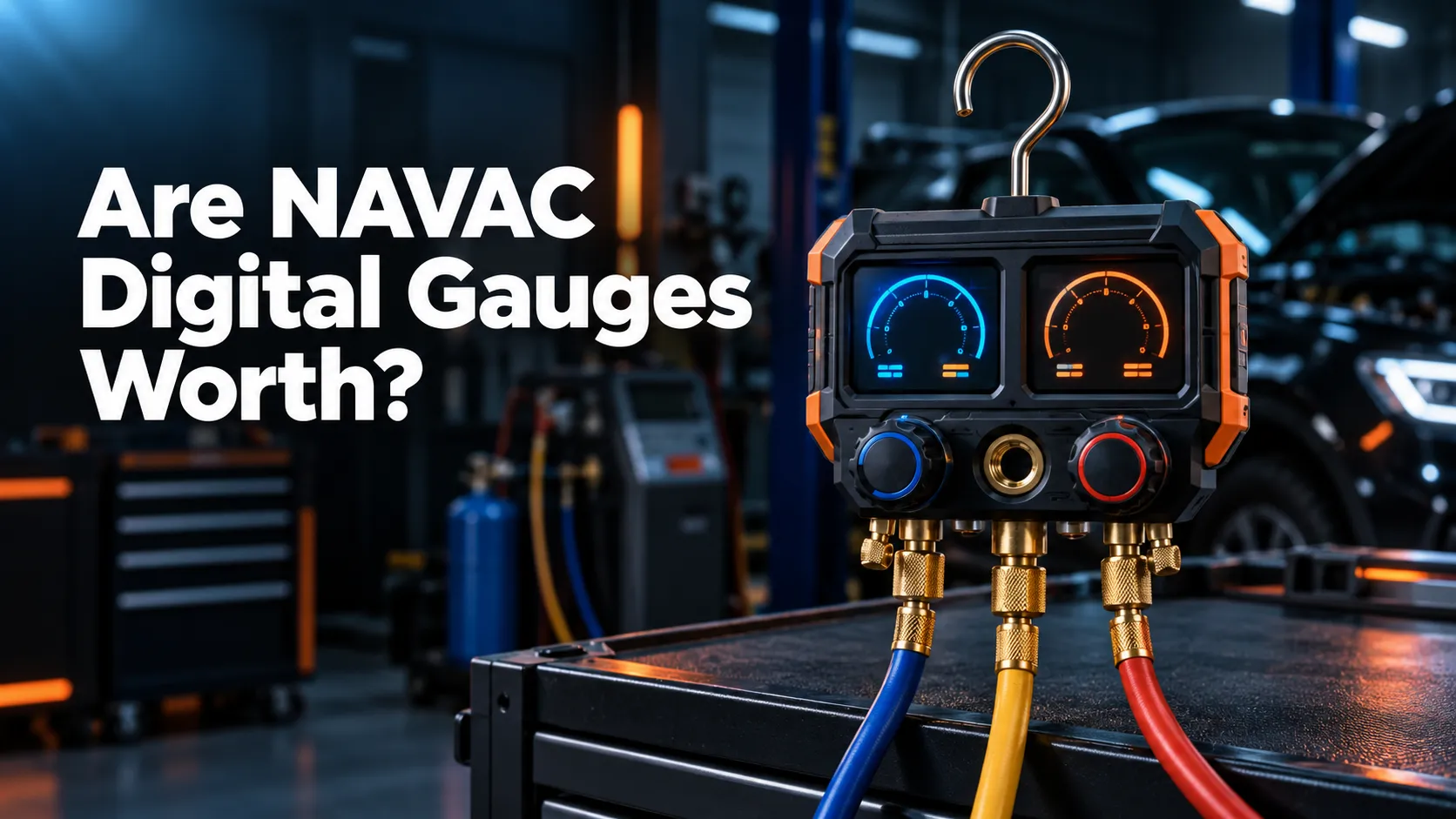
Yes, NAVAC digital gauges are generally good for HVAC and refrigeration work if you want fast readings, solid feature sets, and app-based documentation. I’d call them a strong option for technicians who value digital convenience, but the best choice still depends on your budget, workflow, and whether you need the most proven ecosystem or the simplest tool possible.
If you’re asking whether NAVAC digital gauges are worth buying, I look at them the same way I look at any service tool: by how well they perform on real jobs, not just on a spec sheet. In practice, NAVAC has built a respectable reputation in the HVAC/R space, especially for technicians who want smart features without jumping straight to the most expensive setup.
In this article, I’ll break down what NAVAC digital gauges do well, where they fall short, how they compare with other brands, and who should buy them with confidence.
Are NAVAC Digital Gauges Good for HVAC and Refrigeration Work?
For most HVAC and refrigeration technicians, NAVAC digital gauges are good tools when you need speed, readable data, and modern diagnostics. They are not magic, and they are not the only good option on the market, but they can absolutely handle day-to-day service work when used correctly.
What NAVAC digital gauges are designed to do
NAVAC digital gauges are built to measure pressure, vacuum, and in some models temperature-related system data. Their main job is to give technicians a clearer picture of system performance than a basic analog manifold can provide. Many models also add app connectivity, logging, and digital display features that make it easier to document work.
Who typically uses NAVAC gauges
I usually see digital gauges like these used by HVAC service techs, refrigeration technicians, installers, and contractors who work on systems that benefit from precise readings. They also appeal to techs who want a lighter, more compact setup than a traditional manifold and separate instruments.
What “good” means for technicians: accuracy, durability, and ease of use
When I judge a gauge set, I focus on three things. First is accuracy, because bad readings waste time and can lead to wrong decisions. Second is durability, because jobsite tools have to survive drops, heat, dust, and daily handling. Third is ease of use, because a tool that slows you down is not really helping.
Digital gauges do not automatically make a technician more accurate. The tool helps, but system diagnosis still depends on proper setup, stable conditions, and good service habits.
What NAVAC Digital Gauges Offer in Real-World Use
| Feature | What It Means on the Job | Why It Matters |
|---|---|---|
| Pressure readings | Digital display with quick pressure changes visible at a glance | Helps with faster diagnosis and less reading error |
| Vacuum measurement | Micron-level vacuum data on supported models | Useful for evacuation work and moisture removal checks |
| Bluetooth/app support | Wireless connection to a phone or tablet | Useful for logging, reporting, and remote viewing |
| Build and display | Compact body with a digital screen and service-friendly layout | Improves portability and readability in the field |
Accuracy and pressure reading reliability
In normal service conditions, NAVAC digital gauges are generally reliable enough for everyday HVAC/R work. Like any digital instrument, they depend on good calibration and proper handling. If a gauge is dropped, exposed to contamination, or not verified over time, accuracy can drift.
For pressure readings, the main advantage is clarity. I can read a digital display faster than I can interpret an analog needle, especially when I’m working in poor light or trying to catch a changing system condition. That alone makes digital gauges appealing for many techs.
Vacuum measurement performance
Vacuum performance is one of the bigger reasons many technicians move to digital gauges. NAVAC models that support micron readings can be useful during evacuation because they give a more precise picture of how deep the vacuum really is. That matters when you want to confirm moisture removal and system readiness.
📝 Note
Micron readings are only as useful as your setup. Hose quality, core removal tools, clean fittings, and leak-free connections can affect results just as much as the gauge itself.
Bluetooth/app connectivity and data logging
One of NAVAC’s biggest selling points is smart connectivity. For technicians who need to record readings, track service work, or share data with a customer or office, app support can be a real advantage. It can also help when you want to monitor readings without standing over the manifold the whole time.
That said, app features are only valuable if you actually use them. If you prefer a simple tool that turns on and works without pairing, the extra software layer may feel unnecessary.
For users who want to review product details directly, I recommend checking NAVAC’s own site at NAVAC Global and comparing model specs before buying.
Build quality, display readability, and hose connection design
NAVAC digital gauges are usually designed with portability in mind. The compact layout is helpful in tight spaces, and the display is generally easy to read. The real-world value here is simple: less squinting, less guesswork, and less bulk hanging off your setup.
Connection design matters too. A gauge set can have great electronics and still be annoying if the hose layout is awkward or the valves feel clumsy. NAVAC tends to do well enough in this area for most service work, but the exact experience depends on the model.
NAVAC Digital Gauges Pros and Cons
- Fast digital readings
- Compact, jobsite-friendly design
- Useful feature set for modern HVAC/R work
- App and logging options on supported models
- Good visibility compared with analog needles
- Higher price than basic analog manifolds
- battery/” title=”8 Best Cordless Inflators Battery Operated for Fast, Convenient Inflation”>Battery dependence
- Learning curve for app features
- Not every model fits every workflow
- Digital tools still need calibration checks
Pros: fast readings, compact design, feature set, smart diagnostics
The biggest advantage is speed. Digital gauges remove some of the guesswork and make it easier to track what the system is doing in real time. That can save time on service calls where you’re checking pressures, comparing conditions, or documenting performance.
Another plus is the compact design. A smaller digital setup can be easier to carry, easier to store, and less awkward in cramped mechanical spaces. For techs who work in attics, rooftops, and tight equipment rooms, that matters.
Cons: price, battery dependence, app learning curve, model-specific limits
The first drawback is cost. Digital gauges usually cost more than basic analog manifolds, and that can be a hard sell if you only need simple pressure checks. Battery dependence is another issue. If the battery dies or the unit is not charged, the tool is useless until it’s powered back up.
There is also a learning curve. If you do not want to manage app pairing, firmware updates, or data export, the digital feature set may feel like extra work. And as with any product line, some models are better suited to certain tasks than others.
Best use cases where NAVAC stands out
NAVAC tends to stand out for service technicians who want a modern gauge set that can handle everyday pressure checks, vacuum readings, and documentation. It is also a good fit for techs who like a cleaner digital workflow and want fewer separate tools in the bag.
Situations where another gauge may be a better fit
If you only need a simple manifold for occasional use, a basic analog set may be the better value. If you already have a preferred digital ecosystem from another brand, staying within that system may make more sense. And if you work in harsh conditions where you want the simplest possible tool, fewer electronics can be a plus.
How NAVAC Digital Gauges Compare to Other Popular Brands
- Strong feature-to-price balance on many models
- Useful for techs who want modern digital tools
- Good fit for documentation-focused workflows
- May not match the ecosystem depth of top competitors
- Some users prefer more established software or accessories
- Analog simplicity still wins for basic jobs
NAVAC vs Fieldpiece digital gauges
Fieldpiece is one of the most recognized names in HVAC digital test tools, and many technicians like its broader ecosystem and long track record. NAVAC can compete well on features, but Fieldpiece often has the edge when a buyer wants a very mature platform with a lot of field adoption.
NAVAC vs Testo digital gauges
Testo is also a respected name, especially among technicians who care about measurement quality and professional-grade instrumentation. NAVAC can be a solid alternative if you want a capable digital gauge set without always paying the premium associated with some Testo setups.
For broader refrigerant handling and safety information, I also suggest reviewing guidance from the U.S. Environmental Protection Agency on Section 608 refrigerant management. It is not a gauge manual, but it is useful background for proper HVAC/R practices.
NAVAC vs analog manifolds
This comparison is really about simplicity versus capability. Analog manifolds are cheaper, familiar, and easy to use. NAVAC digital gauges bring better readability, more advanced data, and often better documentation tools. If you need only a basic pressure check, analog still works. If you want faster interpretation and better records, digital wins.
Which type is better for service, install, and evacuation work
For service work, digital gauges often make the most sense because they help with diagnosis and note-taking. For installation, they are also useful because you can verify pressures and evacuation progress more precisely. For evacuation work specifically, digital gauges with micron capability are the better choice, as long as the rest of your vacuum setup is solid.
Key Features to Check Before Buying NAVAC Digital Gauges
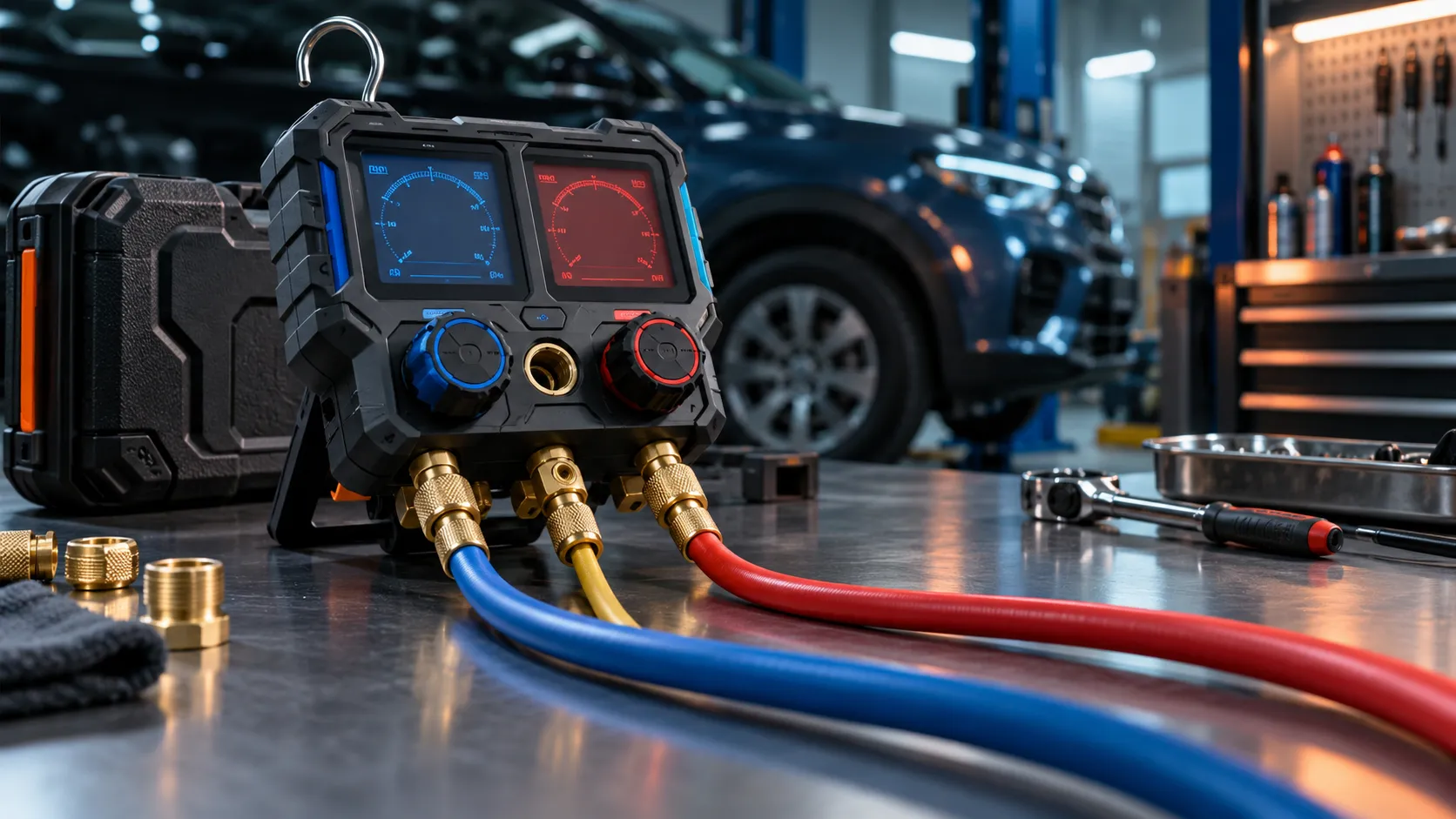
- Pressure range and refrigerant compatibility
- Vacuum accuracy and micron features
- Hose fittings, valve quality, and manifold layout
- App compatibility, firmware updates, and data export options
- Battery life and jobsite durability
Pressure range and refrigerant compatibility
Before buying, make sure the gauge covers the refrigerants and pressure ranges you actually work with. Residential HVAC, commercial refrigeration, and specialty systems can have different demands. A gauge that fits your current work is more valuable than one with features you will never use.
Vacuum accuracy and micron features
If you plan to do evacuation work, micron performance should be a priority. Not every digital gauge handles vacuum the same way, and not every model is built for the same level of precision. Check whether the gauge is intended for serious evacuation monitoring or just general service readings.
Hose fittings, valve quality, and manifold layout
Good electronics do not fix poor hardware. Look at the hose ports, valve feel, and overall layout. If the gauge is awkward to connect or the valves feel cheap, it will slow you down on the job.
App compatibility, firmware updates, and data export options
If you want digital documentation, verify that the app works with your phone or tablet and supports the kind of reporting you need. Also check whether the manufacturer provides firmware updates. A gauge that can improve over time is usually a better long-term buy than one that stays frozen in its original state.
Battery life and jobsite durability
Battery life matters more than many buyers expect. A gauge that needs constant charging becomes a hassle fast. I also look closely at how well the unit is protected from drops, dust, and rough storage. HVAC tools live hard lives, so durability is part of value.
When NAVAC Digital Gauges Are Worth the Money
For technicians who need speed and precision
If your work depends on quick decisions and accurate readings, NAVAC digital gauges can be worth the cost. The time saved on diagnosis and the clarity of digital data can pay off over time, especially in busy service environments.
For service calls that require documentation
When you need to show a customer or manager what happened on the job, digital logging is a real advantage. NAVAC’s smart features can make it easier to keep records and communicate what you found.
For HVAC pros upgrading from analog gauges
If you are moving up from analog, NAVAC can be a sensible step into digital tools. You get a more modern workflow without having to jump straight into the most expensive setup on the market.
For users who may not need premium digital features
If you only need basic pressure readings a few times a month, you may not get enough value from the digital extras. In that case, a simpler gauge set may be the smarter purchase.
Common Problems and Complaints About NAVAC Digital Gauges
Many gauge complaints come from setup issues, not product failure. Dirty fittings, weak batteries, poor hose practices, and app problems can make a good gauge look bad.
Connectivity issues and app pairing problems
One of the most common complaints with any smart tool is Bluetooth pairing. If the app is not updated, permissions are off, or the phone is acting up, the gauge may seem unreliable even when the hardware is fine. That can be frustrating, especially on a busy call.
Sensor drift or calibration concerns
Over time, sensors can drift. That is true for many digital instruments, not just NAVAC. The solution is to verify readings regularly and follow the manufacturer’s guidance for calibration or service.
Battery or power-related frustrations
Battery issues are simple but annoying. A weak battery can cause shutdowns, display problems, or app disconnects. If you use digital gauges daily, charging discipline matters.
Handling, storage, and maintenance mistakes that affect performance
Bad storage can ruin a good gauge. Leaving it exposed to moisture, refrigerant oil, dirt, or impact damage can shorten its life and affect accuracy. I always tell techs to treat digital gauges like precision instruments, not just another hose accessory.
Tips to Get the Best Results from NAVAC Digital Gauges
- Verify readings on a regular schedule so small drift does not become a bigger problem.
- Keep ports, fittings, and hose ends clean to protect the sensors.
- Use high-quality hoses and proper evacuation practices for better vacuum results.
- Update the app and firmware when the manufacturer releases improvements.
- Store the gauge in a protective case or dry bag between jobs.
Calibrate or verify readings regularly
Even a good digital gauge should be checked from time to time. Regular verification helps you trust the numbers and catch issues early.
Keep fittings clean and protect sensors from contamination
Contamination can affect performance and shorten the life of the tool. Clean fittings and caps are a small habit that can prevent bigger problems later.
Use the gauges with proper hoses and recovery/vacuum practices
The gauge is only one part of the setup. Good hoses, proper connections, and correct evacuation or recovery procedures make the whole system work better.
Update firmware and app software when available
If your model supports updates, keep them current. Manufacturers often fix bugs or improve connectivity through software changes.
Store gauges correctly between jobs
Do not toss them loose in a truck bed or tool pile. A protected gauge lasts longer and stays more reliable.
Your gauge shows inconsistent readings after verification, will not connect after troubleshooting, or appears physically damaged. At that point, the issue may be beyond normal field maintenance and should be checked by the manufacturer or a qualified service provider.
Are NAVAC Digital Gauges Good? Final Verdict for Buyers
NAVAC digital gauges are good tools for HVAC and refrigeration pros who want modern features, readable data, and practical performance. They are most attractive to technicians who value speed, documentation, and micron-level vacuum work, but they are not the best fit for every buyer.
Best overall buyer profile for NAVAC gauges
The best buyer is a technician who works regularly, wants digital convenience, and will actually use the app or logging features. If that sounds like you, NAVAC can be a smart purchase.
Who should buy them with confidence
I’d recommend NAVAC most confidently to HVAC/R pros who need a balance of performance and modern features, especially if they are upgrading from analog tools and want a cleaner workflow.
Who should consider another option
If you want the lowest-cost gauge possible, or if you prefer a very simple tool with no software layer, NAVAC may be more than you need. In that case, an analog manifold or a different digital brand might fit better.
Yes, they are generally accurate enough for normal HVAC and refrigeration service when properly maintained and verified. Like any digital instrument, they still need periodic checks.
Models with micron capability can work well for evacuation monitoring. Just remember that hoses, fittings, and system setup affect vacuum results too.
They are better if you want faster readings, clearer displays, and digital documentation. Analog manifolds still make sense if you want a cheaper, simpler tool.
Fieldpiece often has a more established ecosystem and wider technician familiarity. NAVAC can still be a strong option if you want solid features and a competitive price-to-performance balance.
The biggest downside is usually the mix of higher cost, battery dependence, and app learning curve. For some users, those tradeoffs are worth it; for others, they are not.
Buyers who only need occasional basic pressure checks, or who want the cheapest and simplest possible setup, may be happier with an analog manifold or a lower-feature digital option.
- NAVAC digital gauges are a good fit for many HVAC and refrigeration techs.
- They offer strong readability, useful digital features, and solid vacuum support on the right models.
- Their main tradeoffs are price, battery dependence, and app learning curve.
- They make the most sense for service pros who value speed and documentation.
- Simple analog gauges may still be the better buy for basic or occasional use.