
As an Amazon Associate, Best Auto Products earns from qualifying purchases. We may also earn a commission from Walmart links.
Quick verdict
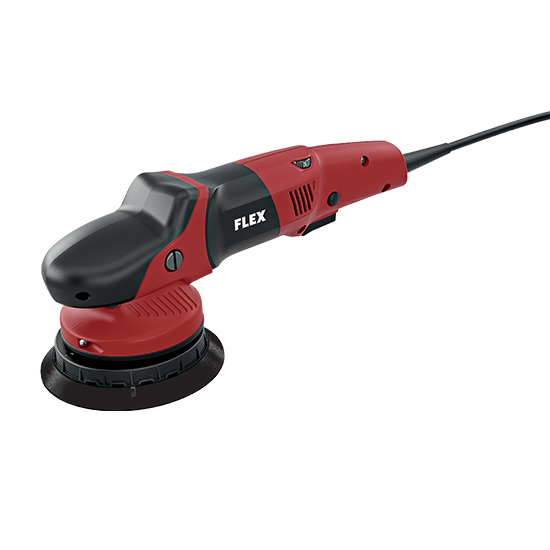
The FLEX XFE 7-15 150 makes sense for someone who regularly finishes full panels and wants a corded, free-spinning 15 mm machine. It sits between a compact short-throw tool and a forced-rotation machine. If your work is mainly around mirrors, pillars and bumpers, put your money toward a smaller tool first.
Best fit: frequent paint enhancement on flat and gently curved panels.
This FLEX XFE 7-15 150 review covers the U.S. corded model, part 436712. It draws on manufacturer specifications and documented listings. The buying verdict is based on the machine’s design and intended use. We did not perform a hands-on test.
| Model | 436712, 120 V U.S. |
|---|---|
| Drive | Free-spinning random orbital |
| Orbit | 15 mm |
| Power | Corded |
| Backing plate | Confirm the plate supplied with your listing. FLEX lists support for up to six inches. |
See the FLEX U.S. product page and FLEX automotive catalog for model and accessory information.
What the 15 mm orbit changes
The foam pad travels in an orbit while the backing plate is free to rotate. On broad panels, the 15 mm movement gives the pad a wider sweep than a typical short-throw machine. That can make a door, roof or hood feel more manageable when your work consists of several small sections and consistent overlapping passes. How much correction you actually get still depends on the pad, polish, paint and technique. A wider orbit alone tells you very little about whether a specific scratch will come out.
Free rotation also changes what happens on a curved panel. When one edge of the pad takes more pressure, rotation can slow even while the tool continues orbiting. A small visible reference mark on the edge of the backing plate can help you notice the difference. If it barely moves, ease up, flatten the pad where the shape permits, or switch tools. Pushing harder to recover rotation can make the problem worse and make it harder to control where the pad touches.
The practical payoff comes from choosing your work area well. A long-throw machine fits the middle of a door or the broad section of a hood. At a sharp crease, the outer edge of the pad moves farther than it appears to at rest. Give raised lines and trim enough clearance. A compact tool earns its place by reaching those spots with less overhang and giving you better visibility around the pad.
Which buyers will notice the upgrade?
A driver who polishes two or three vehicles a year has a different case for this machine than a shop working on several cars every week. If your current short-throw polisher finishes a vehicle in the time you have and delivers a result you like, the FLEX mainly buys you a different handling experience on large panels. Fresh pads, a better inspection light or a smaller tool for awkward sections might solve more of your day-to-day frustrations for less money.
The upgrade is easier to justify if you have already identified what slows you down. For example, if most of your time goes into broad panels on SUVs, vans and pickups, a 15 mm machine directly addresses that workload. If you spend more time chasing defects along door handles and sculpted bumpers, the larger orbit does little for the areas that matter most. Think through the last car you polished and identify where you actually stopped, changed tools or repeated a pass.
The same logic applies if you already own a RUPES LHR15 Mark V. Both are free-spinning 15 mm machines. The FLEX is a lateral choice within the same category. Look at the trigger feel, availability of replacement plates, service arrangements and what comes in the box. Owning both makes more sense if you need a backup or want to leave each fitted with a different pad during a busy job.
How it compares with RUPES and a short-throw DA
The RUPES LHR15 Mark V is the closest comparison in our review lineup. If a seller has the RUPES kit in stock with consumables you already use, compare that complete package against the cost of bringing the FLEX to the same point. If you are buying a bare machine, check the backing plate size and make sure the pads you own have enough coverage around the plate. Replacing a shelf full of incompatible pads can cost more than a modest difference between tool prices.
A short-throw DA such as the Griot’s G9 gives you a useful reference point if you are shopping for your first machine. It can do full-panel work while being easier to place around some contours. The FLEX starts to look more appealing when you expect to spend most of a session on open paint. Either choice still benefits from a smaller machine or hand polishing in spots where a full-size pad cannot sit correctly.
A forced-rotation machine mechanically drives pad rotation, which can help where a free-spinning setup repeatedly stalls. It has its own handling characteristics and can pull more noticeably as you move across changing contours. If you mainly want to finish well-prepared paint after a correction step, the FLEX’s free-spinning design fits that use. If you frequently need consistent rotation in awkward areas, put a forced-rotation model on your comparison list and consider pad size at the same time.
Compare our RUPES LHR15 Mark V review, Griot’s Garage G9 review and Meguiar’s MT300 review.
Build a working kit before comparing prices
Start with the model number. The U.S. product page identifies 436712 as the 120-volt version. Similar names appear on international models, and some marketplace titles shorten the name or leave out the voltage. Ask the seller to confirm the rating and the exact item in the box if the product description is vague. The price matters only after you know the listing matches the tool and electrical setup you intend to use.
Confirm the backing plate separately. FLEX’s U.S. catalog identifies a five-inch plate in its standard supply list and a six-inch plate as an accessory. A seller can build a bundle around a different mix of plates, pads and liquids. Buy pads that fit the supplied plate and consider picking up several of the same grade so you can rotate them as they load up. A large bottle of polish will do little for productivity if you stop every panel to deal with a saturated pad.
Budget for a finishing polish and compatible pads based on the paint you usually work on. An inspection light and clean towels help you judge what each pass actually changed. If the listing already includes accessories, check whether they match what you would have bought yourself. A smaller bundle with usable consumables can be a better buy than a bigger one packed with liquids or pad grades you rarely reach for.
Where to check U.S. offers
Walmart has an exact-model page. Amazon is linked as a search because a matching direct listing could not be verified. Look for FLEX 436712 and the U.S. voltage designation in the title or specifications. Search results may contain similarly named cordless machines, pads sold by themselves, and unrelated FLEX tools. When the listing offers several options, recheck the selected option before you add it to the cart.
Compare the delivered total for the same package. Open each seller page with your ZIP code set and check shipping, stock and estimated delivery. Then compare who sells and ships it, the return window, and how warranty support is handled. A marketplace page can show a price even when the item is unavailable for delivery. If you need the tool for a booked job, put more weight on a firm ship date and the exact kit contents.
A detailing supplier is also worth checking when marketplace stock is patchy. Ask about replacement plates and available parts along with the tool. If you need to replace a worn accessory later, being able to identify and source the exact part is more valuable than a small initial price difference. Keep the purchase receipt and record the model number so you have both on hand if you need to contact the seller or manufacturer.
How to evaluate your first test spot
Wash and dry the car, then check the paint under a light that makes fine marks easy to see. Follow the instructions for your polish, pad and machine. Start with a small, open area and a mild combination suited to the finish. Compare the result against the area beside it under the same light. Checking one small section first gives you a way to judge the finish before repeating the process on the rest of the car.
Pay attention to the pad as you work. Residue builds up and can change the finish you get even when the dial and technique stay the same. Clean or swap the pad according to the pad manufacturer’s directions and take another look if the result starts to vary between panels. If an area needs a much more aggressive combination, make a separate test spot and consider the condition and history of that paint before you proceed.
Use extra care on previously repaired panels, sharp body lines and areas with peeling or failing clear coat. Removing defects through polishing involves removing some material, and aggressive correction is a poor trade when the condition of the finish is unknown. If you are aiming for a cleaner daily-driver finish, judge the overall panel in ordinary lighting as well. A few deeper marks left alone can be a reasonable outcome.
Frequently asked questions
Can the FLEX XFE 7-15 150 correct swirl marks? It can work on typical light swirl marks with a suitable polish and pad. Paint hardness and defect depth determine how far a combination will take you. Start with a test spot and reassess before going more aggressive.
Is the FLEX XFE 7-15 150 cordless? Part 436712 is the corded U.S. model. FLEX also sells cordless polishers with similar naming. Check the part number if a listing mentions a battery or charger.
Can you use the same pad everywhere? Broad and gently curved surfaces suit a full-size pad. A compact tool or hand polishing can be easier to control around badges, mirrors and tight bumper contours. Match the pad to the actual backing plate and follow the manufacturer’s instructions.
Should a first-time buyer choose it? It can make sense if most of your work is on large, accessible panels and you have room in the budget for pads and polish. For occasional work on a small car with many tight contours, a short-throw machine is often the more versatile first purchase.
Final verdict
The FLEX XFE 7-15 150 is easiest to justify if you detail often, work mostly on broad panels and can buy the U.S. model with the backing plate you need. Compare it with the RUPES if you want another premium free-spinning 15 mm option. If the cost of the FLEX plus pads and polish stretches your budget, price a short-throw DA and the consumables for a full job before deciding.