
As an Amazon Associate, Best Auto Products earns from qualifying purchases. We may also earn a commission from Walmart links.
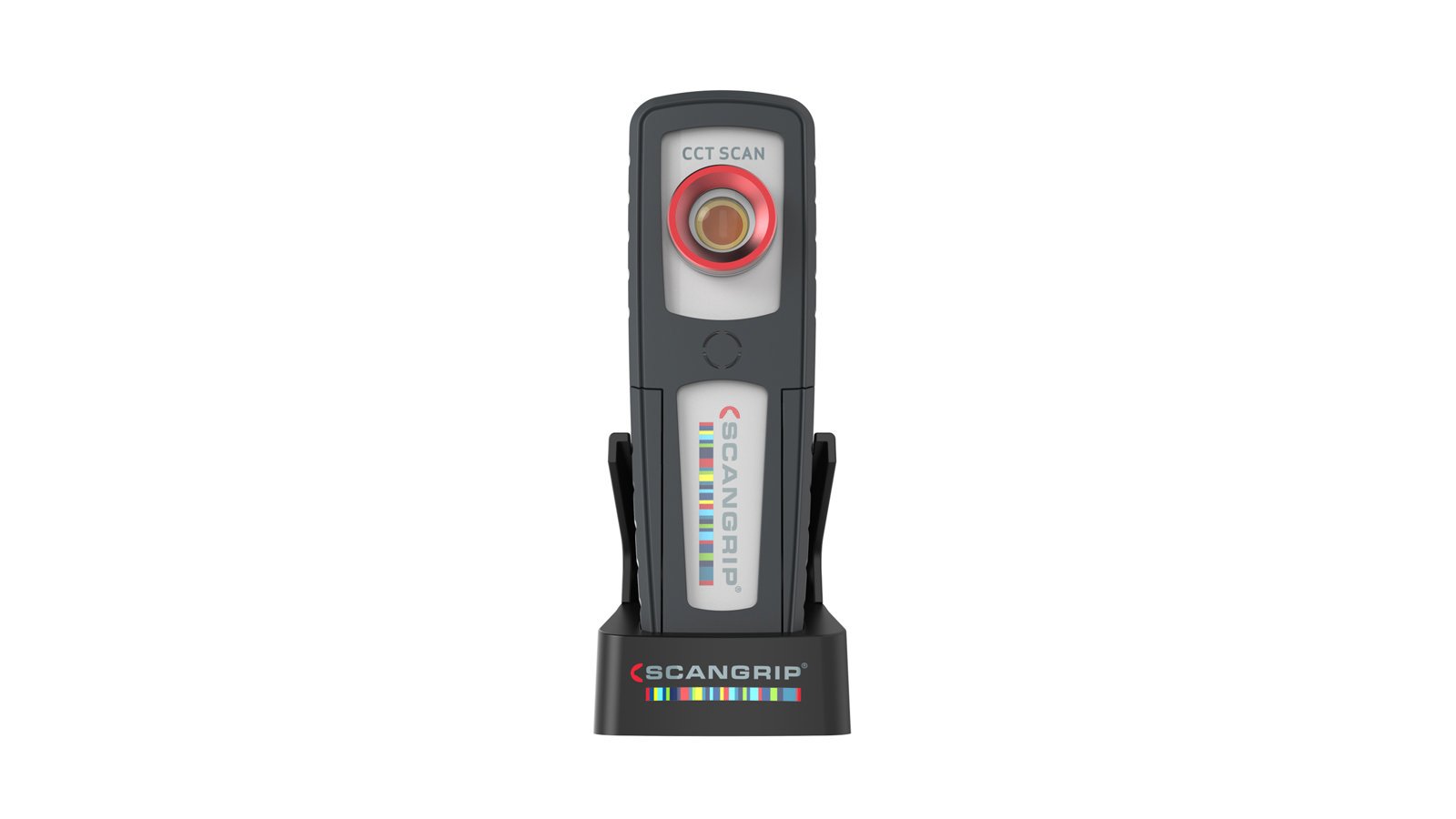
This SCANGRIP SUNMATCH 4 review looks at model 03.5657 as a practical detailing purchase: what its controls add, what the package includes, and whether a handheld lamp fits your polishing routine. The strongest reason to buy is a specific inspection problem, such as difficulty revisiting the same test section. A premium name alone is not a reason to replace a light that already helps you judge your work.
How this review was prepared: We checked SCANGRIP’s product page and operating manual. This is a research-based assessment, with no hands-on testing or independent optical measurements. Published specifications belong to the manufacturer; the buying recommendations are our editorial judgment. Images are manufacturer photographs and do not document our own testing.
On this page: Specifications · Output reduction · Inspection workflow · Alternatives · Compare offers · FAQ
Who should buy this handheld inspection light?
A handheld light makes the most sense when you frequently change viewing position. You may want to walk around a door, check a lower panel, or revisit a small area after polishing. My buying recommendation is to start with those movements. If carrying and repositioning a lamp sounds easier than moving a larger setup, this format deserves consideration. If you mainly need continuous illumination over a work area, look at a positioned lamp first.
For an enthusiast, frequency matters as much as features. A specialist lamp used a few times a year should solve a problem your existing garage lighting cannot address conveniently. For a working detailer, consider how it fits between process steps: inspect, put the light somewhere accessible, polish, and inspect again. Ease of returning to the same viewing conditions may matter more than an impressive maximum-output number.
Skip the purchase if the real bottleneck is elsewhere. A tired polishing pad, an unsuitable process or an unclear correction goal will not be fixed by buying a more expensive light. Use our foam vs microfiber vs wool polishing pad guide to evaluate the rest of your setup before committing your budget.
SCANGRIP SUNMATCH 4 specifications
| Specification | Manufacturer listing |
|---|---|
| Model | SUNMATCH 4 / 03.5657 |
| Main light | 50–500 lumens; stepless dimming |
| Color temperature | 2,500–6,500 K; CCT SCAN |
| Secondary spotlight | 200 lumens |
| Battery | 3.7 V, 2,600 mAh Li-ion |
| Listed operating range | 2–10 hours, depending on setting |
| Charging time | 4 hours |
| Protection | IP65; IK07 |
| Package | Lamp, base, charging cable, diffuser, manual; wall charger excluded |
Source: SCANGRIP’s SUNMATCH 4 product page. These are manufacturer figures, not results from our testing. Confirm the exact item and bundle with your seller, particularly when a listing mixes older SUNMATCH names with current product photographs.

The 500-lumen claim needs a three-minute qualifier
The most consequential specification is in the official operating manual: high mode drops from 500 to 250 lumens after three minutes to manage heat and battery use. That makes a meaningful difference when comparing a short maximum-output claim with the light level available during a longer task.
For brief spot checks, a temporary high setting may fit your routine well. For continuous inspection, judge the purchase around the lower sustained mode rather than imagining uninterrupted maximum brightness. We have not measured its output curve, so we cannot tell you how noticeable the transition will be in your workshop. A retailer that highlights only the peak figure leaves out a buying detail worth checking.
This also changes how to read runtime. Do not multiply the headline output by the headline operating time and assume they describe one unchanging setting. Before ordering, think about the duration of your actual inspection periods and the gaps between them. A compact rechargeable lamp can be convenient for intermittent checks even when a larger powered light suits uninterrupted work better.
What CCT SCAN adds to your inspection routine
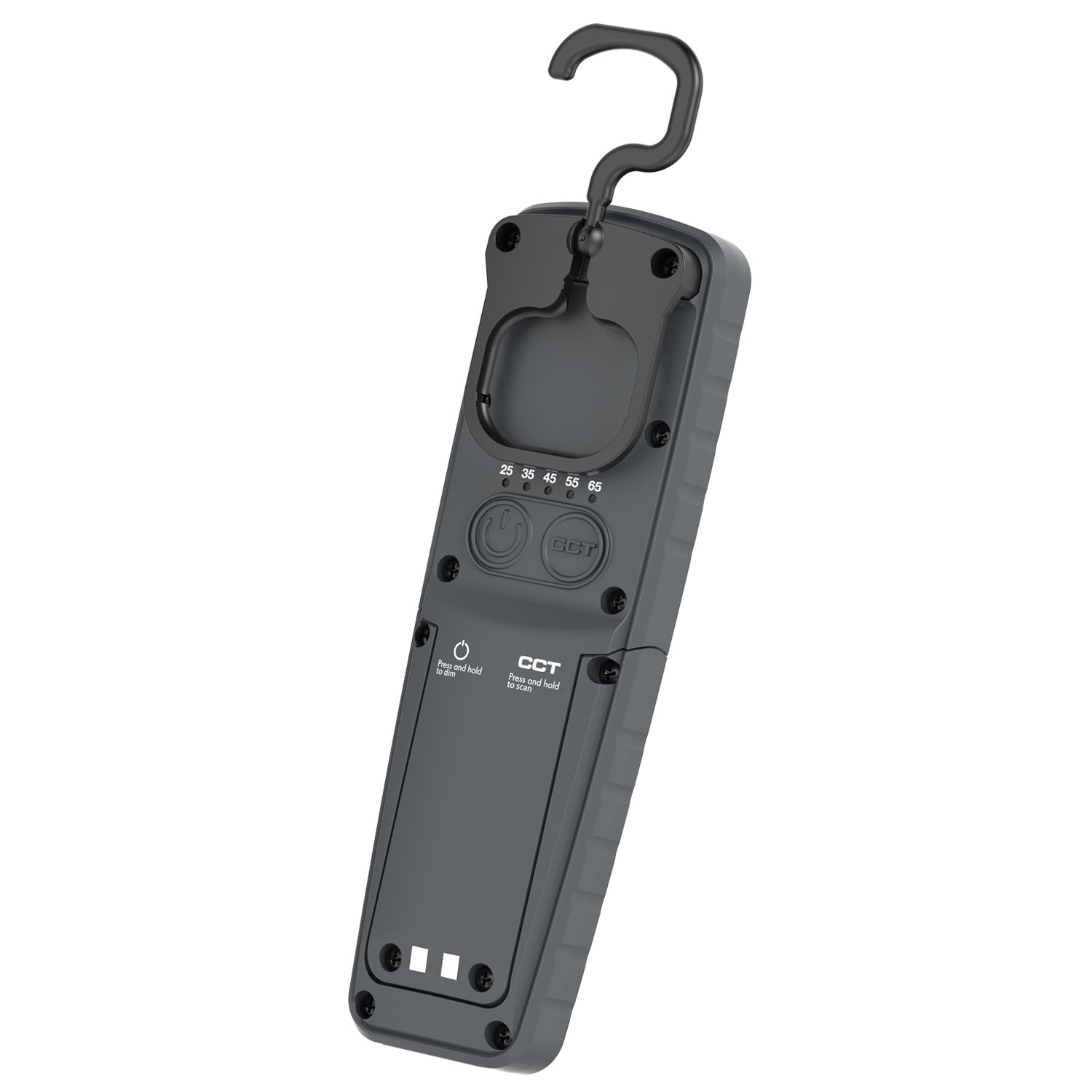
CCT SCAN changes the appearance of the illumination across the published warm-to-cool range. Its practical appeal is the ability to explore different viewing conditions without changing lamps. That does not make it an automatic defect detector or an instruction to keep polishing whenever a new reflection appears. You still interpret what you see and decide whether it matters to your correction goal.
My suggested approach is to use the adjustment deliberately. Find a useful setting for the section, then keep the position and setting consistent when comparing before and after. If you change brightness, angle and color temperature together, the comparison becomes harder to interpret. The control is valuable when it helps you answer a question clearly, rather than when it simply produces more lighting variations.
Color appearance and surface correction are separate decisions. A light can contribute to visual assessment, but it cannot establish the remaining clear-coat thickness or the repair history of a panel. Read our paint thickness gauge guide before treating a visible mark as permission to use a more aggressive polishing combination.
Charging, package contents and ownership cost
The package distinction is simple: a charging base and cable are not necessarily a wall power adapter. The product listing excludes the charger, and the manual calls for a 5 V, 1 A USB supply. Check what your retailer actually includes instead of inferring contents from an accessory shown in a photograph. If you need an adapter, add a suitable one to the total cost before comparing stores.
Plan where the light will live between tasks. A convenient charging location can make a tool easier to use consistently; an awkward one can leave it discharged when you want it. For mobile detailing, consider how you will recharge between appointments and whether a second light is needed for your schedule. We have not tested charging from vehicles or third-party power banks, so no compatibility claim is implied here.
A useful cost comparison includes the lamp, any required charging accessory, delivery, taxes and the return terms. Also consider whether local support matters to you. A slightly lower advertised price may offer little value if the seller cannot clarify the model or package. Keep a copy of the item description so that you can compare what arrives with what you ordered.
A practical inspection workflow before and after polishing
Start with a defined question. Decide whether you are checking your test-section result, investigating a mark, or judging whether the agreed finish has been reached. This keeps inspection from becoming an endless search for something else to remove. Set realistic limits for the job and avoid escalating the process just because a different viewing angle reveals another detail.
Prepare a consistent reference. Choose a manageable section and inspect it before polishing. Note the location of the marks that matter to your goal. Follow the instructions for the surface and products you use, and allow for residues that may affect what you see. A lamp helps with observation; it does not replace the preparation needed for a useful comparison.
Change one variable at a time. Establish a comfortable light position and viewing angle, then adjust the controls only as needed. After a test section, return to that arrangement. A quick photo or written note can help you remember the setup, but do not treat an uncalibrated phone photo as a measurement of color accuracy or correction percentage.
Inspect the pad and process too. If results become inconsistent, check your working materials before assuming the lamp is the problem. Our guide to cleaning polishing pads covers a related maintenance decision. A repeatable polishing routine and a repeatable inspection routine work together; neither is improved by changing every variable at once.
Stop when the agreed result is reached. A visible imperfection is information, not an automatic instruction for more abrasion. If you are uncertain about the finish or previous repairs, get qualified advice before continuing. Use the light to make the decision clearer, and keep the correction goal separate from the desire to make every possible reflection look identical.
SUNMATCH 4 vs MULTIMATCH 3 CONNECT vs your existing light
| Option | Consider it when | Main buying question |
|---|---|---|
| SUNMATCH 4 | You want to carry a compact inspection lamp between sections. | Does the handheld format and high-mode step-down fit your routine? |
| MULTIMATCH 3 CONNECT | You want a larger positioned inspection setup. | Have you priced the complete power arrangement and any support accessories? |
| Your existing light | It already makes your inspection decisions clear. | What specific limitation would another lamp resolve? |
The useful comparison is the job each format performs. A handheld lamp is appealing for moving around individual details. A larger positioned lamp may be a better starting point when you want a stable inspection arrangement while both hands are occupied. Neither format automatically makes the other unnecessary. Read our SCANGRIP MULTIMATCH 3 CONNECT review for its separate power and package considerations.
If you already own several lights, avoid buying another one simply to complete a matching set. List the conditions in which your current setup becomes inconvenient. Then ask whether this purchase changes those conditions enough to justify its cost and charging routine. This keeps the comparison focused on a real improvement instead of a feature count.
Pros and limitations before you order
| Potential advantage | What to consider alongside it |
|---|---|
| Portable inspection format | Handheld use may interrupt tasks that need both hands. |
| Adjustable color temperature and dimming | Consistency still depends on your inspection method. |
| Rechargeable design with a base | Charging access becomes part of ownership. |
| Short high-output mode | 500 lumens steps down after three minutes. |
| Diffuser listed in the package | Confirm the actual seller’s bundle and accessory contents. |
These are buying considerations rather than performance-test findings. We cannot assign a measured improvement in defect visibility, a time-saving percentage or a durability score. The strongest recommendation we can support is conditional: consider the SUNMATCH 4 when you need this size and control arrangement, understand its output behavior, and can verify a complete package from a seller with suitable terms.
Amazon vs Walmart: compare the exact SUNMATCH 4 offer
The buttons below open retailer searches, not verified in-stock product offers. We have not confirmed a current checkout price or stock position at either store. Search results can include other lamps, accessories or third-party sellers. Match the SUNMATCH 4 name and 03.5657 item number, then read the actual listing before deciding.
| Check | Amazon | Walmart |
|---|---|---|
| Exact model | Confirm SUNMATCH 4 / 03.5657 in the listing. | Confirm SUNMATCH 4 / 03.5657 in the listing. |
| Current total | Check price, shipping and checkout tax. | Check price, shipping and checkout tax. |
| Package | Confirm base, cable, diffuser and adapter status. | Confirm base, cable, diffuser and adapter status. |
| Seller and returns | Check who sells it and the applicable return terms. | Check the marketplace seller and applicable return terms. |
Do not choose a store based on an unverified “lowest price” label. Compare the total for the same package on the same day. If the product is unavailable, assess whether waiting or buying through an authorized local dealer is more practical than ordering an unclear substitute. A lamp accessory with a similar title is not an equivalent offer.
Frequently asked questions
Does the SUNMATCH 4 stay at 500 lumens?
No. SCANGRIP’s manual specifies a reduction to 250 lumens after three minutes in the high setting. Treat 500 lumens as a short inspection setting rather than a sustained-output specification.
Is a wall charger included?
The manufacturer lists the lamp, base, charging cable, diffuser and manual, and marks the charger as excluded. A retailer may sell a different bundle. Check its written contents and follow the manual’s 5 V, 1 A USB charging requirement.
Can the SUNMATCH 4 replace a MULTIMATCH 3 CONNECT?
It can serve buyers whose priority is a handheld inspection tool. It is not an equivalent replacement for a larger positioned work light. Choose according to how you inspect panels and whether you need your hands free.
Does CCT SCAN automatically identify paint defects?
No. It varies the light’s color temperature. You still need to choose a useful viewing position, interpret the finish and decide whether correction is appropriate.
Is this a hands-on SUNMATCH 4 review?
No. This is a research-based buying assessment using manufacturer documentation. We have not tested runtime, color accuracy, durability or defect visibility.
Final buying verdict
The SUNMATCH 4 belongs on your shortlist if a portable inspection lamp would make your detailing process easier to repeat. Its adjustable controls and rechargeable format address a different need from a larger positioned work light. Make the decision around how you inspect, the complete package cost and the three-minute high-mode reduction. If those tradeoffs fit your routine, compare current seller offers; if they do not, keep your existing light or investigate a larger setup.