As an Amazon Associate, Best Auto Products earns from qualifying purchases. We may also earn a commission from Walmart links.
Quick verdict: The RUPES HLR75 iBrid Mini is worth considering when a compact polishing tool would solve a recurring access problem and you value the option to work without a cord. Buy it as a planned addition to your detailing setup. For an occasional whole-car job, a main polisher and a good supply of clean pads usually deserve the budget first.
This RUPES HLR75 iBrid Mini review focuses on the decision that product listings often leave unresolved: should you buy the STB battery kit, pay more for LUX, or choose a different type of polisher? The right answer depends on the surfaces you work on, the equipment you already own and the complete cost of getting started.
How we reviewed it: This is a research-based buying assessment using RUPES product documentation, its U.S. kit listing and the U.S. instruction manual. We have not performed hands-on testing or measured correction speed, vibration or loaded battery runtime. Buying recommendations are our editorial assessment; manufacturer specifications are identified below.
Jump to: Who it suits · Specifications · STB vs LUX · Alternatives · Compare offers · FAQ
Who should buy the RUPES HLR75 iBrid Mini?
Start by naming the task that your current equipment makes awkward. Perhaps your broad-panel machine is cumbersome on a bumper section, or managing its cord interrupts your work around a vehicle. A compact addition becomes easier to justify when you can identify a repeated problem. Buying another premium machine without defining its job can leave you with overlapping equipment and the same unfinished areas.
For a working detailer, review several recent jobs rather than one unusually difficult vehicle. Note how often you needed a smaller setup and how much useful work you could reasonably assign to it. A tool used every week can make more sense than the same tool purchased for a single annual session. We have no timed comparison proving a particular saving, so treat time savings as something to measure in your own workflow.
A first-time owner should build the foundation before adding specialist equipment. Include inspection lighting, suitable towels, paint preparation products and multiple pads in the budget. Our Griot’s Garage G9 review can help you assess the role of a main polisher. Owning a compact tool does not remove the need to choose a sensible process for large panels.
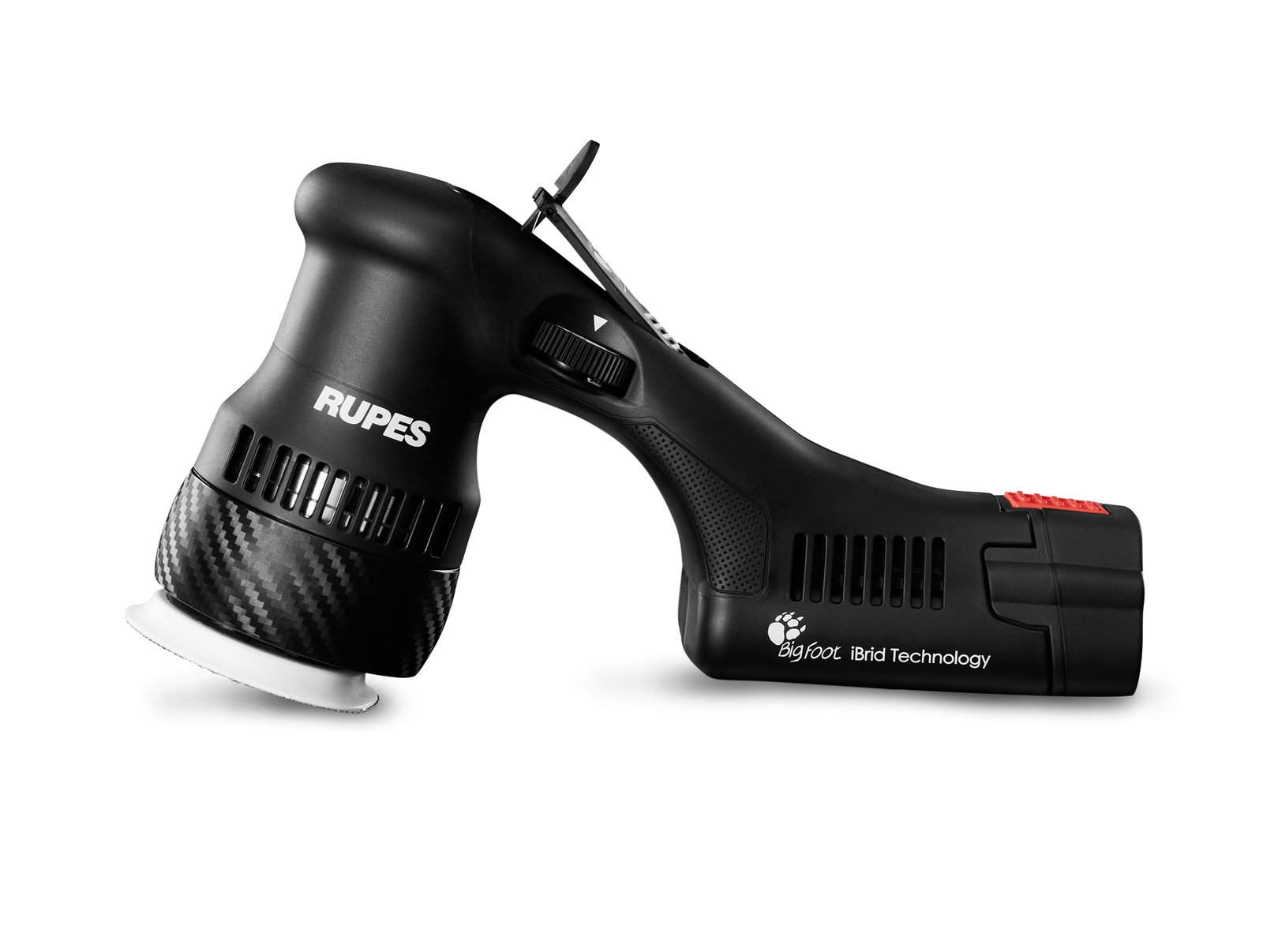
RUPES HLR75 specifications that affect the decision
| Item | RUPES published specification | What to check |
|---|---|---|
| Backing plate | 75 mm / 3 inches | Match approved pads to the plate. |
| Orbit | 12 mm | Allow clearance for movement. |
| Power system | 18 V; battery or compatible mains adapter | Check which power equipment is included. |
| Speed | 3,000–5,500; listed as R.P.M. by RUPES | Do not equate the number with measured correction speed. |
| Runtime / charge reference | Approximately 35–45 / 35 minutes | Manufacturer figures; actual conditions vary. |
| Weight | 1.1 kg without battery or power supply | Compare complete working configurations. |
Source: RUPES HLR75 product documentation. The backing plate diameter describes the support beneath a pad; it does not establish that every pad advertised as “3-inch” is compatible. Read the accessory specification rather than relying on a marketplace title.
Numbers also leave out the part of the buying decision that is personal: how the machine feels in your hands. If possible, try the intended working configuration at a dealer or training event. Check reach, sight lines and control access. A specification table cannot tell you whether you prefer a particular grip during a long session, and we cannot rank comfort without testing it.
STB vs LUX vs body-only: buy the equipment you will use
| Package | Documented starting point | Best reason to consider it |
|---|---|---|
| 9.HLR75 | Machine-only option | You have verified the necessary compatible equipment. |
| HLR75/STB | Machine, two 9HB180LT packs and 9HC180LT charger | You want a battery setup and will choose consumables separately. |
| HLR75/LUX | Larger package with case, power supply, batteries, charger, pads, compounds and towels | Its extra equipment already appears on your shopping list. |
The RUPES USA STB listing confirms the two-pack battery and charger arrangement. The international product page lists the LUX contents. Seller bundles and regional packages can differ, so use the exact offer’s contents list as your purchasing checklist. A photograph alone is insufficient proof of what will arrive.
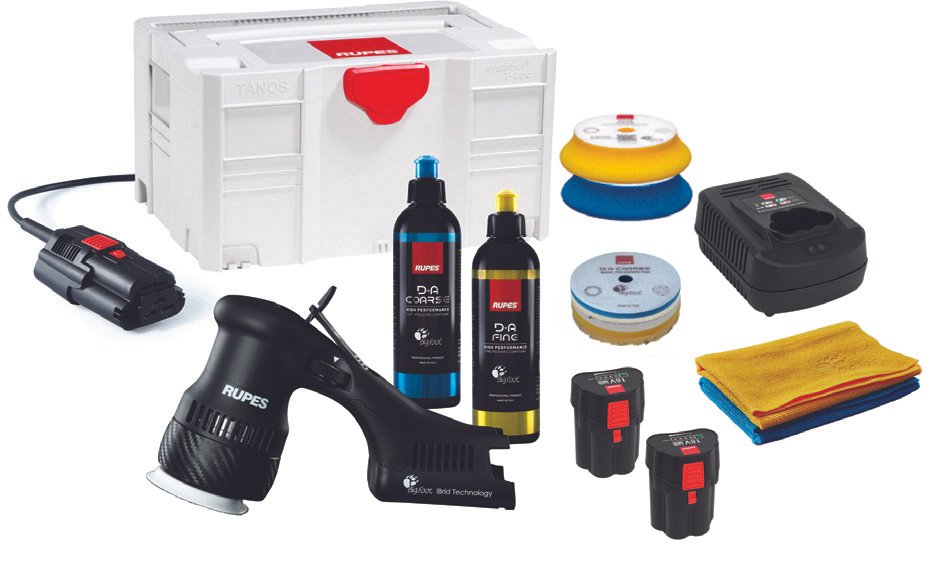
For STB, add the cost of enough appropriate pads, your chosen polish and any storage you need. For LUX, identify which included items you would otherwise buy. Give unwanted liquids and duplicate towels little value in your calculation. A larger accessory count is useful only when those accessories support your actual work. Check replacement availability for the consumables you expect to use most frequently.
Body-only is attractive when you already own a compatible setup, but confirm every relevant part number before ordering. A shared brand name does not establish that another battery or charger fits. Ask the seller to confirm compatibility in writing if the listing is unclear. An inexpensive bare machine can become the more expensive purchase after you add the missing equipment one item at a time.
Battery or corded power: where dual power adds value
The ability to choose a power arrangement gives you a workflow decision. Around a vehicle, consider how often a cable crosses your route or requires repositioning. At a fixed workstation, consider whether keeping batteries charged creates unnecessary management. Decide which situation describes most of your work before paying for equipment intended for the other one.
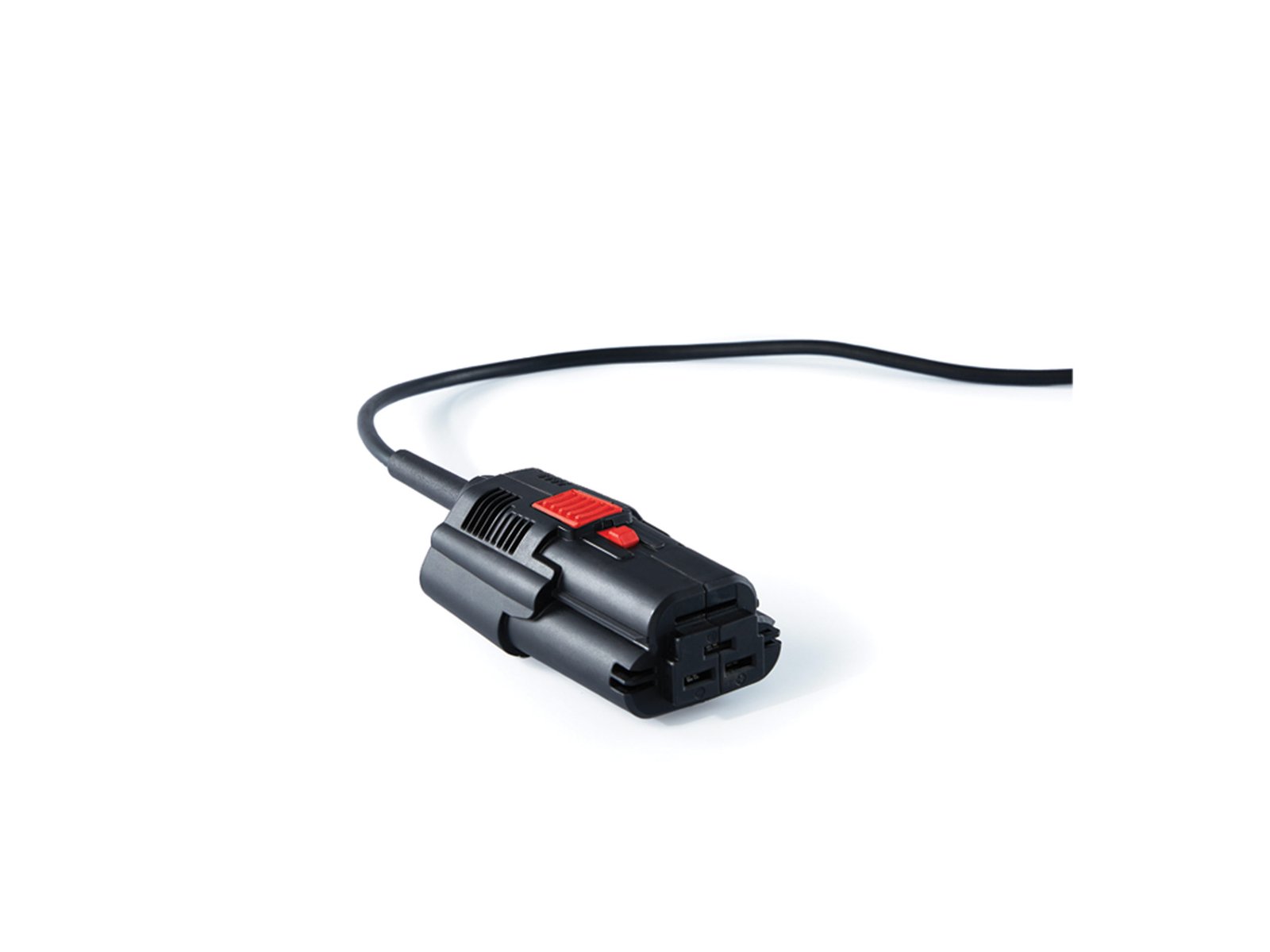
The STB contents list does not include the mains power supply. If corded operation is central to your plan, price the correct adapter alongside STB and compare that total with a suitable larger bundle. Check regional plug and electrical requirements with the seller. A wall adapter used to charge a battery is not automatically the accessory that powers the tool during operation.
Two batteries should be treated as a rotation option, not a promise of uninterrupted work. Charging opportunities, starting charge, battery condition and job demands still matter. Organize a session so pad changes, inspection and other tasks fit naturally into your routine. Do not build a professional scheduling promise around an advertised runtime figure that you have never verified under your own conditions.
HLR75 vs Nano 2 vs Griot’s G8: compare the job first
| Choice | Role to investigate | Question before buying |
|---|---|---|
| RUPES HLR75 | Compact polishing with a choice of power arrangement | Would this remove a recurring access or cable-management problem? |
| RUPES iBrid Nano 2 | More specialized precision configurations | Do you need the narrower access and configurations described in its documentation? |
| Griot’s Garage G8 | Another compact polisher option | Would its setup suit your work at a better total ownership cost? |
| Full-size polisher | Large-panel coverage | Is most of your unfinished work still on doors, hoods and roofs? |
Our RUPES iBrid Nano 2 review covers the precision-tool decision separately. Do not assume two products carrying the iBrid name are interchangeable. Think about the area you need to reach, then check the approved configuration for that model. If you already own a precision tool, identify which additional tasks would justify another compact machine.
The Griot’s Garage G8 review offers another buying path to assess. Compare the complete setup, service access and replacement consumables rather than treating the purchase price as the whole cost. We have not conducted an HLR75-versus-G8 test, so this comparison does not establish a winner for cutting speed, finish quality or vibration.
If broad panels remain your main workload, start with our FLEX XFE 7-15 150 vs RUPES LHR15 Mark V comparison. A second machine is valuable when it adds a capability you need. If your existing setup already reaches the intended surfaces comfortably, fresh consumables or better lighting may be the more useful next purchase.
Pads and paint assessment: budget beyond the machine
Before buying consumables, decide what result you want from the vehicle. For a daily driver, a restrained improvement can be more sensible than pursuing every isolated mark. Pad choice should follow the condition and finish goal, together with the tool and product instructions. Our foam vs microfiber vs wool polishing pads guide explains the material choices without treating color as a universal grading system.
Plan how you will maintain a supply of clean pads throughout the job. Buying one pad in several colors can be less useful than having enough suitable pads for a consistent process. Keep clean and used items separate and allow washed pads to dry properly before storage. See our polishing pad cleaning guide when planning this part of the setup.
Unknown paint history deserves attention before correction. A gauge reading can contribute to an assessment, but it should not be treated as a universal permission to remove defects. Read how to read a paint thickness gauge for the limits of that information. When you are uncertain about a surface or repair, obtain qualified advice before making an irreversible change to the finish.
Use the RUPES U.S. HLR75 instruction manual for setup and operation. Disconnect the appropriate power source before accessory changes, inspect the equipment and follow its protection requirements. This buying guide does not replace the supplied instructions or hands-on training.
Amazon vs Walmart: how to compare a real offer
The buttons below open retailer searches for the HLR75. They are search links, not verified in-stock product listings. Results can include replacement parts, other models or unrelated accessories. We have not verified a live like-for-like selling price or a lowest-price winner. Confirm the full model code and selected variation before using a displayed price in your comparison.
| Check | Amazon offer | Walmart offer |
|---|---|---|
| Exact model and suffix | Confirm HLR75 and STB/LUX/body-only | Confirm the same model and suffix |
| Contents | Read the seller’s written list | Match the full contents list |
| Delivered total | Set ZIP code; check shipping and tax | Use the same ZIP code and delivery assumptions |
| Seller and support | Verify seller identity, returns and warranty eligibility | Verify seller identity, returns and warranty eligibility |
| Availability | Check the selected listing | Check the selected listing |
A meaningful comparison starts with equivalent equipment. A machine-only listing should not be declared cheaper than a battery kit without adding the missing items. Save the selected offer’s contents and return terms before ordering, and inspect the delivered package promptly. If warranty coverage matters to your decision, confirm eligibility with RUPES or an authorized dealer rather than assuming any marketplace seller qualifies.
A practical value test before you spend
Write a short equipment list for the next three jobs you expect to perform. Mark the tasks your current machine handles, the tasks needing different access and the tasks better left to a professional. Then estimate the complete purchase cost for the compact setup you would actually use. This keeps a premium purchase tied to useful work rather than the appeal of a new tool.
For paid work, divide the additional setup cost by your realistic contribution per relevant job after consumables and other costs. This is a planning exercise, not a promised return. Use your own figures and leave room for service, training and downtime. For home use, decide whether the convenience is worth the money even if the machine never generates income.
RUPES HLR75 iBrid Mini review: frequently asked questions
Is the HLR75 a sensible first polisher?
It can suit someone whose main requirement is compact-area work, but choose your first machine around the vehicle and workload. For regular whole-car polishing, assess a main machine first and include the supporting equipment in the budget. Buying a specialist first can leave a large portion of the job poorly matched to the setup.
Does the STB kit include the corded adapter?
The documented STB package contains the tool, two batteries and a charger. Its contents list does not include the mains power supply. Confirm the seller’s specific bundle if you need corded operation immediately.
Is LUX always better value than STB?
No. LUX is easier to justify when its additional equipment replaces purchases you already planned. STB may be the better fit when you prefer to select your own consumables or already own several of the extras. Compare equivalent complete setups using current delivered prices.
Can the HLR75 replace an iBrid Nano 2?
Decide by the access and approved configurations your work requires. Neither the shared brand nor the family name proves that one machine covers every task assigned to the other. Read the Nano 2 guide and check both models against the actual surfaces you intend to work on.
What is our final buying recommendation?
Choose the HLR75 when it fills a clear compact-tool gap and its power options fit the way you work. Start with STB if the battery setup covers your needs; consider LUX after valuing its additional equipment individually. If you cannot identify a recurring task it improves, develop the setup you already own before adding another specialist.
Sources checked November 18, 2026: RUPES international HLR75 documentation, RUPES USA HLR75/STB listing and the U.S. instruction manual. Specifications and packages may change; confirm the exact regional offer before purchase.