
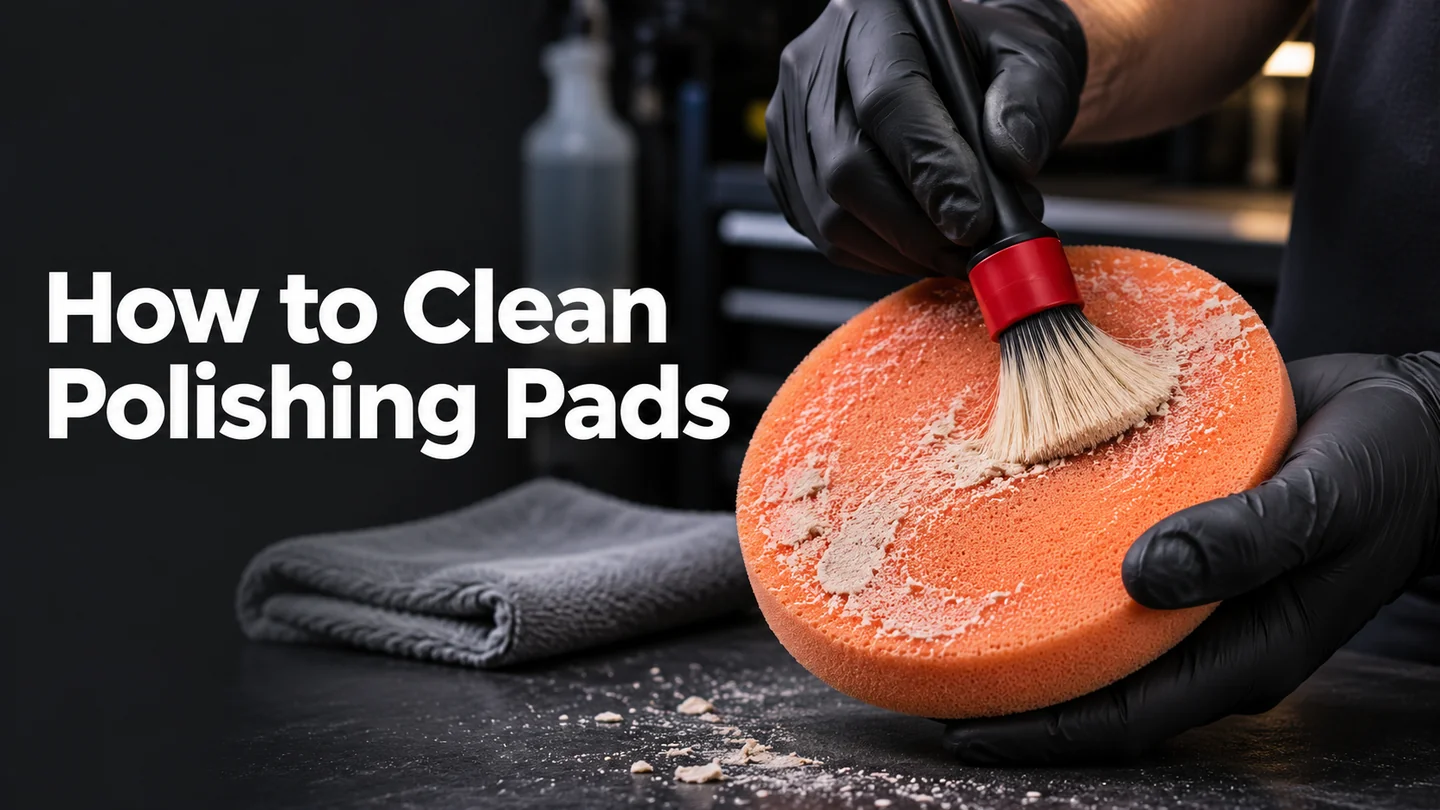
To clean polishing pads, remove loose residue during the job, then wash the detached pad with a compatible cleaner, rinse thoroughly and let it air dry completely. Foam, microfiber and wool pads do not all tolerate the same treatment: follow the instructions for your exact pad before using a washing machine, heat or a powered cleaning tool.
This is a research-based maintenance guide, not a hands-on comparison of pad cleaners. It draws on Griot’s Garage and RUPES care instructions linked below. The goal is a repeatable routine that keeps old compound and dirt out of your next polishing session.
Your next clean-pad routine
Inspect → use compatible cleaner → rinse → air dry fully.
Check the care kit · Jump to washing steps · Read common questions
Quick decision: brush, wash or replace?
Brush or otherwise clean during polishing when the face begins to load with residue. Swap to a clean pad when cleaning no longer restores an even working face, the pad is saturated, or it needs to cool. Wash after the session to remove remaining product. Replace a pad with torn material, loose backing or contamination you cannot remove.
What you need
Prepare a clean sink or bucket, water at the temperature allowed by the pad maker, a compatible pad cleaner, clean towels and a ventilated drying space. A purpose-made conditioning brush can help between polishing cycles. Keep a spare pad available so you do not need to put a freshly washed, damp pad back to work.
Separate pads used for different products and jobs. A finishing pad should not collect coarse compound from a cutting pad or grit from a dirty workbench. Marking the storage bag with the pad’s role is a simple way to avoid mixing them up.
Build a simple pad-care kit
Start with a cleaner approved for your pads, a gentle conditioning brush and a clean, dry spare pad. Check compatibility before buying—especially for wool or specialty pads.
Manufacturer link. Review current specifications, price and shipping on the seller’s page. This guide does not claim hands-on product testing.
How to clean polishing pads after use
1. Disconnect the polisher and remove the pad. Keep water and cleaner away from the machine. Support the attachment material as you peel the pad off rather than pulling hard on its foam edge. Inspect the face and backing before spending time cleaning a damaged pad.
2. Pre-rinse using the pad maker’s instructions. For an unknown pad, check its care label first. Do not assume that instructions for one foam construction apply to every microfiber or wool pad. Avoid letting dirty rinse water become the cleaning bath for your finishing pads.
3. Apply the specified cleaner and gently work it through. Use the label’s dilution and dwell time. Griot’s Garage describes kneading its Microfiber & Foam Pad Cleaner into the pad and allowing a ten-minute dwell in its brush-head guidance. That is a product-specific instruction, not a universal soaking time.
4. Rinse until the cleaner and loose residue are removed. Inspect the working face again rather than judging only by its color. A stained pad is not automatically ruined, while a pad that still feels loaded with product needs more attention. Do not escalate to an aggressive solvent simply to remove discoloration.
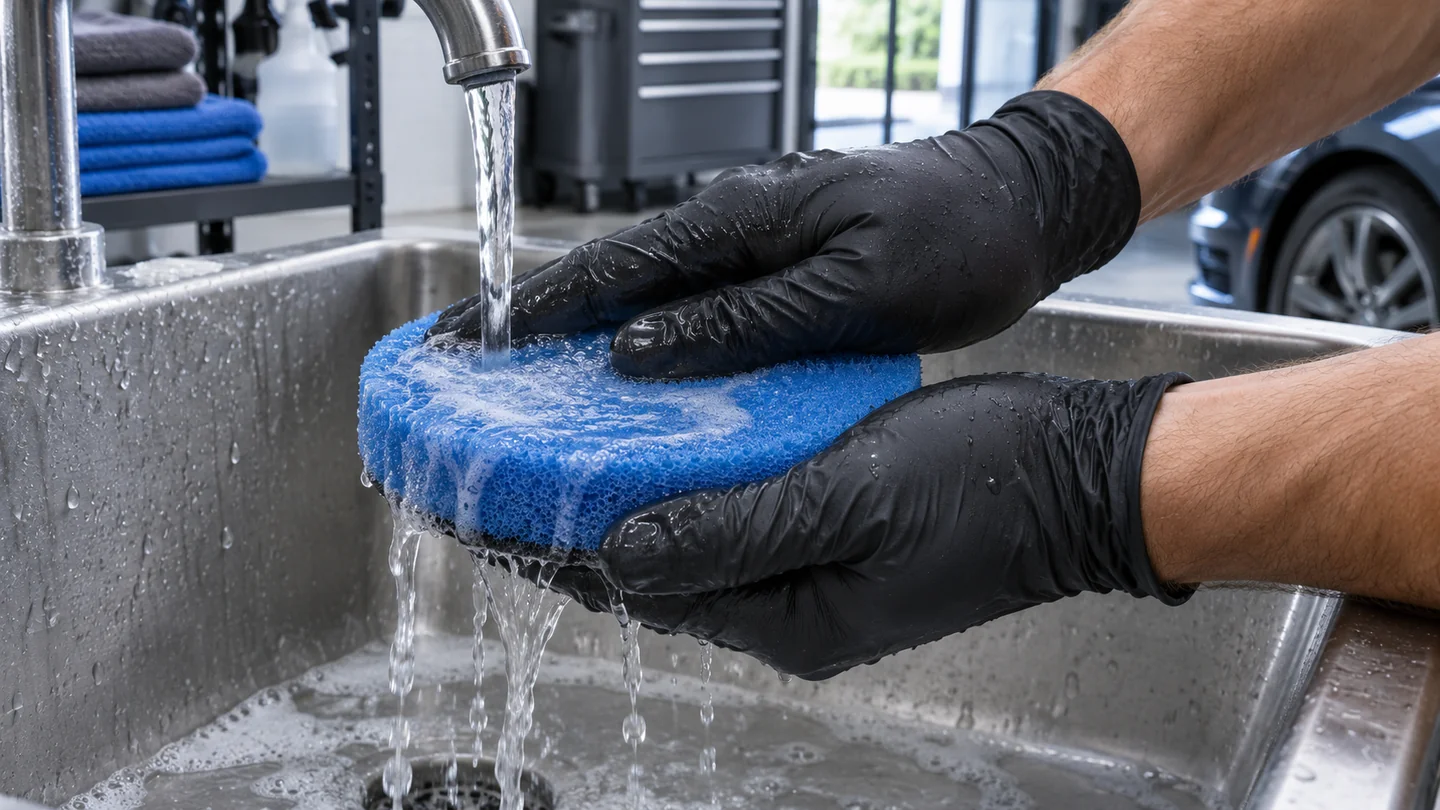
5. Remove excess water gently, then air dry completely. Follow the pad manufacturer’s method for removing water. Leave pads in a clean, ventilated location with space around them. Do not seal a damp pad inside its storage bag or promise yourself that a fixed overnight drying period will always be sufficient.
Foam vs microfiber: what changes?
Foam: inspect for splits, crumbling and separation from the attachment layer. RUPES specifies warm water, mild soap, thorough rinsing and air drying for its D-A Coarse foam pad, and warns against solvent-based cleaners because they can damage the foam structure.
Microfiber: look for packed-down fibers and trapped residue as well as backing damage. RUPES gives warm-water, mild-soap and air-drying guidance for its D-A Fine microfiber pad. Treat those directions as applying to that pad; check the instructions for other fiber and backing combinations.
Wool: use its own care guidance. Do not transfer a microfiber or foam washing routine to wool by default. If the manufacturer does not approve your proposed cleaner or machine-washing method, choose an approved method before proceeding.
Cleaning pads while polishing
Check the pad face between working sections and clean it before heavy buildup develops. Both brands describe frequent cleaning during use, but the approved tools and machine settings vary. Follow the exact tool and pad instructions rather than using one speed setting for every polisher.
For a conservative approach, stop and disconnect the machine before inspecting or handling the pad. Only use an on-machine brush or air-cleaning procedure when the manufacturer explains how to do it safely. Keep fingers, loose clothing and cords away from moving parts. Surface cleaning is not a substitute for the final wash.
If you are choosing a machine for tight areas versus larger panels, see our Griot’s Garage G9 review. Pad care still matters regardless of machine size; extra power does not make a dirty or damaged pad suitable for paint.
Mistakes that shorten pad life
Avoid adding more compound to compensate for a loaded pad, scrubbing delicate foam with a metal tool, using unapproved solvents, and storing pads while damp. Do not put every pad in a washing machine because a different brand permits it. Keep freshly cleaned pads away from floor dust and inspect them again before installation.
Cleaning cannot repair a separating backing layer. If a pad was dropped, do not simply brush the visible dirt away and continue: remove the contamination fully or replace the pad when you cannot be confident it is clean.
Frequently asked questions
Can polishing pads go in a washing machine? Some can. Griot’s Garage permits machine washing in its G9 maintenance guidance, but that does not establish permission for every pad. Check the pad’s own instructions, including detergent and drying restrictions.
Can I use dish soap? Do not assume any household detergent is suitable. Use the cleaner the pad maker specifies; where mild soap is permitted, follow that guidance and rinse thoroughly. Added fragrance, conditioners or other residues are another reason to choose a known compatible product.
Can I reuse a wet pad immediately? For the Griot’s Garage routine cited here, pads must dry completely before use. A damp, recently washed pad is not a shortcut to keeping a polishing job moving; rotate to a clean, dry spare.
How often should I replace pads? There is no reliable universal number of cars. Inspect condition, attachment security and cleanliness each time. Replace damaged pads rather than relying on age or appearance alone.
Manufacturer references
Griot’s Garage G9 manual: pad maintenance; Griot’s Garage conditioning brush instructions; RUPES D-A Coarse foam technical sheet; RUPES D-A Fine microfiber technical sheet. Product-specific care instructions take precedence over a general routine.
Ready for your next polishing session?
Have a compatible cleaner, gentle brush and dry spare pad ready. If you also need a machine, compare the G9’s pad setup, ownership trade-offs and buying checks.