Disclosure: As an Amazon Associate, we earn from qualifying purchases. Walmart affiliate links may also earn us a commission, at no additional cost to you.
Compare a rinseless starter option
Retailer search links. Match formula, size, seller and checkout total.
Bucket solution; no final hose rinse
Dedicated spray and clean towels
Inspect the dirt level and finish
Compare matched sizes and delivery
Updated October 22, 2026 · Editorial research based on manufacturer guidance; no hands-on product test is claimed.
Rinseless vs waterless car wash: the quick answer
Choose a rinseless wash when you want a regular maintenance wash without a final hose rinse and can carry a bucket of properly mixed solution. Choose a waterless wash for light cleaning when the exact product is suitable for the dirt level and you have enough clean towels. If the vehicle is caked in mud or covered with gritty contamination, arrange an appropriate pre-rinse or conventional wash first.
The important difference is the process. Rinseless washing still uses water in a bucket. Waterless washing typically uses a spray product and towels without a wash bucket. Neither name gives permission to drag dirt across the paint. Product suitability, enough lubrication and clean wash media remain essential.
For an apartment owner, the deciding factor may be access rather than cleaning chemistry. Check the parking rules, the permitted work area and where you can prepare and dispose of wash solution. Buy for the routine you can actually complete.
What is a rinseless car wash?
A rinseless wash uses a dedicated solution mixed with water according to its label. You clean a manageable area with suitable wash media and dry it without a final hose rinse. The bucket provides a supply of cleaning solution, so this approach can fit owners who have water indoors but no outdoor hose connection.
Do not substitute ordinary car shampoo and simply omit the rinse. A shampoo designed to be rinsed away has a different intended workflow. Select a product explicitly labeled for rinseless use and use the current directions on that bottle. Different versions and formulas may have different uses.
A rinseless setup can be compact, but it still needs planning. Put the bucket where it will not spill, keep clean and used towels separate and have enough drying material ready. If the job becomes more contaminated than expected, pause and change the method rather than forcing your original plan.
What is a waterless car wash?
A waterless wash is generally a spray-and-wipe cleaning method using a product formulated for that purpose. It is convenient for suitable light cleaning because you can carry a bottle and a stack of towels. The term does not mean any household spray or plain dry cloth becomes an acceptable paint-cleaning tool.
Read the product’s stated surface compatibility and dirt limitations. Gloss paint, matte paint, wraps and special finishes should not be treated as interchangeable. A product that includes wax or gloss-enhancing ingredients may not match the needs of a finish whose manufacturer specifies a different maintenance system.
The small equipment footprint is attractive, but towels do much of the practical work. As a towel face becomes dirty, expose a clean face or replace the towel. If you run out of clean towels, stop. Trying to finish a whole vehicle with a heavily soiled towel defeats the reason for choosing a careful cleaning process.
Compare the two methods before you buy
A rinseless kit usually starts with concentrate, water, a bucket, suitable wash media and drying towels. A waterless kit often starts with a ready-to-use spray and multiple clean microfiber towels. Some concentrates support more than one task, but only at the manufacturer’s specified dilution for each task.
Neither method is automatically the cheapest because the supplies differ. A concentrate can make several batches, while a ready-to-use bottle avoids mixing. The right comparison includes the amount used per suitable cleaning, towel laundering and any equipment you still need.
Use the comparison table to select a workflow rather than a universal winner. If you clean a commuter regularly and can bring a bucket to the car, rinseless is worth considering. If you need occasional light cleaning with minimal equipment, a suitable waterless product may be more convenient.
| Factor | Rinseless | Waterless |
|---|---|---|
| Core setup | Water, concentrate, bucket, wash media, towels | Dedicated spray and multiple clean towels |
| Final hose rinse | Not part of the intended process | Not part of the intended process |
| Useful situation | Regular maintenance with bucket access | Suitable light cleaning with minimal equipment |
| Main cost check | Correct dilution and batch size | Actual product use and towel supply |
| Heavy grit or mud | Evaluate pre-rinse or conventional wash | Evaluate pre-rinse or conventional wash |
How dirty is too dirty?
Inspect the vehicle before choosing the bottle. Loose dust on an otherwise maintained car is a different task from dried mud, gritty road deposits or heavy contamination near the lower doors. Do not use the word waterless as a promise that every kind of dirt can be safely removed by wiping.
If the contamination looks abrasive, arrange a suitable rinse to remove loose material first. A self-service wash may be a practical option when home hose access is unavailable. Follow the facility rules and the product instructions, and avoid moving a dirty brush from one surface to another.
When uncertain, use the more cautious process and test a small area. Cleanliness of the wash media matters throughout the job. Stop if you see grit accumulating, if the towel begins dragging or if you cannot maintain the process described by the manufacturer. Convenience should not decide how much dirt you are willing to rub across the paint.
Which method fits apartment living?
Rinseless washing can suit apartment owners who can mix a small bucket indoors and transport it safely. Before starting, confirm that vehicle washing is allowed in the parking area. Limited water use does not automatically override property rules, and a covered space may still have restrictions on cleaning products.
Waterless washing reduces the equipment you carry, which can be useful when your parking spot is far from storage. Keep bottles closed in transport and carry a separate bag for dirty towels. Do not store chemical products somewhere that conflicts with the storage instructions on their labels.
Think about the entire process, including cleanup. You need somewhere to launder the towels, dry the equipment and dispose of used solution appropriately. A convenient-looking bottle is only one part of a workable routine. If those steps are difficult, an occasional commercial wash followed by careful maintenance may be the better arrangement.
Two products that illustrate the difference
Optimum No Rinse Wash & Shine is an example of a dedicated rinseless wash. The manufacturer describes a wash-and-dry process without a final hose rinse and directs owners to mix the product according to its label. Confirm the version and directions on the bottle you purchase before measuring out a batch.
Meguiar’s Ultimate Waterless Wash & Wax G3626 is an example of a waterless wash-and-wax spray. Its official listing identifies glossy paint and clear-coat use. Check the current directions for cleaning technique and suitability rather than borrowing the instructions from a rinseless concentrate or another spray.
These are examples of different product formats, not results from a head-to-head test. This guide does not claim measured scratch resistance, exact cleaning times or independently verified cost per wash. Choose the method first, then compare the exact bottle size and current seller offer for the product that fits it.
Rinseless option: Optimum No Rinse Wash & Shine
Verify the version, dilution directions and bottle size.
Waterless option: Meguiar’s Ultimate Waterless Wash & Wax G3626
Verify the 26 oz product and current label suitability.
Amazon vs Walmart: compare the complete price
Use the store buttons to look for the exact product name. Match the formula, version, bottle size and pack count before comparing the displayed price. A kit with towels is a different purchase from a bottle alone, and a large concentrate is a different proposition from a ready-to-use spray.
Check the seller, delivery estimate, shipping charge and return terms. Marketplace search results may include multiple sellers, related products or different sizes. The buttons open retailer searches, so confirm the correct listing yourself before checkout. Neither button represents a verified lowest-price offer.
No fixed price is displayed here because current prices and stock have not been independently confirmed. Your useful comparison is the delivered checkout total for a matched item. If a store requires a membership or minimum basket for an advertised delivery benefit, include that condition in your decision rather than comparing only the headline price.
How to estimate cost per wash
Start with the bottle price and the volume of concentrate or ready-to-use product it contains. For a rinseless concentrate, use the label’s wash dilution and the batch size you actually prepare. Do not use a stronger detail-spray dilution to estimate the cost of a normal bucket wash.
For illustration only, imagine a 32-ounce concentrate costing $20 and a wash batch using one ounce. The chemical cost would be $20 divided by 32, or about $0.63 per batch. Those numbers are hypothetical and do not describe a current store offer or a recommended dilution for any named product.
For a waterless spray, estimate consumption from your own suitable cleaning sessions rather than assuming a bottle lasts a fixed number of full-car washes. Add towel costs and laundering to your comparison. Saving a small amount of chemical by using too little product or too few towels is a poor tradeoff if it undermines the intended cleaning method.
A beginner’s rinseless wash routine
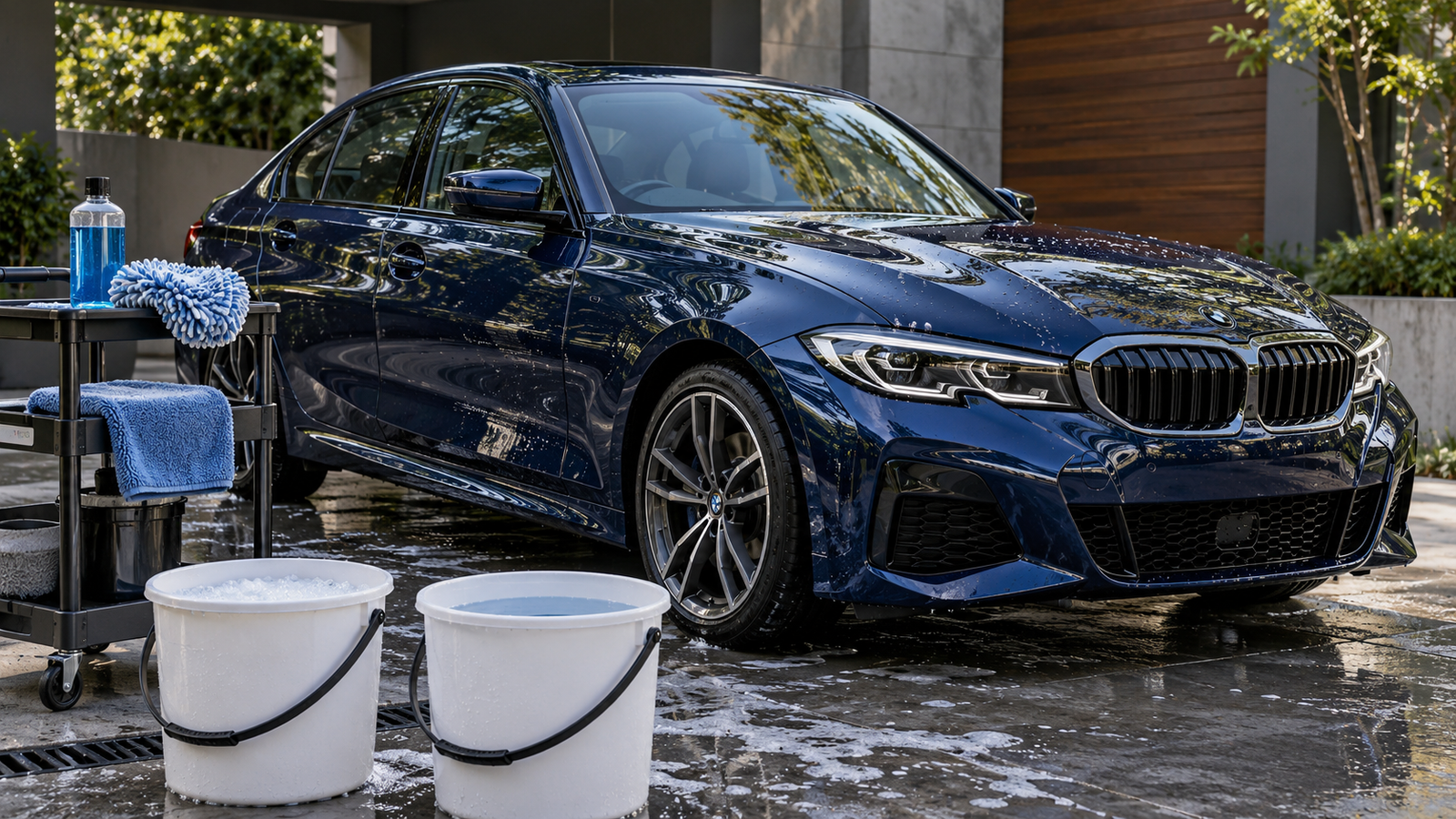
Read the bottle first and measure the solution accurately. Gather enough clean wash media and drying towels before you begin. Work in suitable conditions, preferably with a cool surface, unless the manufacturer gives other explicit guidance. Keep the product from drying prematurely while you work.
Inspect and address contamination that requires a different first step. Then clean manageable sections using the manufacturer’s method. Keep dirty wash media from reintroducing contamination into your process. If you use multiple towels, separate used ones so you do not accidentally pick one up again.
Dry each completed area as directed and inspect it in good light. Work methodically around the vehicle instead of rushing toward the lower, dirtier sections. Wheels and heavily contaminated areas deserve separate tools. When you finish, clean the equipment so the next wash begins with supplies that are actually ready to use.
A beginner’s waterless wash routine
Confirm that the surface condition is suitable for the product. Start on a small, cool section and follow the specified spray and wiping instructions. Avoid treating the whole vehicle at once if the product may dry before you reach it. Have more clean towels available than you expect to need.
Use clean towel faces as the cloth collects dirt. Apply light, controlled movements rather than trying to scrub stubborn deposits away with pressure. A mark that does not release easily may need a dedicated treatment suitable for that material. More rubbing is not a reliable solution to an unidentified stain.
Check your work from several angles before continuing. Stop if the towel is loaded with contamination or the method no longer feels appropriate for the dirt you encounter. Keep paint towels separate from wheel towels, and follow the product’s instructions for any final buffing. Wash the used towels before returning them to your clean supply.
The towel setup matters more than a big bundle
Buy towels suitable for the intended automotive surface and cleaning task. You need enough clean material to replace dirty faces and finish drying without improvising. A large pack is not automatically better if the towels are unsuitable, contaminated or difficult to maintain.
Inspect towels before use for grit or foreign material. A towel dropped on the ground should be set aside until properly cleaned and checked. Keep separate storage for clean and used items so a quick wash does not begin with a cloth that was previously used on the wheels.
Follow towel-care instructions during laundering and drying. Keep paint-care equipment organized by use, especially when several people share the supplies. A clearly labeled container can be more helpful than adding another cleaning chemical. Reliable preparation makes a simple setup easier to repeat and reduces the temptation to finish with whatever cloth happens to be nearby.
Wash-only vs wash-and-wax formulas
Some cleaning products are intended mainly for washing, while others add a wax or gloss-enhancing step. Decide whether you want that additional function before buying. If the vehicle has an existing coating, follow the coating maker’s guidance on compatible maintenance products.
Do not assume that every wash-and-wax product replaces a separate long-term protection routine. The intended benefit and maintenance interval depend on the specific formula. Likewise, a wash-only product is not automatically a poor choice because it leaves the protection step to another product.
Keeping the routine simple helps. If you already use a protection system that works well, choose a compatible cleaner and avoid adding multiple overlapping toppers without a clear reason. For a broader look at finishing products, read our ceramic spray wax versus traditional wax guide before buying another bottle to use after washing.
Mistakes that make either method disappointing
The first mistake is choosing the process after you have already started wiping. Inspect the dirt level first, then gather the correct equipment. A cleaning spray cannot compensate for a towel that is full of grit or a panel that needs a different preparation step.
The second mistake is copying a dilution from an old video without checking the current bottle. Product names can remain similar while versions and directions change. Use the instructions supplied with the exact formulation you own, and measure rather than guessing when mixing is required.
A third mistake is judging success only by shine. Residue, uneven buffing and dirt left around edges can be easier to see in different light. Inspect the completed vehicle and adjust your process next time. A repeatable, careful routine is more useful than buying a stronger-sounding product to address problems caused by rushed technique.
Frequently asked questions
Does rinseless mean no water? No. A rinseless wash normally uses water mixed with a dedicated product. The missing step is the final hose rinse, not the water in the cleaning solution.
Can regular shampoo become a rinseless wash? Do not assume so. Use shampoo according to its own directions and choose a dedicated rinseless formula when you want that process.
Is waterless washing scratch-proof? No cleaning method should be treated as a guarantee against scratches. Surface condition, lubrication, clean towels and appropriate technique all matter.
Can either method clean a muddy truck? Heavy mud and gritty contamination may require a suitable pre-rinse or conventional wash. Evaluate the vehicle before selecting a low-water method.
Which store is cheaper? Compare the matched product and current checkout total on Amazon and Walmart. This guide does not identify either store as the guaranteed lower-cost seller.
Which should you choose?
For regular maintenance without a hose, start by considering a rinseless product and a compact bucket-and-towel setup. For occasional light cleaning where carrying a bucket is inconvenient, compare suitable waterless sprays. In both cases, let the dirt level and surface instructions decide whether the job is appropriate.
Before ordering, confirm the exact formula, read its directions and check the total delivered price at both stores. Buy enough clean towels to use the system correctly. Choosing a process you can perform carefully will make a bigger practical difference than choosing a bottle solely because its marketing sounds more advanced.
Manufacturer sources and related reading
- Optimum: rinseless wash guide
- Optimum No Rinse Wash & Shine product information
- Meguiar’s Ultimate Waterless Wash & Wax G3626
- Ceramic spray wax vs traditional wax
- Gold Class vs Ultimate Wash & Wax
Best Auto Products compares documented product uses and practical buying factors. Follow the instructions supplied with your exact purchase for dilution, surfaces and application.