
Choose a towel for the job, then keep it clean
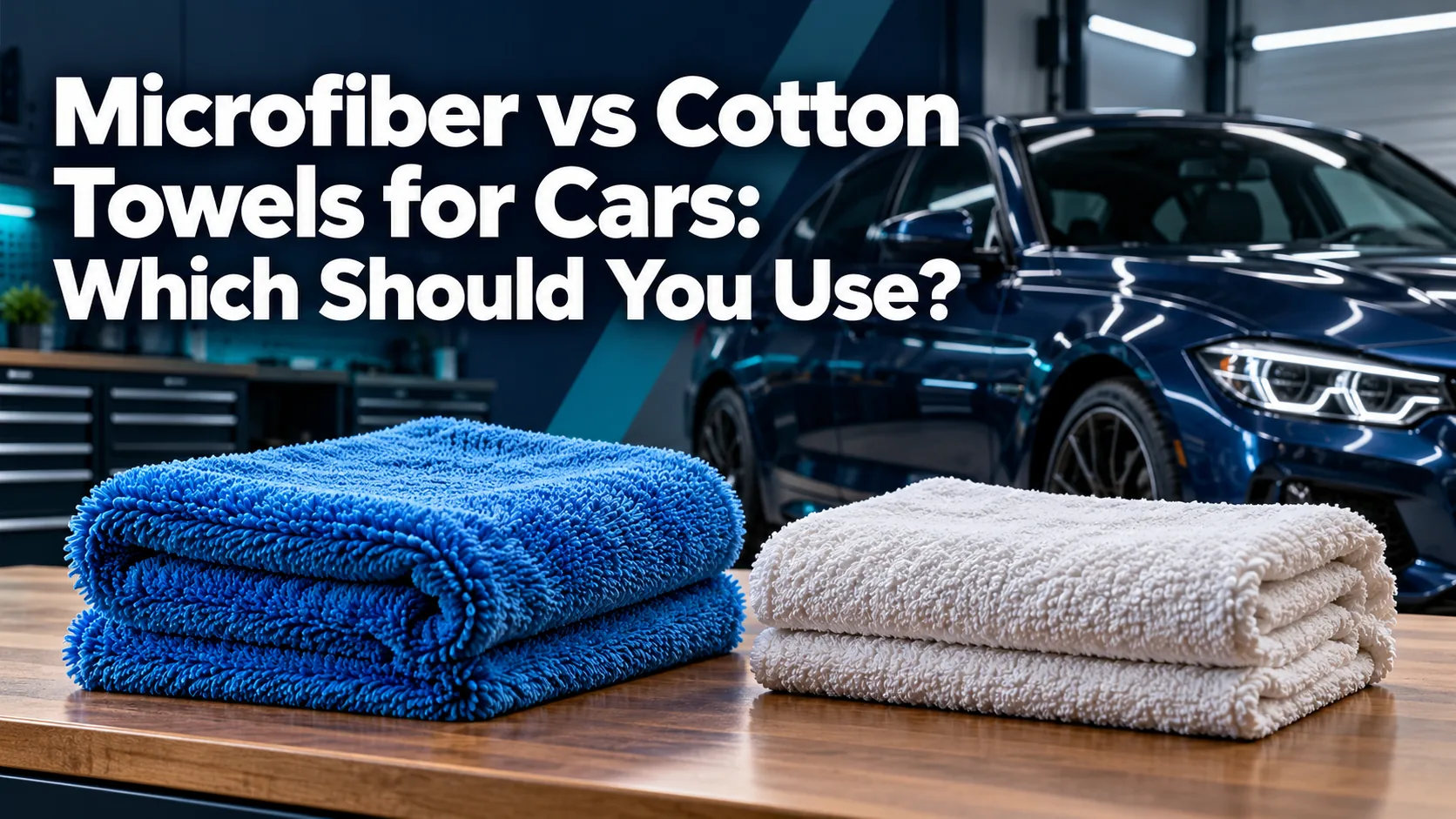
Microfiber vs cotton towels for cars is a practical buying decision. A towel used for drying clean paint has a different job from one used to wipe a wheel, remove wax, or clean a workbench. This guide helps you build a small, organized towel kit.
For routine paint drying and detailing, our editorial preference is a clean automotive microfiber towel designed for the task. Cotton can still have a role when the product or surface instructions permit it. Neither material is scratch-proof: trapped grit, rough edges, dirty surfaces, and excessive pressure can turn a soft cloth into a problem.
As an Amazon Associate, we earn from qualifying purchases. Recommendations below are based on manufacturer information and editorial suitability, not hands-on testing. Verify the exact model, regional version, dimensions, and quantity before ordering.
View Meguiar’s Supreme Shine towel set on AmazonMicrofiber and cotton: what should a driver compare?
“Microfiber” describes a type of very fine fiber, while “cotton” identifies a fiber material. The label alone does not tell you the complete towel construction. Weave, pile, edges, size, cleanliness, and the maker’s intended application all affect whether a particular cloth suits your job.
An old bathroom towel is not automatically a good paint-drying towel because it feels soft against your hand. It may have a rough border, residue from household laundry, or dirt from another use. The same concerns apply to an inexpensive microfiber cloth pulled from a mixed cleaning drawer.
Start with the surface you will touch and the work you will do. Then look for a towel whose manufacturer describes that application. This is more useful than assuming every microfiber is superior to every cotton towel, or that one cloth should handle the entire car.
| Decision | Automotive microfiber | Cotton towel |
|---|---|---|
| Paint drying | Look for a dedicated drying towel. | Use only a suitable clean towel approved for the method. |
| Wax or polish removal | Compare towels specifically sold for product removal. | Follow the product’s cloth recommendation. |
| Edges and condition | Inspect seams, tags, contamination, and wear. | Inspect seams, tags, contamination, and wear. |
| General cleanup | Keep utility towels separate from paint towels. | Can be assigned to suitable non-paint tasks. |
| Scratch guarantee | No blanket guarantee. | No blanket guarantee. |
Match the towel to the surface
Drying clean paint
Prioritize a dedicated drying towel and gentle technique.
Removing detailing products
Choose an appropriate removal towel and follow the product directions.
Dirty utility work
Use a separate set for wheels, door jambs, and garage cleanup.
A drying towel should be used after the washing and rinsing process has left the surface clean. It is not a replacement for washing. If you notice a dirty patch while drying, stop and deal with that contamination using the appropriate wash method instead of pressing harder with the towel.
Wax and polish removal introduces a different challenge: the cloth picks up product residue. A towel used for that step should not immediately become your final glass cloth. Keeping a few clean towels available lets you change cloths when one becomes loaded rather than repeatedly wiping with the same surface.
Glass, glossy interior trim, screens, coatings, and wraps can have specific care instructions. Use the surface manufacturer’s guidance when it differs from a general detailing habit. An automotive towel listing that mentions plastic does not establish compatibility with every vehicle display or delicate coated panel.
Two useful microfiber options to compare
These products serve different roles. We are not ranking them by a lab absorbency test or promising a mark-free result. The specifications below come from Meguiar’s published product information; the buying recommendations are our editorial judgments.

Retailer image. Check the regional variant and package offered.
Meguiar’s Water Magnet: for the drying step
The U.S. X2000 manufacturer page describes a 22 × 30-inch waffle-texture microfiber drying towel that is reusable and machine washable. Its stated purpose is drying, rather than being a universal cloth for every detailing task.
Why consider it: The larger drying format gives a beginner a clear tool assignment after a proper wash.
Limitations: You may need a second clean towel depending on the vehicle, water left on the surface, and your method. The linked Amazon listing currently identifies an X2000EU variant; confirm its dimensions and included quantity rather than assuming every regional package matches the U.S. page.
Check Water Magnet towel variant and size on Amazon
Retailer image. Verify the model and included quantity.
Meguiar’s Supreme Shine X2020: for product removal
Meguiar’s describes the X2020 as a three-pack of 16 × 24-inch microfiber towels with a plush, dual-sided pile. The manufacturer lists removal of compounds, polishes, waxes, and spray detailers among its uses.
Why consider it: Several towels make it easier to switch to a clean cloth during product removal and keep assignments separate.
Limitations: A product-removal towel is not automatically the best dedicated glass towel or the only drying towel you need. Keep used wax towels away from clean glass work, and do not treat promotional “swirl-free” wording as a guarantee against contamination or poor technique.
Check Supreme Shine X2020 three-pack on AmazonFor a basic kit, our preference is a dedicated drying towel plus separate product-removal towels. If you only wash and dry the car, start with the drying role. If you already have a suitable drying towel, extra clean removal towels may be the more useful purchase.
| Manufacturer information | Water Magnet X2000 U.S. page | Supreme Shine X2020 |
|---|---|---|
| Primary role | Drying | Detailing-product removal |
| Listed size | 22 × 30 inches | 16 × 24 inches per towel |
| Listed construction | Waffle-texture microfiber | Plush, dual-sided microfiber pile |
| Listed quantity | One towel | Three towels |
| Care | Machine washable; follow instructions | Machine washable; follow instructions |
Where cotton still fits
There is no need to throw away every cotton cloth you own. Assign suitable clean cotton towels to tasks where the surface and cleaning-product instructions allow them. General garage cleanup is a different decision from wiping a carefully finished painted panel.
For paint contact, an unknown household cloth is an unnecessary gamble when its history, stitching, or residue is unclear. Our preference is to reserve known automotive towels for that work. This is a conservative organizational choice, not a claim that cotton itself always scratches paint.
Do not move a cotton utility towel from an oily tool bench to the car’s bodywork. Likewise, do not move a microfiber wheel cloth back into your paint set just because it has been rinsed. A towel’s assigned job and current condition matter more than the material name printed on its package.
Create a simple towel system
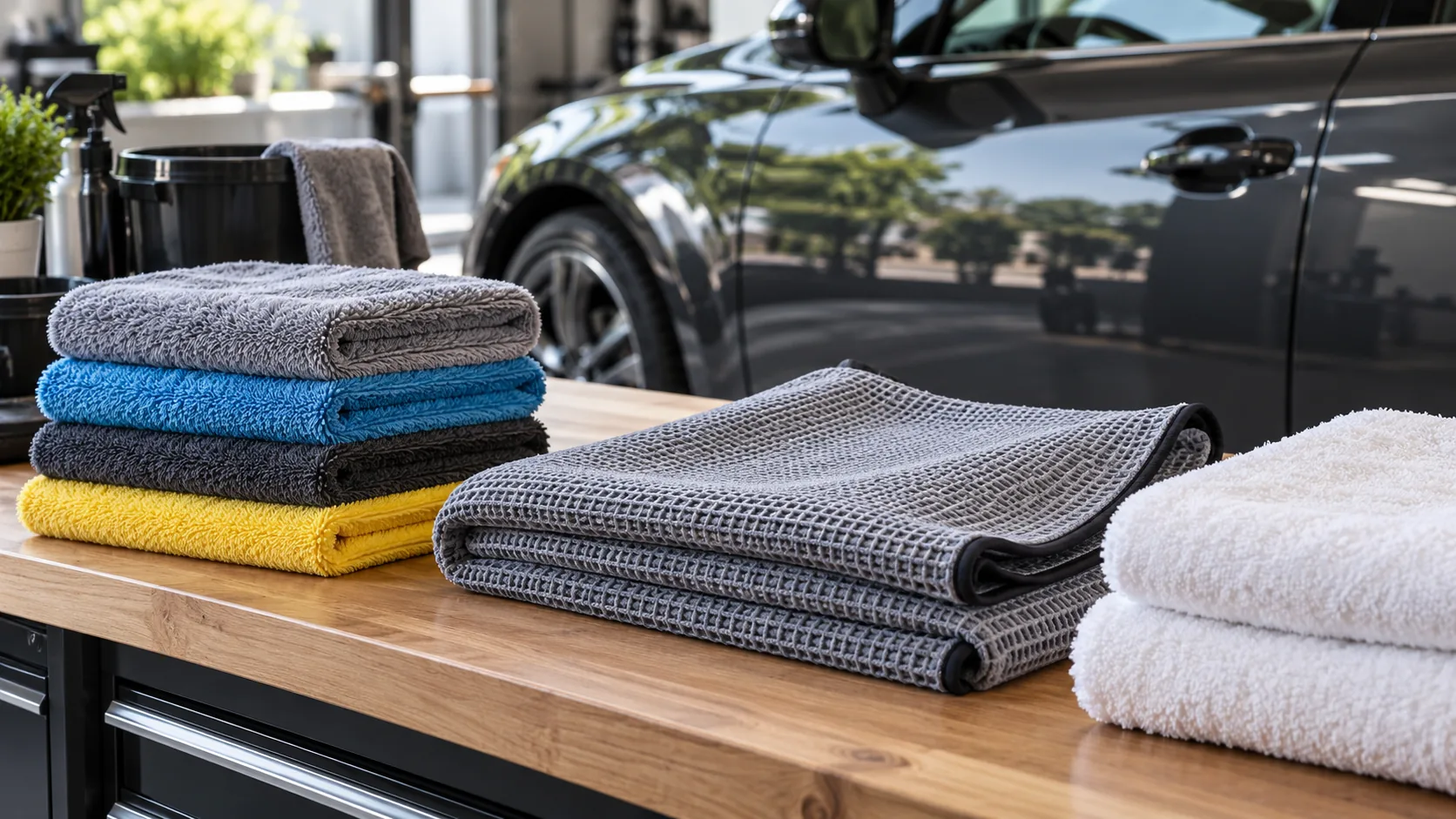
Choose a sorting method that you will actually remember. You could use separate containers, different colors, or small labels on the storage bins. The purpose is to make it obvious which towels touch paint and which have been used on dirtier parts of the vehicle.
- Paint drying: keep dedicated drying towels together.
- Product removal: store clean wax and polish towels separately.
- Glass: reserve a clean set suited to your glass-cleaning method.
- Interior: separate routine cabin wiping from paint care.
- Wheels and utility work: use a clearly separate set.
Before beginning a wash, put out the clean towels you expect to need and keep spare towels protected nearby. Avoid laying them on a tire, driveway, or dusty shelf. If a towel falls onto a dirty surface, remove it from the active paint-care job and clean and inspect it before future use.
Keep a separate place for used towels. Without one, it is easy to pick up the cloth you used earlier on a lower door section and forget where it has been. A simple clean-versus-used distinction prevents confusion even if every towel in your kit is the same color.
Use gentle technique instead of extra pressure
Follow the directions for the wash or detailing product you are using. Work on the surface conditions it recommends, including any requirement for a cool panel or shade. Do not assume a towel purchase changes those instructions.
For wiping tasks, fold the towel into a manageable shape and expose a clean section as needed. Stop when the cloth becomes dirty or loaded with residue. If a product is difficult to remove, review its application and removal directions rather than automatically rubbing harder.
A drying towel that begins to drag or spread water may need attention to its saturation, cleanliness, or care history. Inspect the situation before deciding that the material is wrong. Switching to a fresh appropriate towel can help you finish the task while you investigate the first towel afterward.
If you discover scratches or stubborn residue, do not immediately add a compound to the routine. Paint correction is a separate task with its own risks and instructions. A buying guide about towels is not a reason to start removing paint material from an unfamiliar finish.
Wash and store towels according to their instructions
Read the care label before the first wash. Griot’s Garage’s detailing handbook advises washing microfiber separately from other fabrics and avoiding bleach, fabric softeners, and dryer sheets. Treat the exact towel’s label as the authority for detergent, washing temperature, and drying settings.
Do not apply one universal heat setting to every microfiber product. Instructions can differ by manufacturer and towel construction. If a label is missing, obtain the maker’s guidance rather than choosing a high-temperature cycle on the assumption that more heat always means a cleaner towel.
Separate heavily contaminated utility towels from paint towels when planning laundry. A towel used with oil or an unfamiliar chemical needs appropriate handling for that substance. Do not place chemically contaminated materials into household laundry without checking the product’s disposal and cleaning instructions.
Inspect towels after washing and drying. Look for embedded particles, hardened residue, damaged edges, or a change in texture that makes you uncomfortable using the cloth on paint. Downgrade a questionable towel to an appropriate less delicate task only if it is clean and safe for that use.
Store clean, dry towels where dust and grit cannot settle on them. A closed clean container is practical, but do not seal damp towels away and forget them. The useful goal is a kit that stays clean between jobs and makes the next wash easier to prepare.
What to check before buying
- Intended task: drying, glass, product removal, or utility cleaning.
- Size and handling: choose something you can fold and control without dragging it on the ground.
- Construction: inspect the weave, pile, borders, and tags.
- Quantity: allow for clean replacements during the task.
- Care instructions: choose a towel you can wash and store correctly.
- Exact listing: confirm the model, regional suffix, dimensions, seller, and package quantity.
Do not choose only by a high GSM number, a color, or a “professional” label. Those details may help compare products, but they do not answer whether the towel is designed for your method. A clearly documented ordinary towel used correctly can be a more sensible purchase than an expensive towel assigned to the wrong job.
A small organized kit is a better starting point than a large mixed pile. Buy for the task you do now, then add specialist towels when your routine creates a clear need. We have not quoted current prices or ratings because those are changeable and do not establish compatibility or careful use.
Frequently asked questions
Can microfiber towels scratch car paint?
Yes, a microfiber towel can cause problems if it carries grit, is used on a dirty surface, has damaged edges, or is used incorrectly. “Microfiber” is not a scratch-proof guarantee. Cleanliness and technique remain essential.
Can I dry my car with a cotton bath towel?
Do not assume it is suitable. Check its condition, edges, laundry residues, and the care method’s instructions. Our editorial preference for regular paint drying is a clean automotive drying towel intended for that task.
Can one towel handle wheels and paint?
Keep those assignments separate. Wheels and lower dirty areas introduce contamination you should not carry into the paint-care set. Use a simple sorting system so the distinction stays clear.
Do I need a special towel for every chemical?
Not necessarily, but keep enough clean appropriate towels to avoid transferring residue between tasks. Follow each product’s removal and care directions, particularly for coatings or products with special handling requirements.
Should I use fabric softener on microfiber?
Follow the towel’s care label. The cited Griot’s Garage handbook advises avoiding fabric softeners, bleach, and dryer sheets when caring for microfiber. Keep microfiber laundry separate from other fabrics.
Which towel should a beginner buy first?
If you wash and dry the car, start with a dedicated drying towel. Add product-removal towels when you use waxes, polishes, or detail sprays that call for them. Keep a separate utility set from the beginning.
Our practical recommendation
Choose task-specific automotive microfiber for routine paint drying and detailing, then maintain a clear clean-towel system. Keep suitable cotton cloths for uses allowed by the relevant instructions. The most valuable upgrade is combining an appropriate towel with proper washing, inspection, and gentle use.
If the car will be parked after your detailing session, battery care is a separate part of the storage plan. Our battery maintainer vs trickle charger guide explains that decision. Keep electrical maintenance equipment away from your wet wash area and follow its operating instructions.
Review Supreme Shine towel quantity and options on Amazon